
 Hien Dang
There is something remarkable about memory that most of us only come to realise after enough years have passed. We may forget a face, a conversation, or even an entire chapter of our lives. Yet all it takes is a familiar scent for everything to return with astonishing clarity. It might be the aroma of pandan leaves drifting from a mother’s kitchen, the earthy smell after the season’s first rain, the scent of old timber in a childhood home, or the lingering fragrance on the shirt of someone we once loved deeply.
Original Vietnamese version available here: Đọc bài viết tiếng Việt
Text: NGUYỄN CÔNG MINH
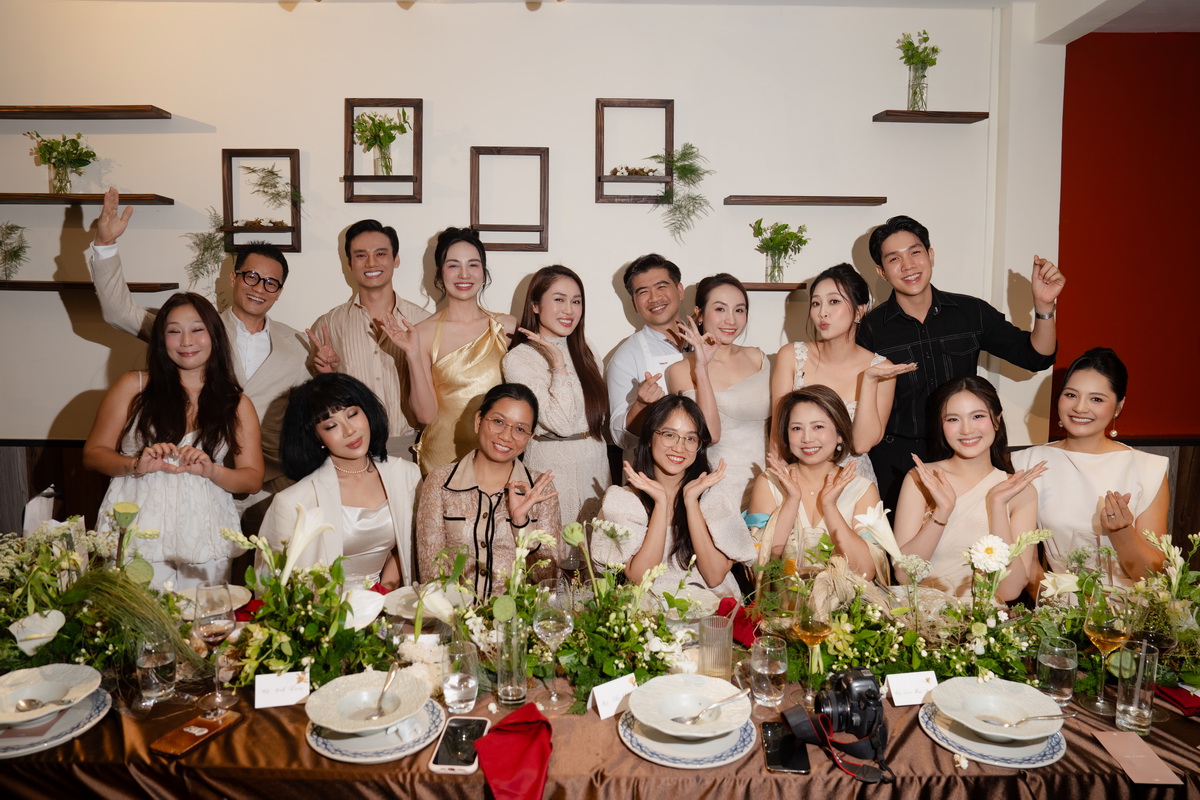
Perhaps that is why Table of Stories #02 – Hương & Hoa (Flowers & Fragrance) began with a question that seemed almost disarmingly simple: “If you could bring just one object that has stayed with you for many years, what would it be?”. A modest question, yet one powerful enough to lead each guest back along the hidden paths of their own memories.
Following the success of its inaugural edition, Ngã Rẽ (Crossroads), the second chapter of Table of Stories once again took shape under the vision of Liêu Hà Trinh and TK Production. Rather than following the familiar format of speaker and audience or a conventional networking event, everything revolved around a single long table, where people who had never met before felt safe enough to share deeply personal stories and, perhaps more importantly, patient enough to truly listen to one another.
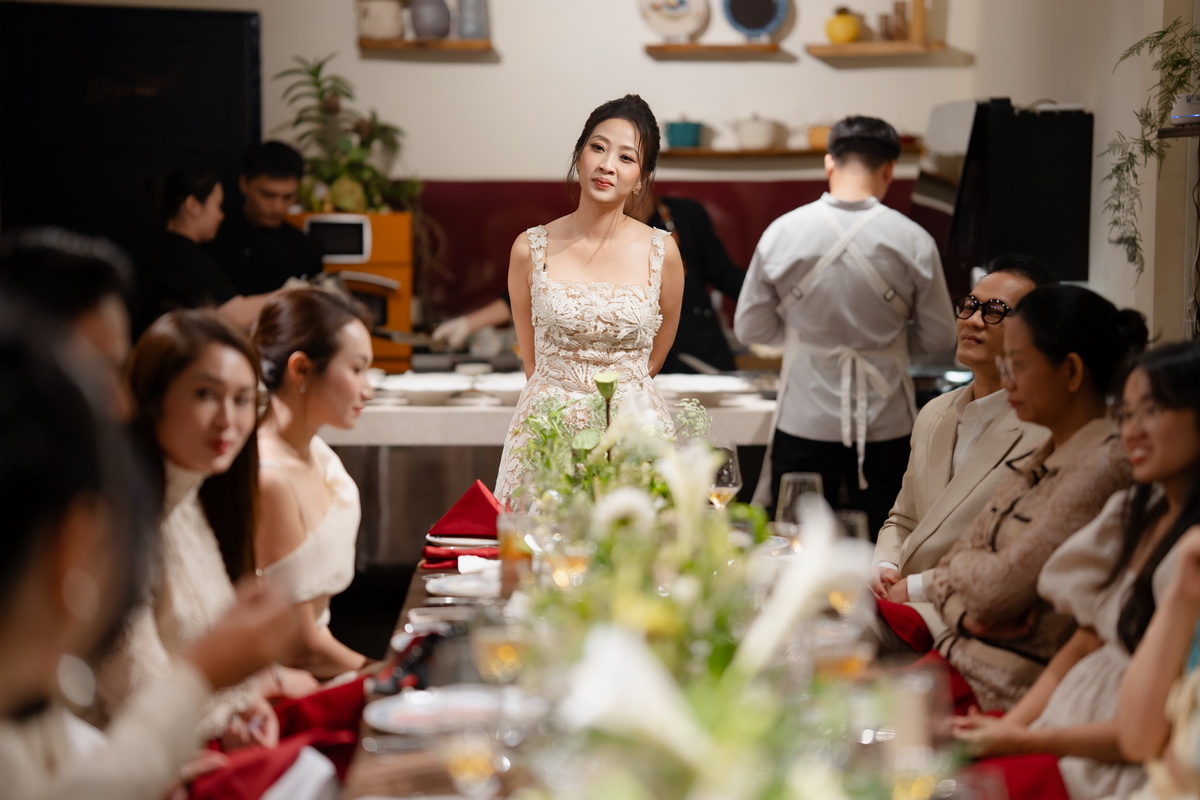
This edition was presented with the support of NỮ DOANH NHÂN – BusinessWoman Magazine, alongside Master Perfumer Huỳnh Hải Yến, Ren Florist Founder Nguyễn Bích Thuận, and Chef Huỳnh Hoàng Sin. Three worlds that might ordinarily seem unrelated – fragrance, flowers and gastronomy – came together to form a seamless experience, one in which none sought to become the protagonist. Fragrance never overshadowed the stories. Flowers existed for more than decoration. The dishes were prepared for far more than taste alone. Each quietly took its place in the background, gently supporting the emotions unfolding around the table. What made the evening truly memorable was not what the guests saw, but what they chose to bring with them.
Some arrived carrying a dress that had been treasured for more than thirty years. Others brought an old notebook. Some carried objects that appeared entirely ordinary, yet contained within them an entire childhood, memories of parents, a home that no longer existed, or someone they had loved and lost.
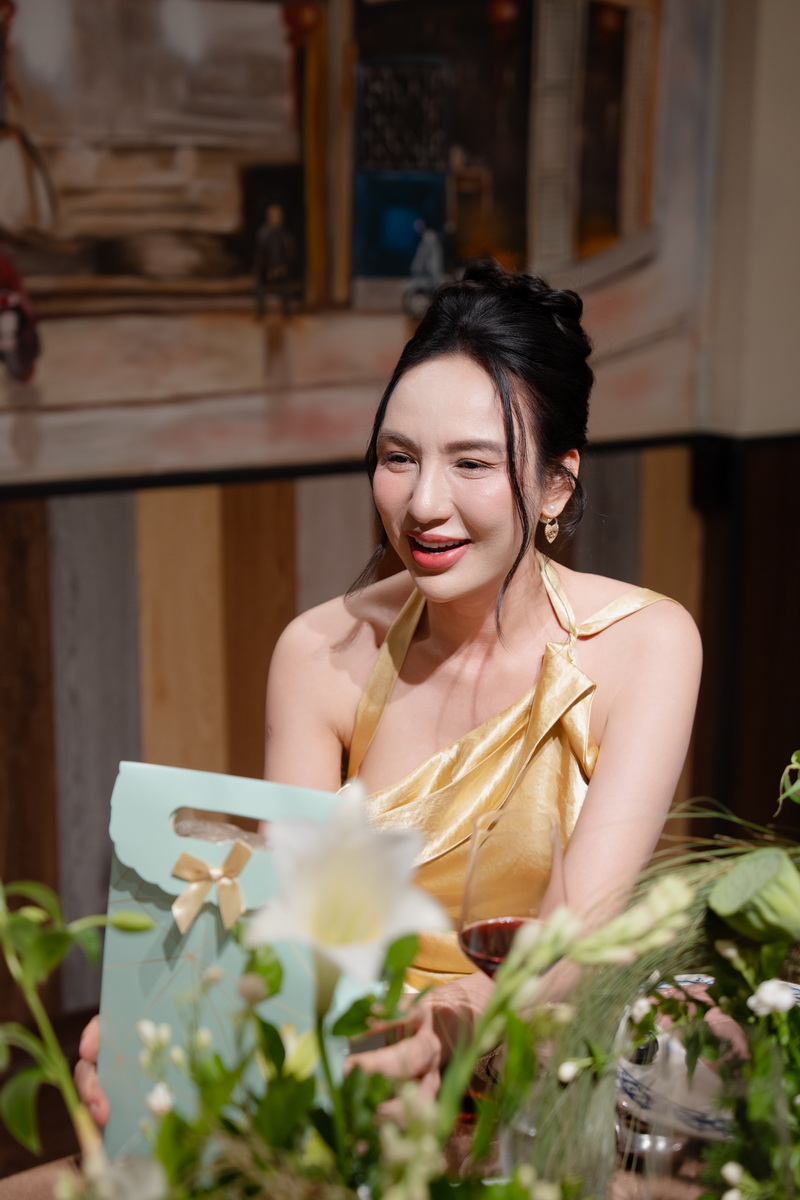
One of the evening’s most moving moments came when Miss Ngọc Diễm reached into a small bag and carefully unfolded the dress her mother had bought her for Lunar New Year thirty-two years ago. The dress no longer fitted the little girl she once was, but it still fitted perfectly within the memories of a daughter whose gratitude towards her mother had never faded.
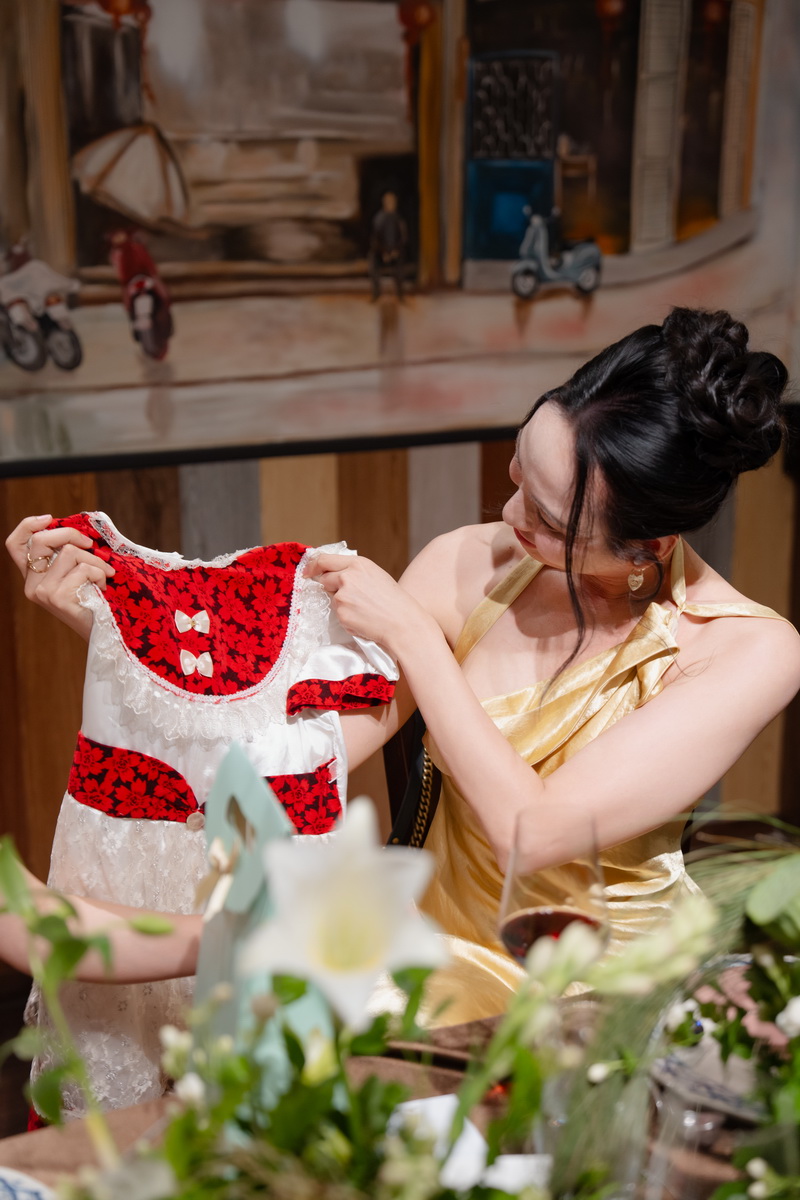
Her story was never truly about the dress itself. It was about a woman who had carried her family through hardship alone, who endured the struggles of every year-end yet somehow always made sure her child had new clothes for Tết, and whose quiet, unwavering love could only be fully understood with adulthood. As her story unfolded, many around the table found themselves looking at the objects they had brought in an entirely different light.
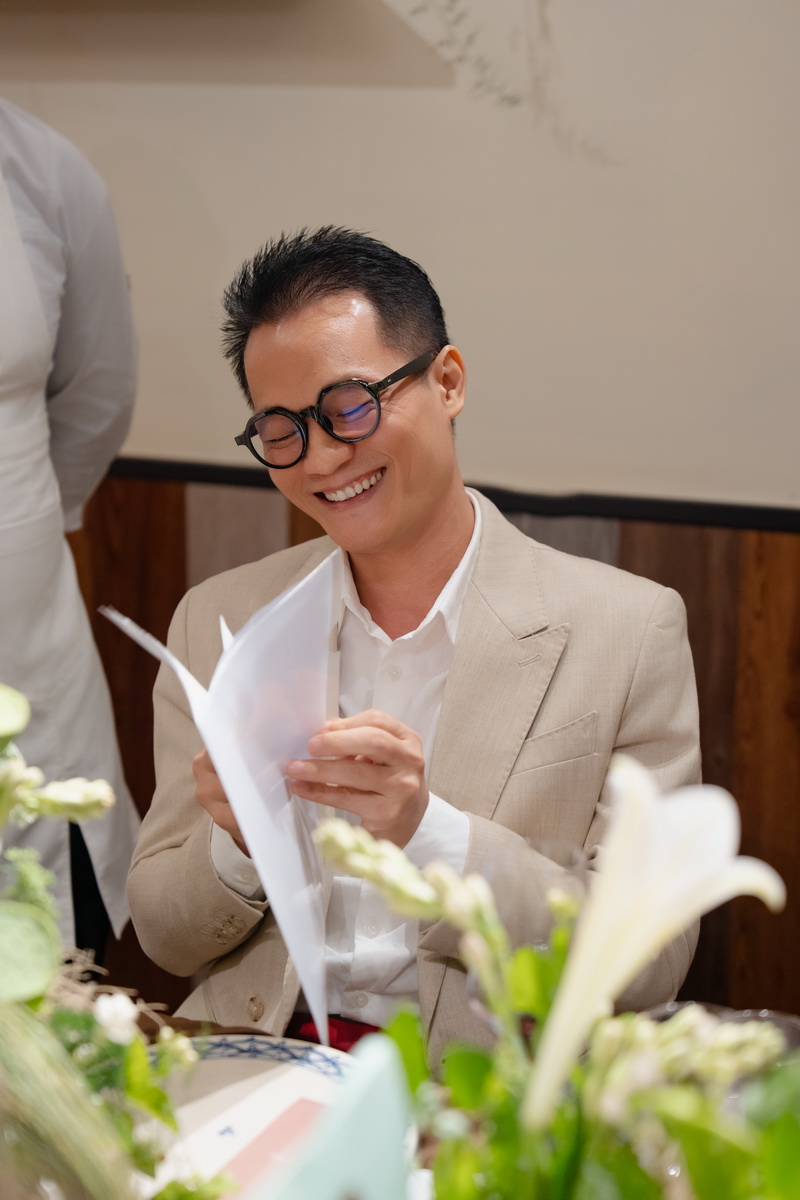
I, too, brought something to that table: a small collection of handwritten notes that I have kept carefully for more than a decade. They were written by my son when he was still very young. Some were little reminders asking his father to help with something. Others were birthday cards. A few contained nothing more than a handful of clumsy, innocent words: “I love you, Dad.” As I unfolded each piece of paper and shared them with everyone around the table, I found it impossible to hide my emotions. What made those notes so precious was not merely what my son had written, but the handwriting itself—the hesitant strokes of a small child, uneven letters, misspellings and all, carrying something that time can never return.
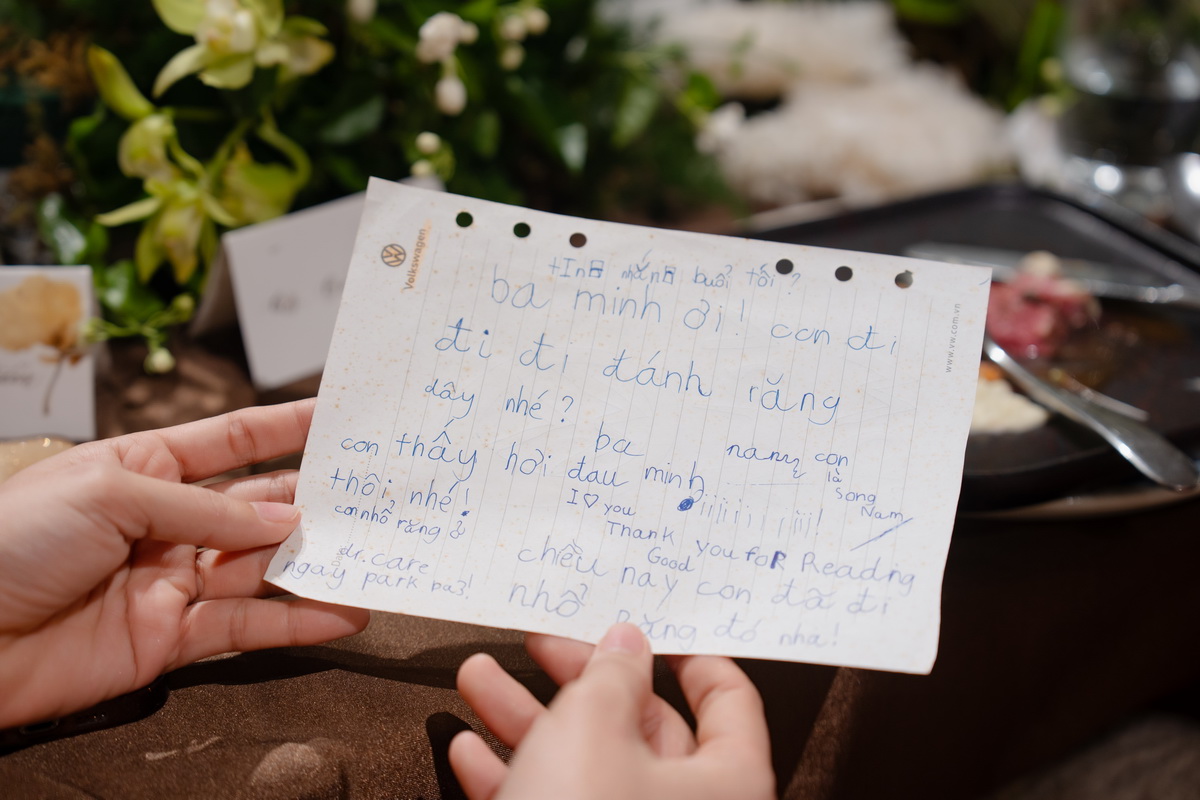
A child grows up. Their handwriting changes. The way they express affection evolves. Those innocent, imperfect letters will never appear again. Perhaps that is why, for more than ten years, I have never regarded those pieces of paper simply as keepsakes, but as a way of preserving my son’s childhood. Words can always be read again, but the handwriting that belongs to a particular moment in life can never be recreated.
No one was prepared for the tears that followed. They came naturally, just as a familiar fragrance quietly finds its way into our memory before we even realise it.
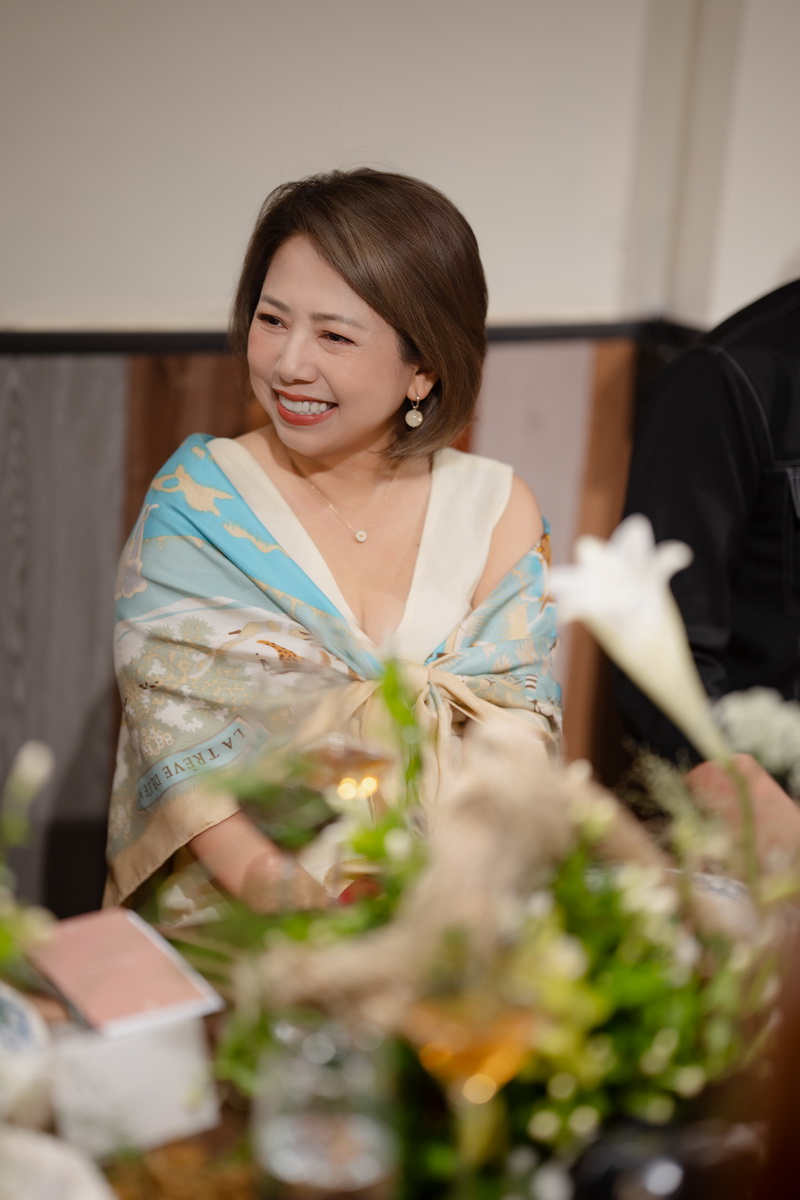
Huỳnh Hải Yến, who has devoted nearly two decades to the world of fragrance, did not speak about fragrance notes or the craft of perfume-making. Instead, she spoke of our sense of smell as the key that unlocks the door to memory. Some memories lie dormant for years, yet a single familiar scent is enough to bring an entire chapter of life vividly back into focus. That is why, throughout the three-hour gathering, perfume was never the centre of the conversation. The true focus was always the people around the table, the memories they carried with them and the emotions they were willing to share with complete strangers.
If fragrance opened the door to memory, flowers softened the atmosphere, allowing every story to emerge naturally.
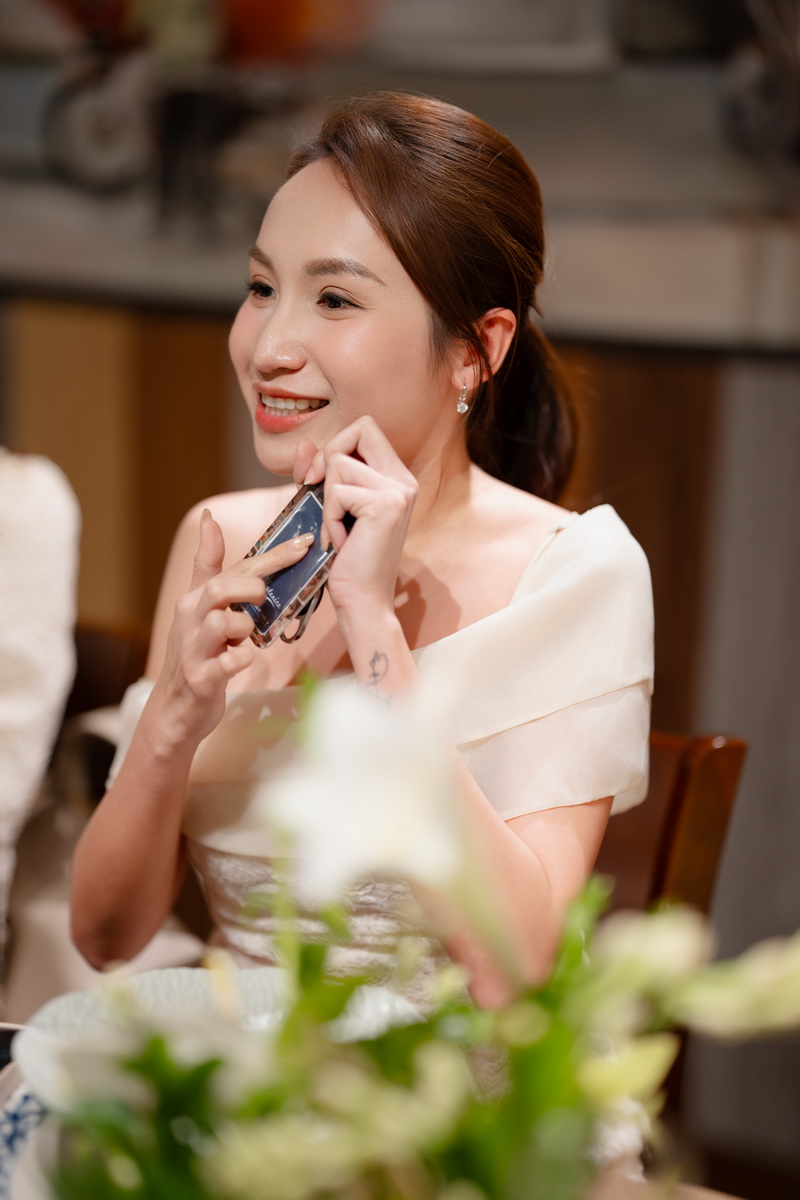
Eschewing elaborate floral arrangements, Nguyễn Bích Thuận chose simple white blooms and humble herbs, creating a table that felt closer to a family meal than to a carefully staged event. It was precisely this restraint that shifted attention away from the flowers themselves and towards the atmosphere they quietly created. Perhaps life is much the same: the most beautiful things rarely demand to be noticed.
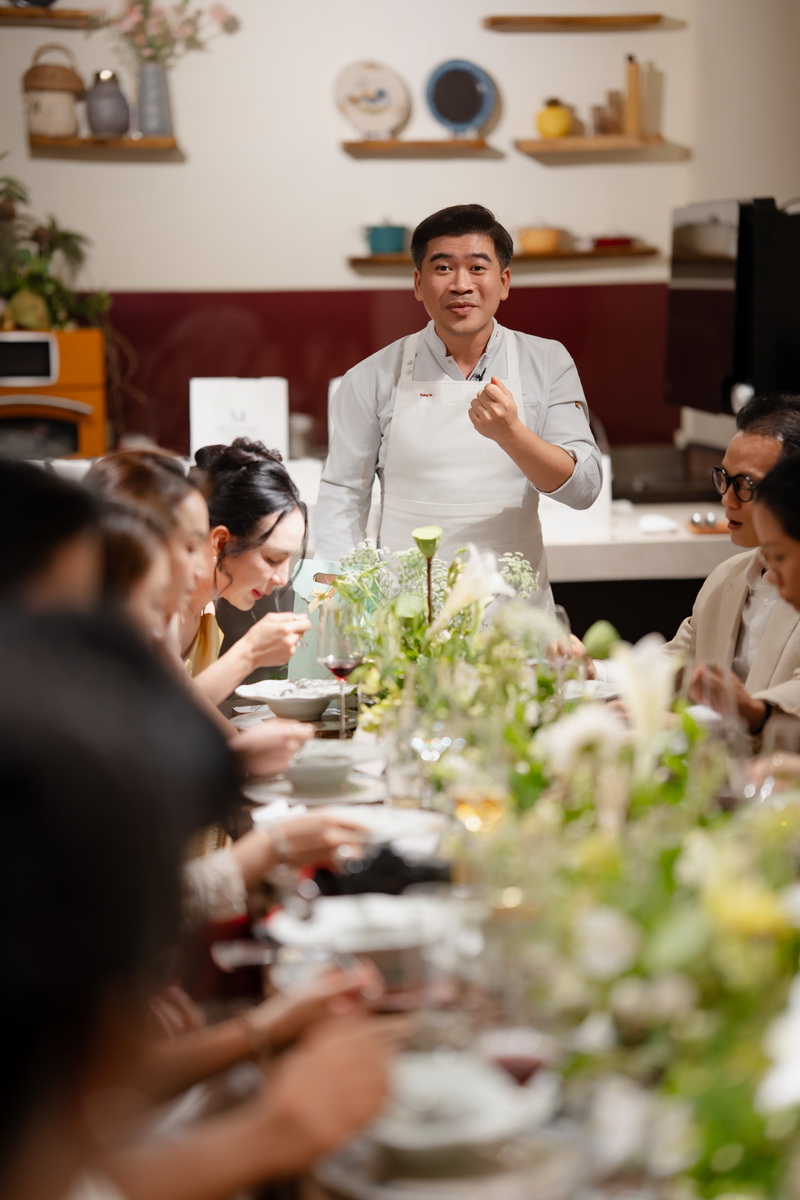
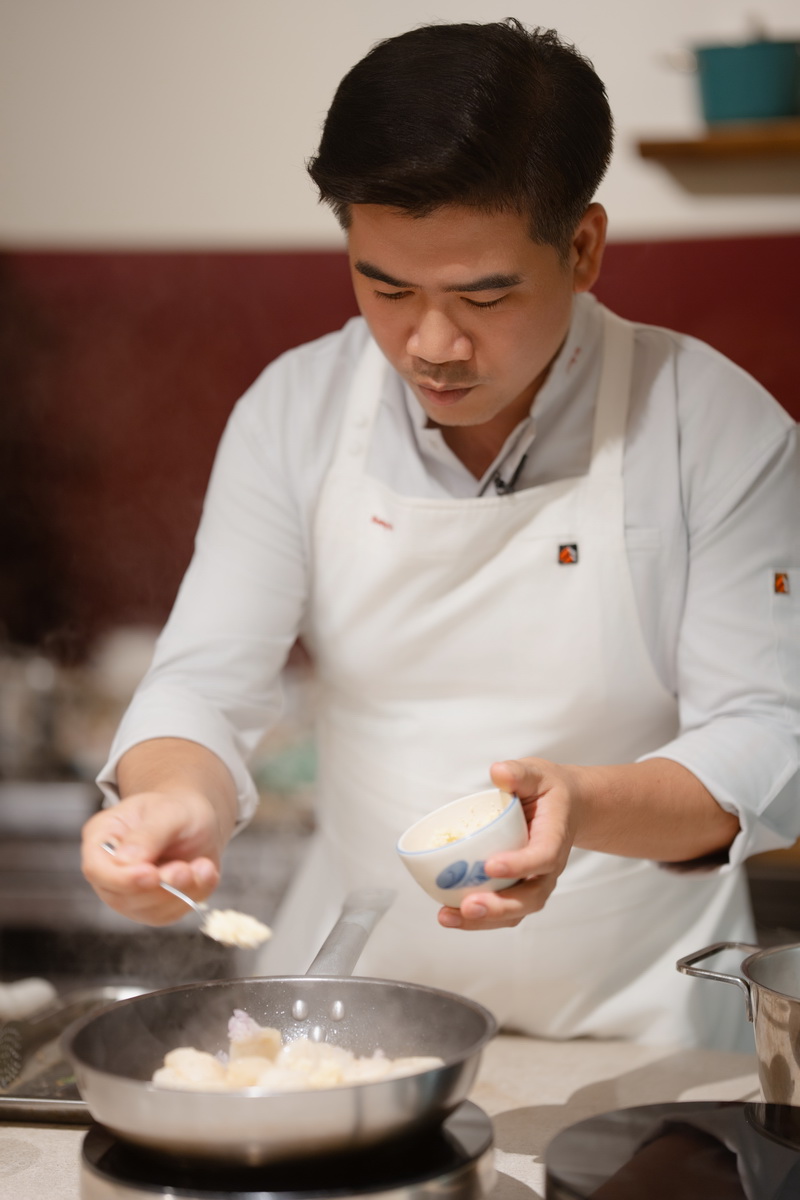
At the heart of the table, Chef Huỳnh Hoàng Sin told his own story through the language of food.
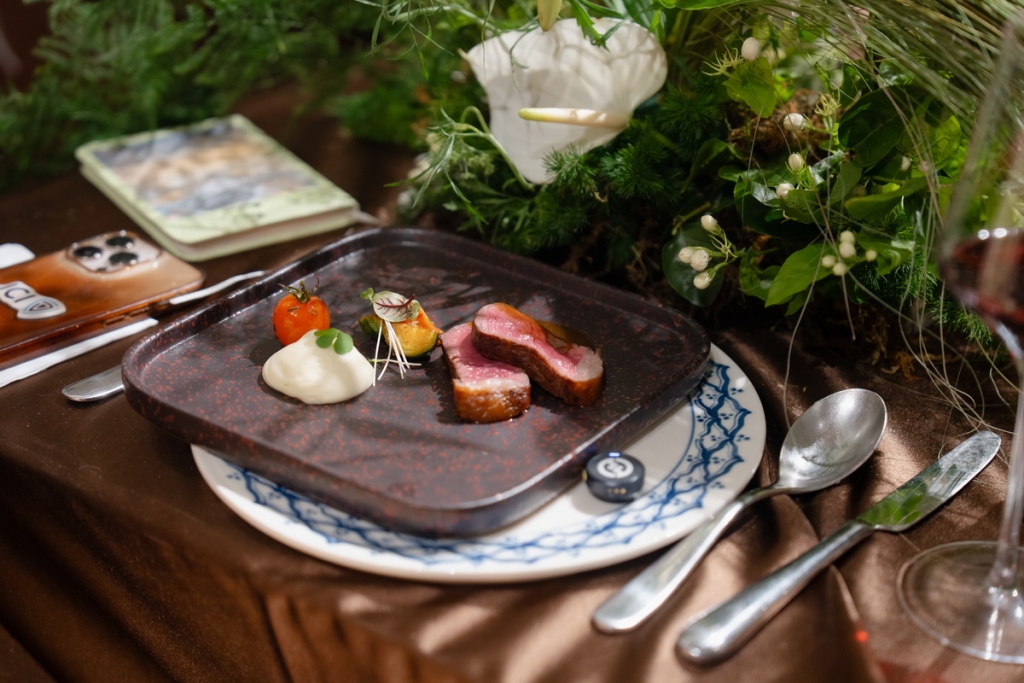
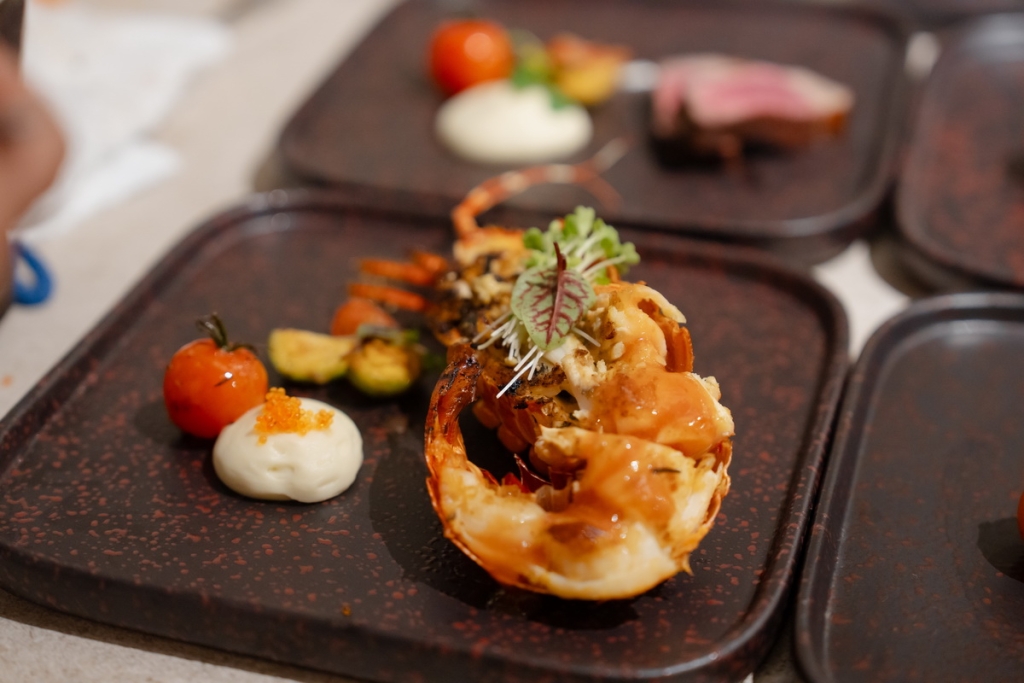
His menu, The Scents That Remain, was built around distinctly Vietnamese memories. A silky black chicken soup infused with pandan leaves and young ginger immediately reminded many guests of the herbal steam their mothers prepared whenever they fell ill. Daylily blossoms, lotus stamens, grilled sticky maize, cinnamon, star anise and cardamom, ingredients deeply rooted in Vietnamese home kitchens, were reimagined in a contemporary setting, inviting guests to experience them not only through taste, but through memory. It was cuisine that sought neither to impress through technical virtuosity nor to surprise for its own sake, but instead reached people through honesty and genuine emotion.
Unsurprisingly, when the evening came to an end, very few guests spoke about which dish had been their favourite or which floral arrangement they admired most. What remained with them was a feeling.
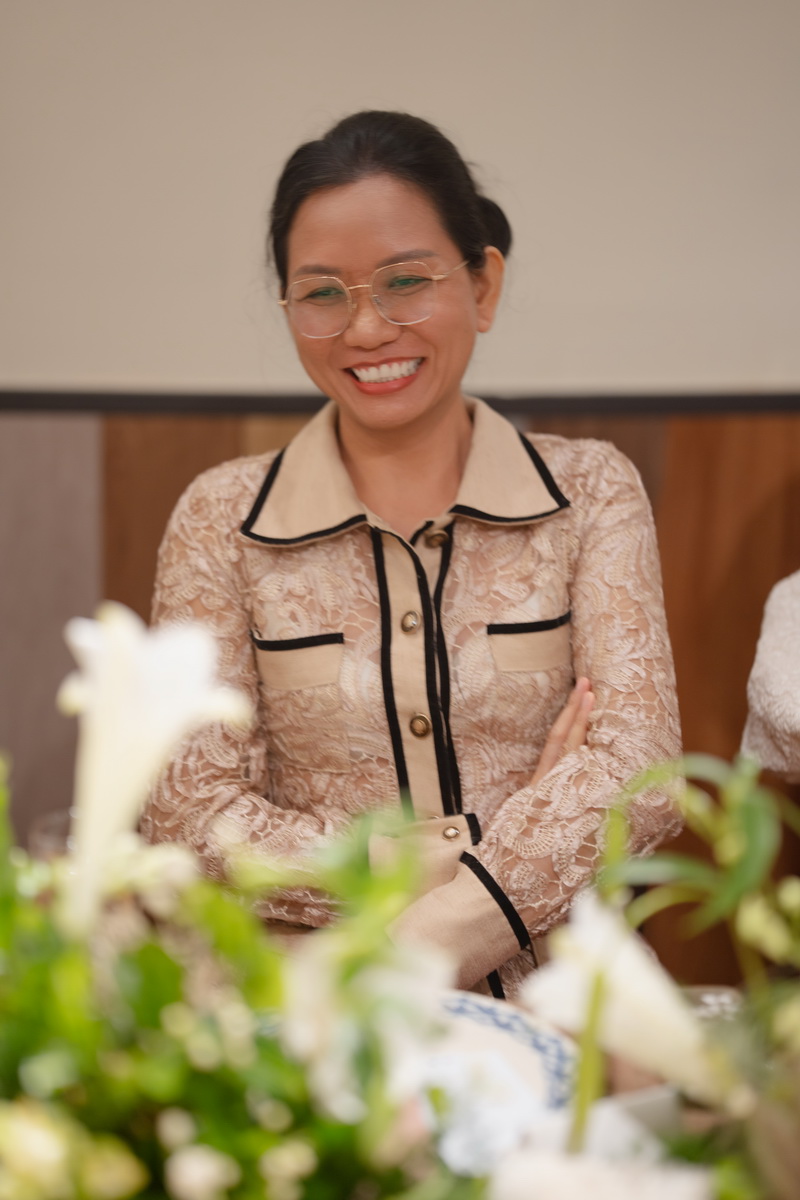
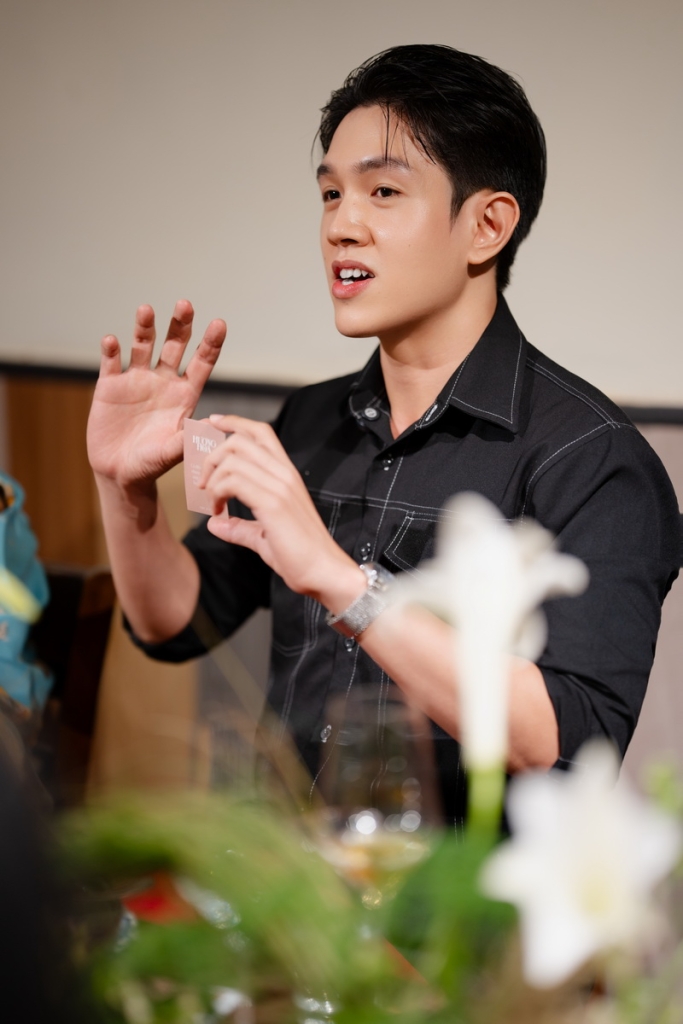
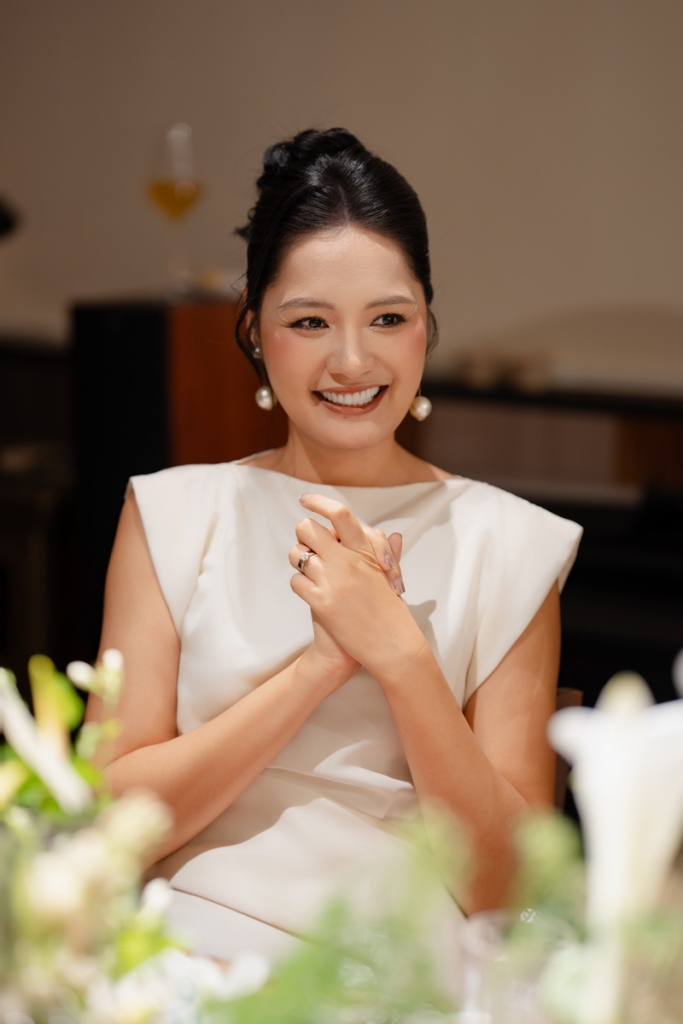
Journalist Hoàng Linh Lan reflected afterwards that although everyone had brought a different object, it was the individuality of each person’s story that made the evening extraordinary. MC Long Hoàng shared that he had grown up surrounded by very different scents, only to discover that evening that fragrance itself could become a form of emotional healing. Miss Hương Giang admitted that she had accepted the invitation simply out of curiosity, yet left feeling as though she had made several new friends. They came from different professions, backgrounds and life experiences, yet they all arrived at the same quiet realisation: somewhere around that table, each had rediscovered a part of their own past.
Throughout the evening, the melody of Scarborough Fair drifted gently through the room. Its timeless refrain recalls four familiar herbs — parsley, sage, rosemary and thyme. Herbs that have lived within music for centuries found themselves present once again that night: on the dining table, among the flowers, within the fragrances, and woven into the stories people chose to tell. Everything came together so effortlessly that the boundaries between art, food and memory quietly dissolved.
Today, there is no shortage of events distinguished by grand productions, cutting-edge technology and spectacular visual effects. Yet the greater the choice, the more people seem to long for experiences that simply allow them to slow down.
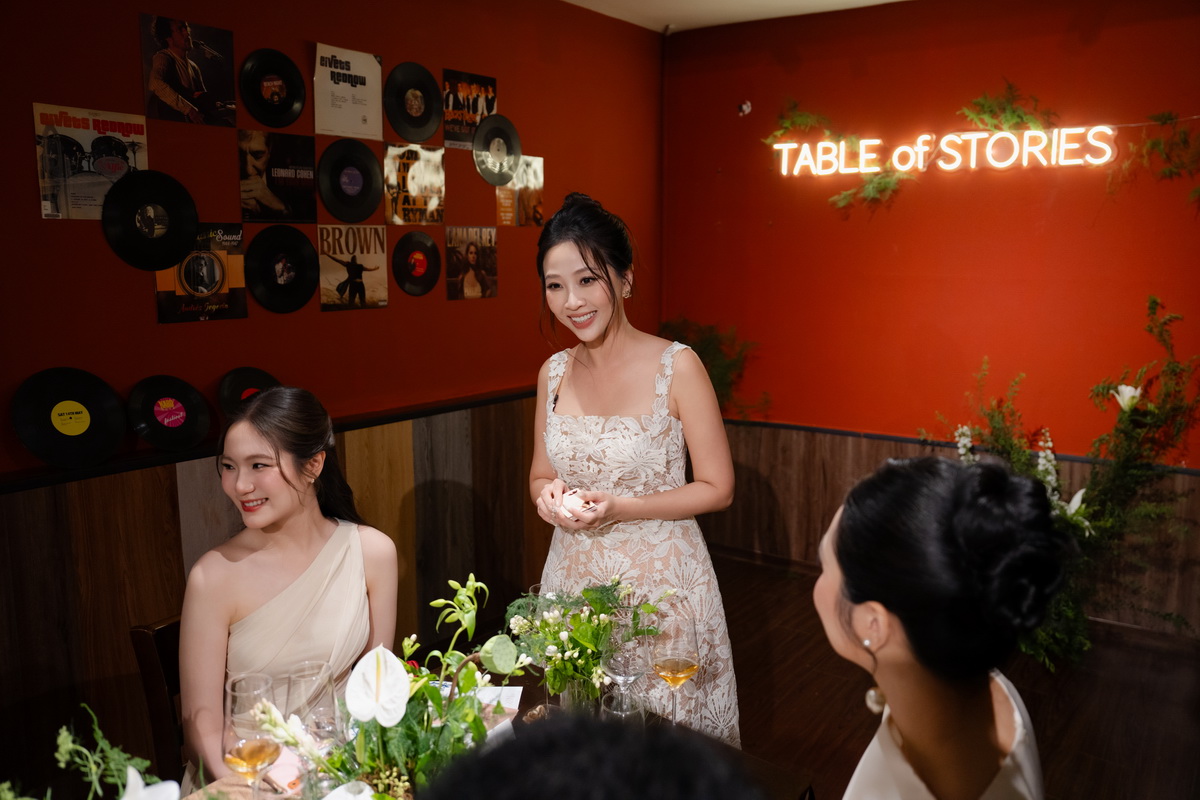
The three hours of Table of Stories #02 – Hương & Hoa were never intended to teach lessons or deliver a predetermined message. They simply created a space built on trust, where everyone felt free to be themselves. Within that space, an old dress became an entire childhood. A bowl of soup carried someone back to their mother’s kitchen. A single familiar fragrance awakened memory that had slept quietly for years.
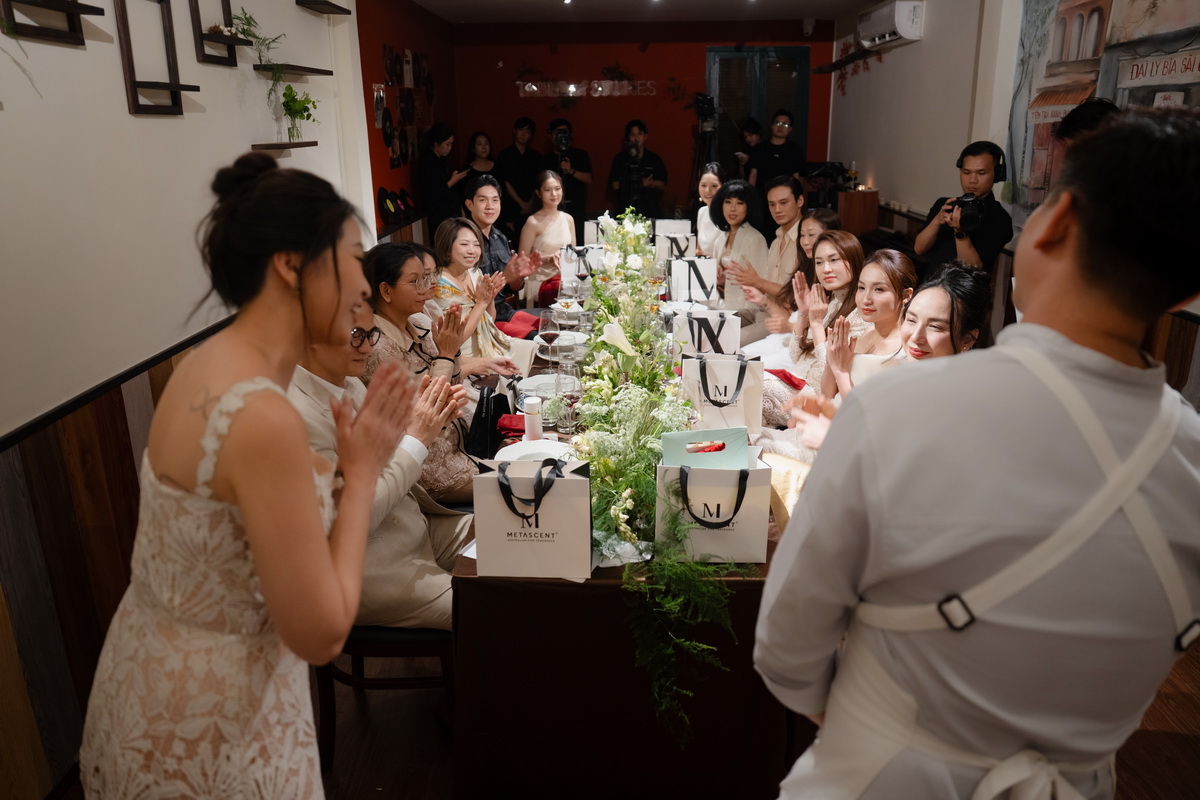
Perhaps one day, amidst the rush of everyday life, someone will catch the scent of freshly cut herbs, a white blossom, young ginger or pandan leaves rising from a kitchen. In that fleeting moment, they may remember more than an evening at Cơm Nhà Sin, Chef Huỳnh Hoàng Sin’s restaurant. They may remember that long table. They may remember the people who once sat opposite them. And perhaps they will remember something even more valuable: that in an increasingly noisy world, being truly listened to is one of the greatest gifts we can offer another human being.

Read more: