
 Hien Dang
Curved temple eaves, bridges, kites, Đồng Tháp lotuses and the riverine life of southern Việt Nam all find their way into NORDIC’s MIỀN Collection 2026, yet they are rarely transferred literally into the products. Across its first eight designs, NORDIC explores how familiar references from Bắc – Trung – Nam (Northern – Central – Southern Việt Nam) can be translated into form, structure and the experience of use. In some pieces, the source of inspiration remains recognisable through shape or construction; in others, the connection to a particular region becomes clearer only through the accompanying narrative.
Text: NGUYỄN CÔNG MINH
Original Vietnamese version available here: Đọc bài viết tiếng Việt
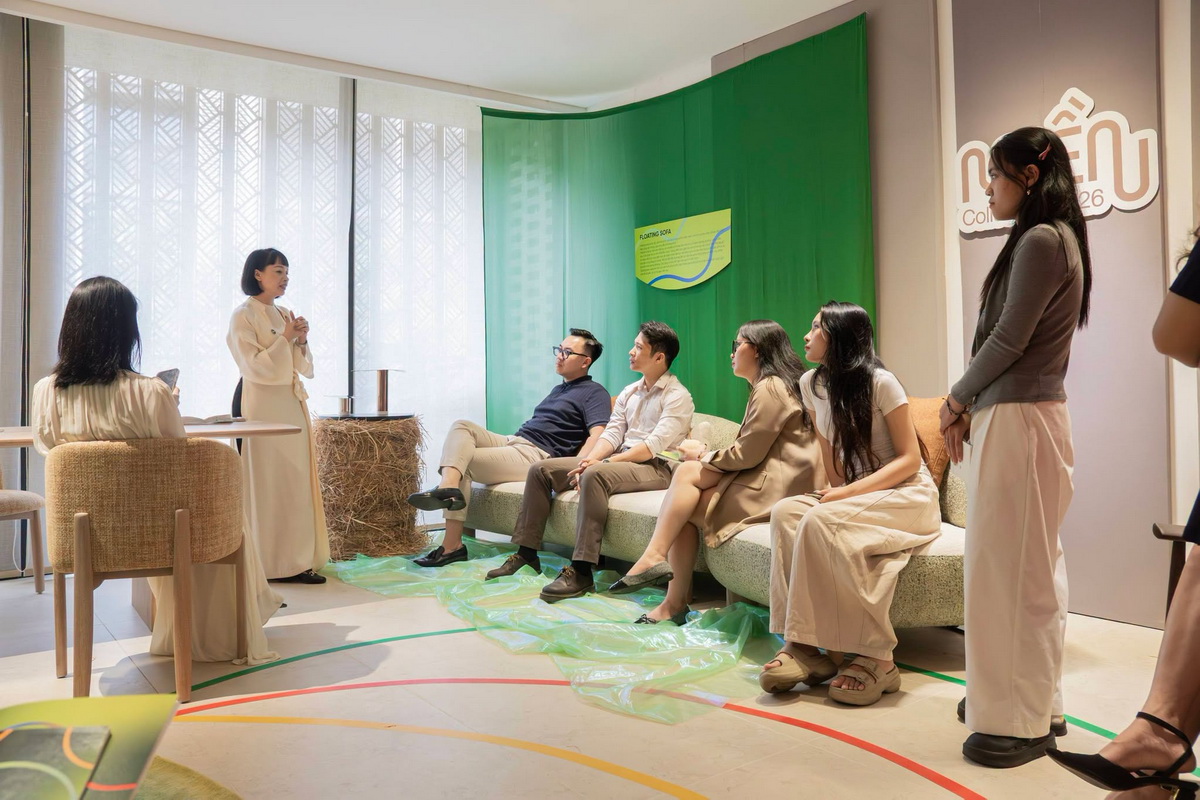
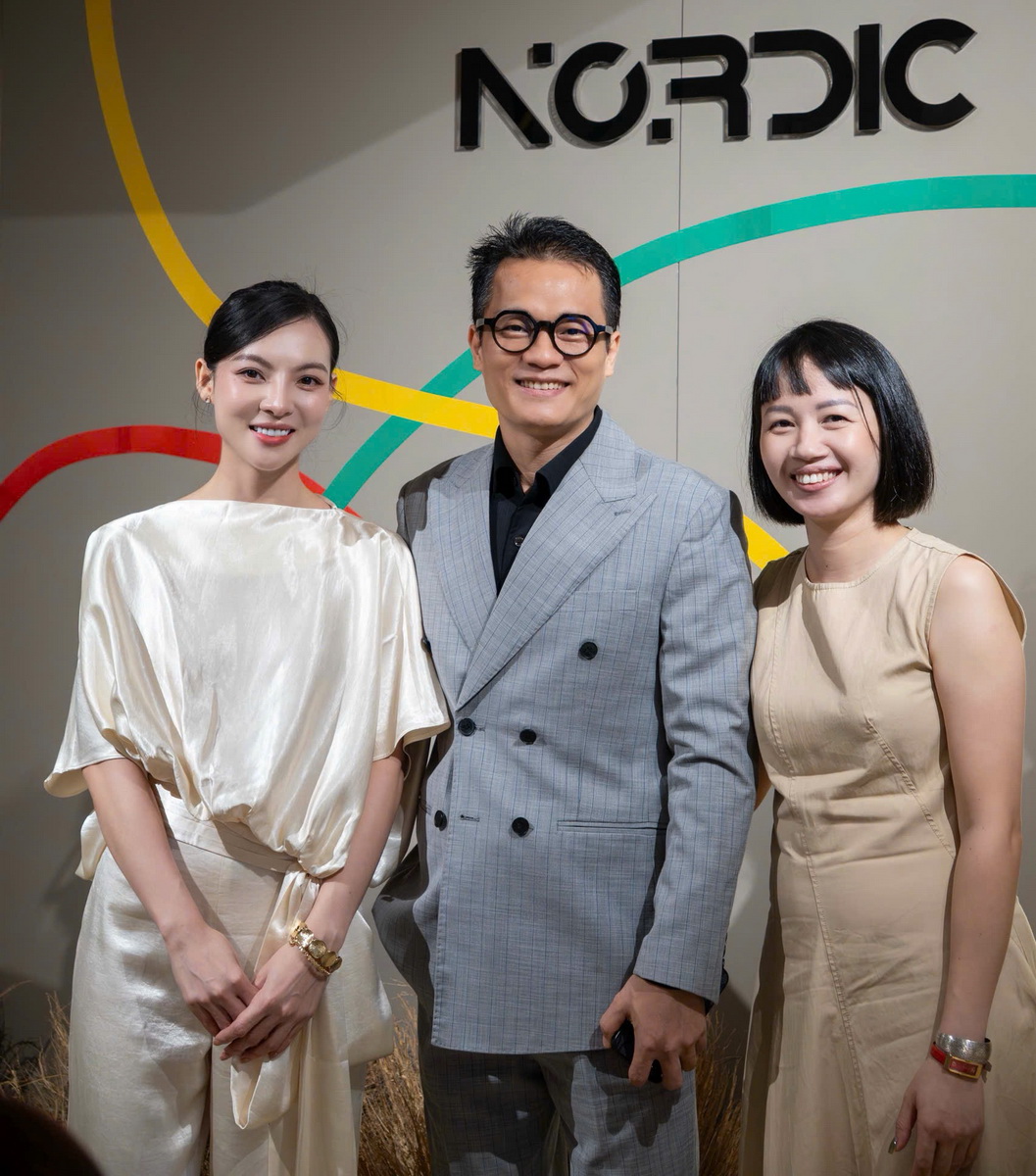
On the evening of 15 August, the first floor of NORDIC’s showroom at 61 N2 Street, The Global City, Ho Chi Minh City, was transformed for a private viewing of the MIỀN Collection. Colour, material and lighting divided the space into distinct areas, taking the designs beyond a conventional furniture display and placing them within a story of Bắc – Trung – Nam.
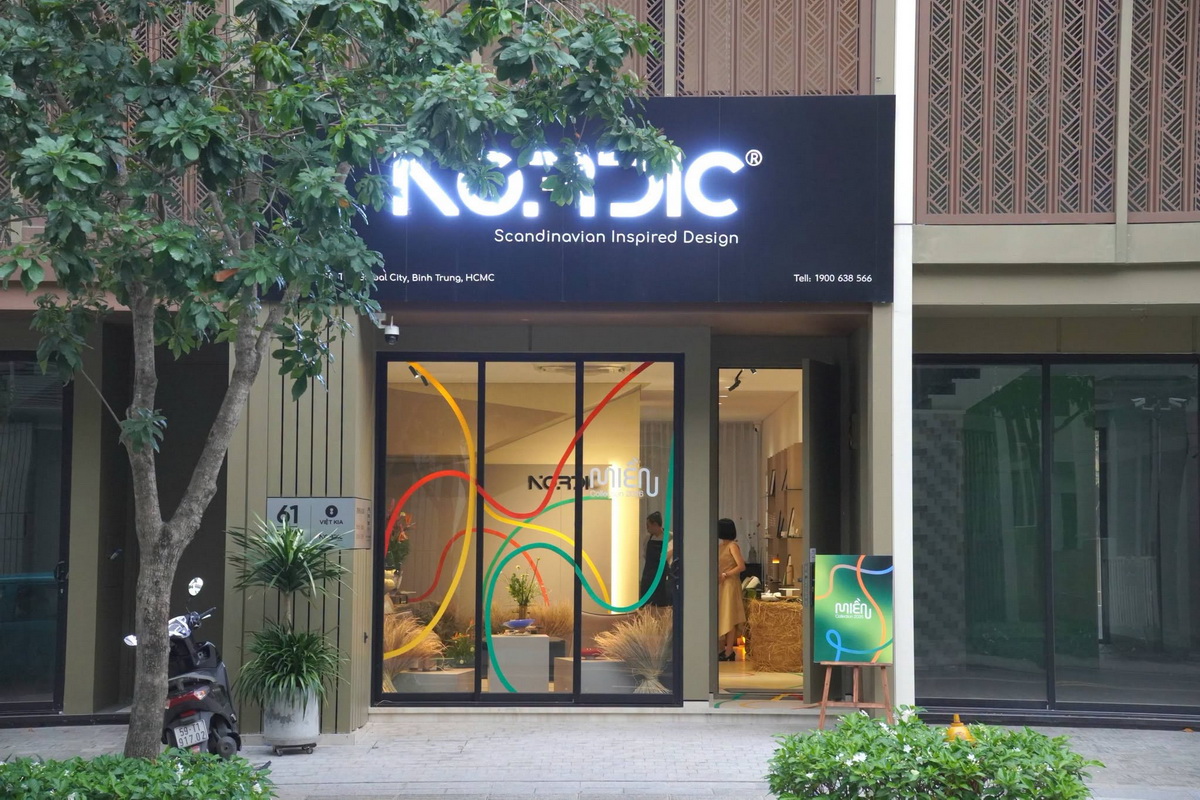
It was the second of two private viewings held in HCMC on 14 and 15 August, following the collection’s presentation in Hà Nội on 8 August. The staging allowed visitors to grasp quickly the inspiration behind each piece. But when it comes to furniture, how are images of place, architecture and ways of living actually translated into design?
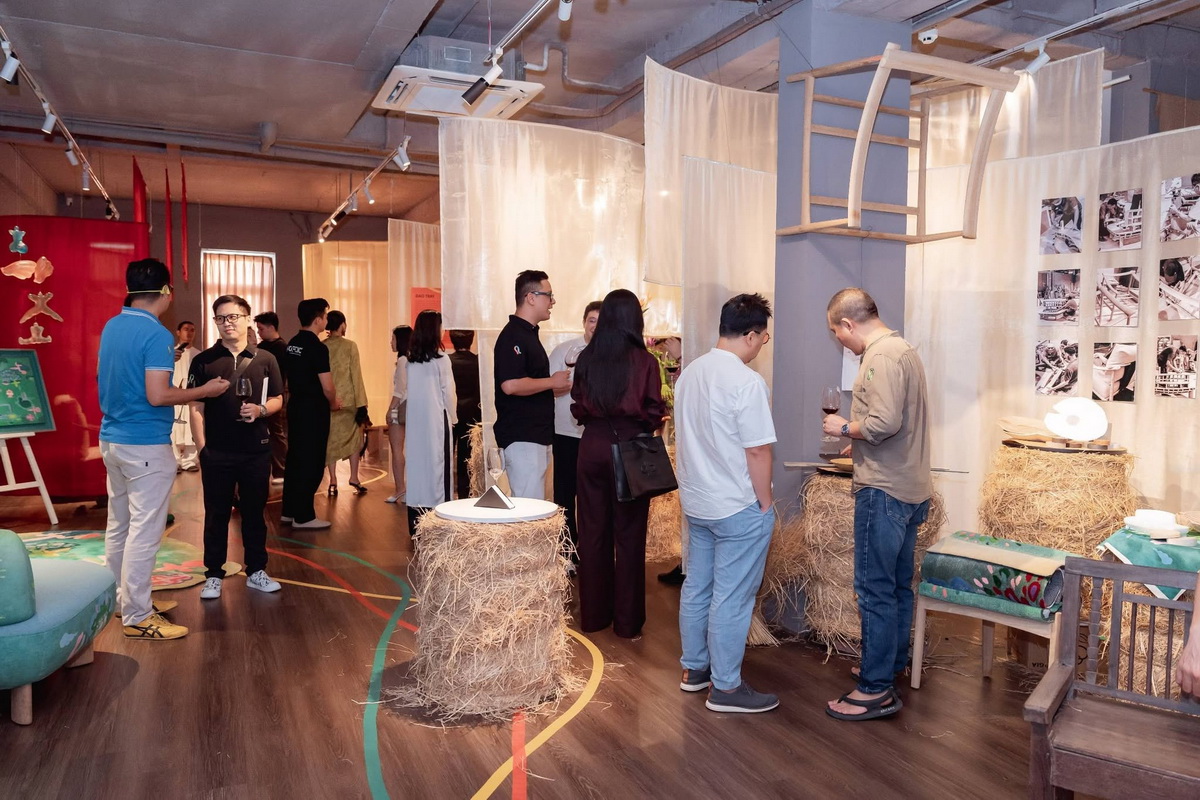
NORDIC does not turn Bắc – Trung – Nam into miniature tableaux, nor does it cover its products with an array of instantly recognisable cultural motifs. Places and familiar images serve primarily as points of departure. In the design process, some details are retained, others simplified, while certain ideas survive only as traces in proportion, construction or use. What makes MIỀN worth examining, then, is how these familiar images change once they become furniture.
When Hà Nội is distilled into a way of sitting
Hà Nội Armchair begins with ideas associated with the spirit of Thăng Long – Hà Nội – Thăng Long being the historic name of the capital – alongside the cultural depth of Kinh kỳ (the traditional term for the imperial capital and its cultivated urban culture), a sense of order and layering, and an elegant way of life. These are all notions that can easily become flattering abstractions unless they find a tangible expression in the object itself.
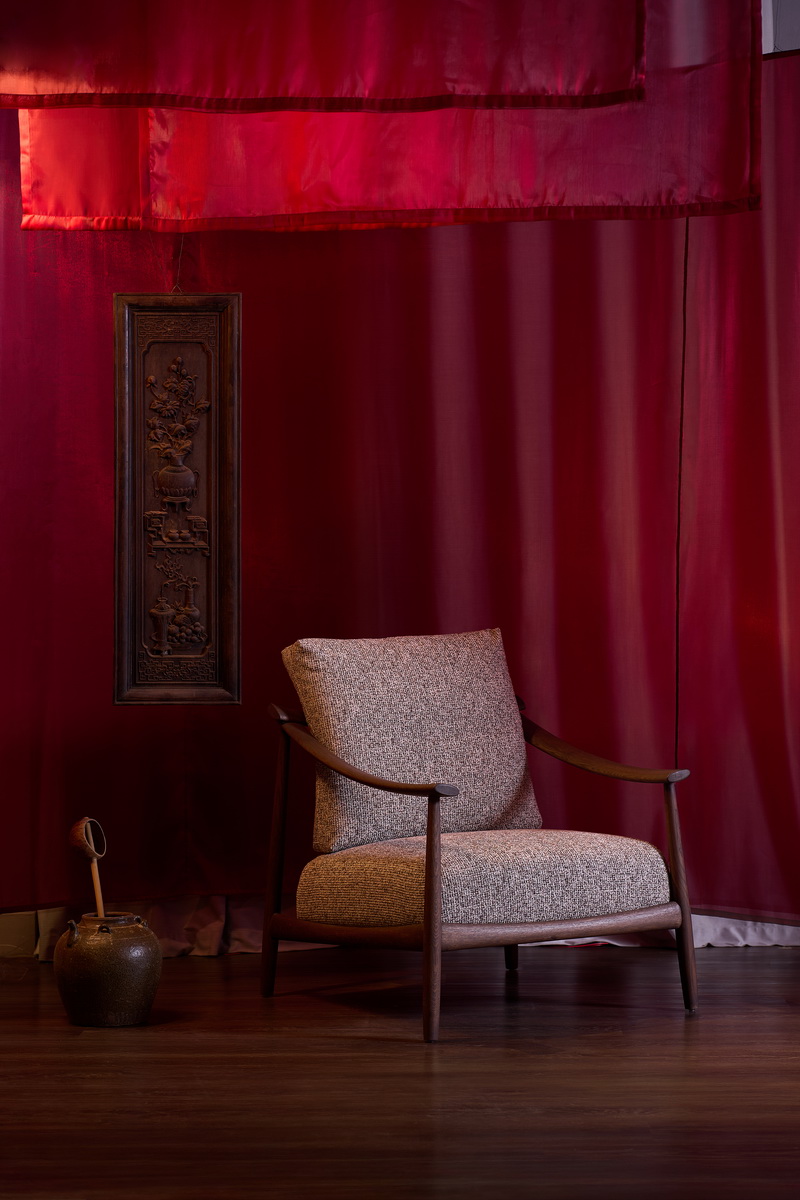
The chair carries no pattern or symbol that immediately evokes Hà Nội. Its dark wooden frame, grey upholstery, clean lines and measured proportions give the design a restrained character. The backrest reclines only slightly, the seat is not overly deep, and the long, straight armrests encourage a relatively upright posture. The sense of moderation NORDIC seeks to convey therefore finds its way, to some extent, into the experience of using the chair rather than remaining solely in its name.
Without knowing the name Hà Nội Armchair, few people would probably associate the chair with Hà Nội on sight. Yet furniture does not necessarily need to function as a geographical signifier. What matters is how the source of inspiration has shaped the designer’s decisions: why the chair has these proportions, this posture, this depth and this construction. In Hà Nội Armchair, the story of Hà Nội emerges not through symbols, but through the proportions, structure and sitting posture created by the chair itself.
Miền Trung is more than a name
While Hà Nội Armchair begins with the spirit of a city, the designs inspired by miền Trung (Central Việt Nam) start with more tangible images: bridges, pavilion architecture and kites. In Cầu Dining Table (“Cầu” meaning “bridge”), Lầu Dining Chair (“Lầu” referring here to pavilion architecture) and Diều Lamp (“Diều” meaning “kite”), these three references are simplified to varying degrees before being translated into form, construction and function.
Cầu Dining Table takes the bridges of miền Trung as its starting point without reproducing any particular structure. The reference can be traced in the rhythm of the table legs and the organisation of its construction, while the long tabletop is softened at the corners. Once the name “Cầu” is known, viewers can work their way back to the original idea; without the name, however, the piece still retains the proportions, construction and functionality of a complete dining table.
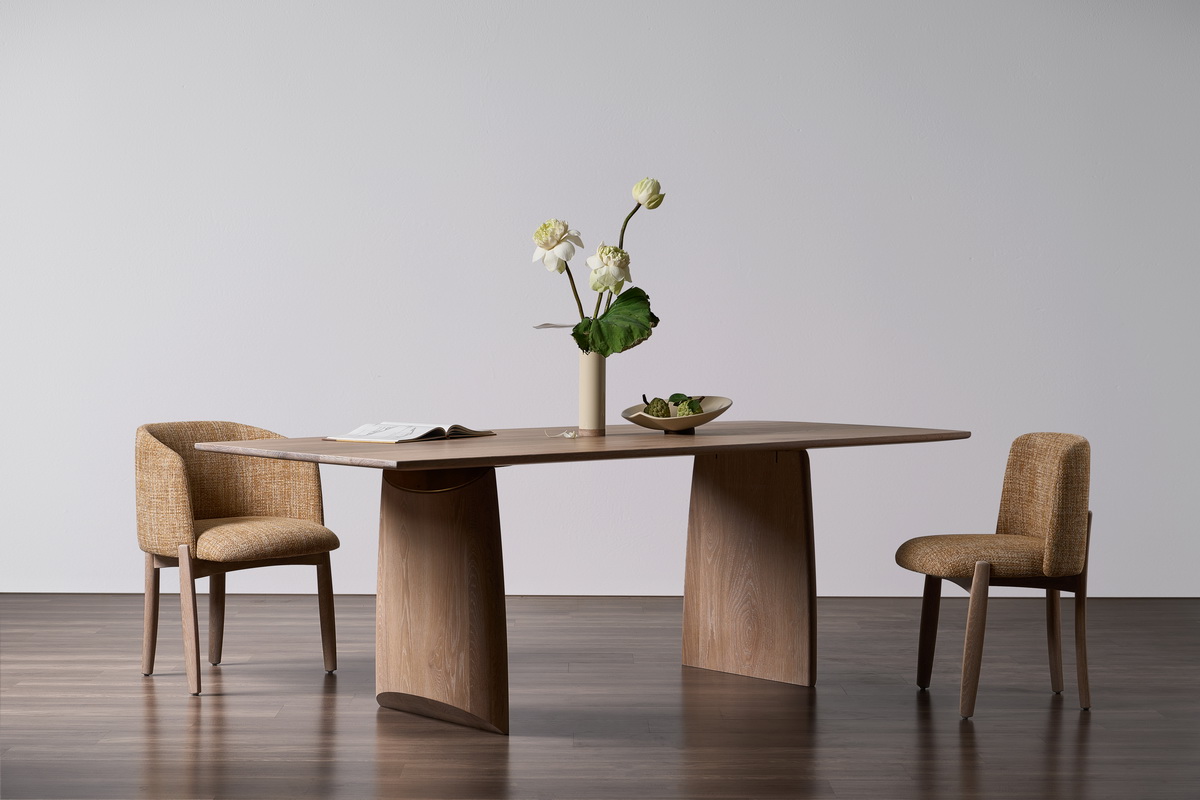
Lầu Dining Chair draws from pavilion architecture in Hội An and Huế, particularly its open spaces that admit breeze and light while maintaining a connection with the surrounding landscape. Translated into a chair, this idea appears in a slender wooden frame, a gently embracing curved back and an airy construction.
Compared with Cầu Dining Table, where the rhythm of a bridge can still be traced through the structure, the connection between Lầu Dining Chair and pavilion architecture is more discreet. Without knowing the original story, viewers may find it difficult to make the connection themselves. Even so, the openness and airiness of the architecture have found an expression in the chair’s construction. The link may not be immediately apparent, but neither does it depend entirely on the name.
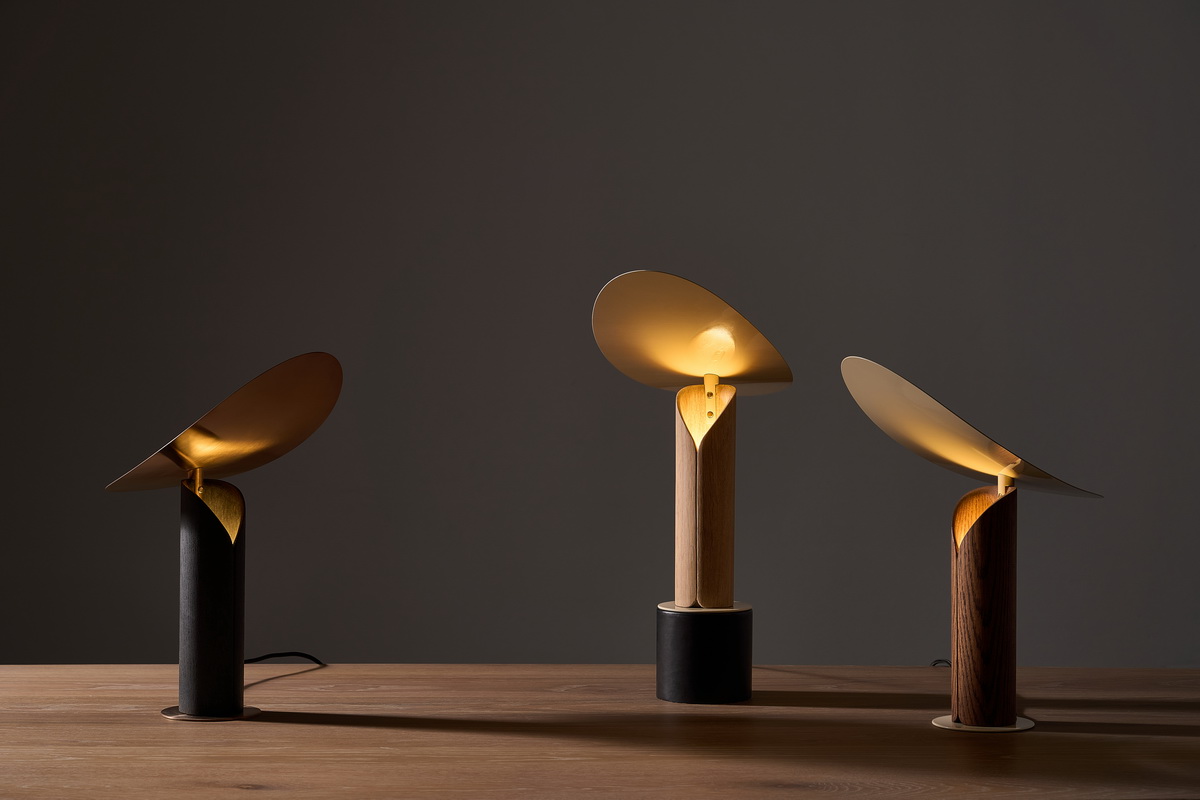
With Diều Lamp, the distance between source and finished object is greater. The kite is reduced to a slender, lightweight lamp head extending outwards from an upright stem. The reference is therefore less direct, but in return the lamp acquires a form of its own rather than becoming a literal imitation of a kite. This is also a noteworthy choice in the designer’s telling of miền Trung, particularly because the kite is not an image exclusive to the region.
Floating Sofa and a story of miền Nam without the boat
If Hà Nội Armchair encourages a relatively upright posture, Floating Sofa takes almost the opposite approach. Low and horizontally expansive, with softly rounded corners, a broad seat and separate backrest modules, the sofa establishes its strongest connection with miền Nam (Southern Việt Nam) through the way it is used rather than through any specific symbol.
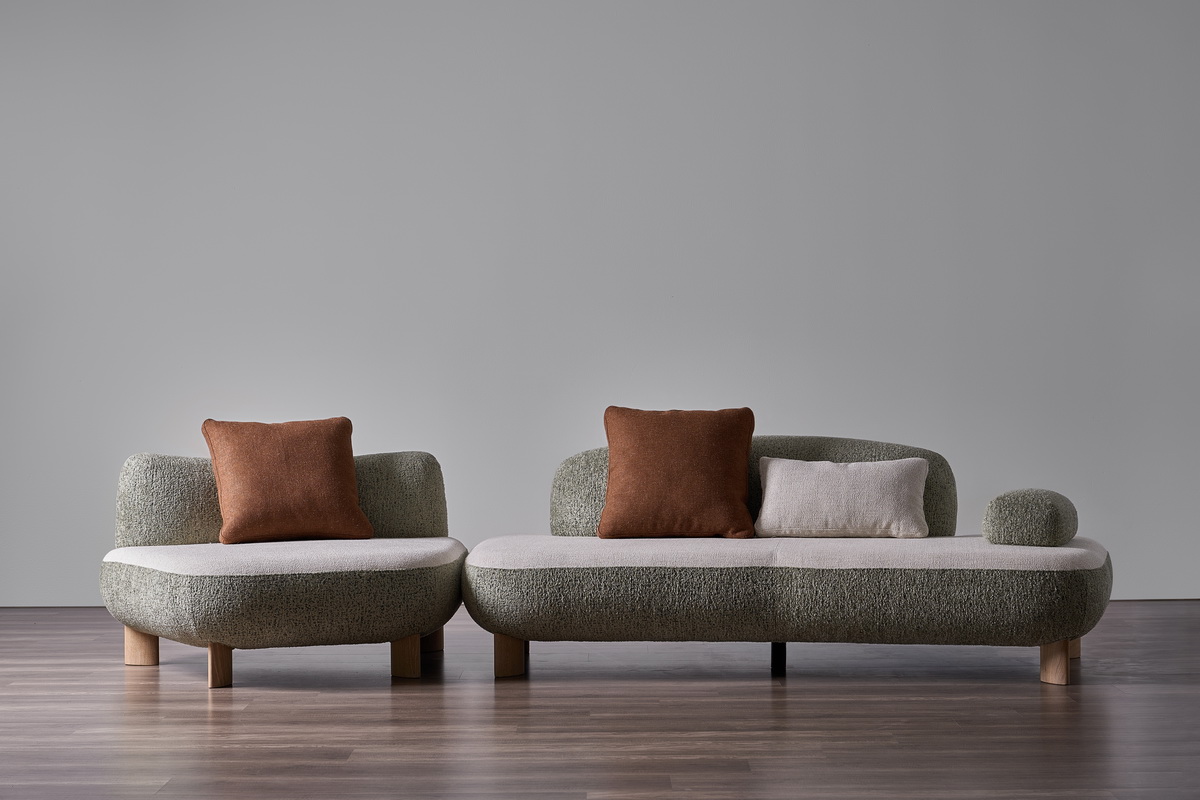
NORDIC does not make the sofa resemble a ghe (a traditional small boat commonly associated with river life in southern Việt Nam), nor does it place floating markets or river scenes across the fabric. Instead, the ideas of “floating”, openness and ease are translated into its low profile, generous seating surface and movable backrest modules, which allow users to shift between different positions.
Placed alongside Hà Nội Armchair, Floating Sofa reveals an interesting contrast between two ways of sitting. One keeps the body relatively upright; the other encourages relaxation and movement. The distinction is created through function and proportion rather than through patterns or symbols applied to the object.
That contrast also reveals the limitations of describing Bắc – Trung – Nam through a handful of adjectives. Words such as “elegant”, “resilient”, “open” or “generous” have been used so often that they struggle to encompass the differences within each region. MIỀN becomes more convincing when those associations lead to a specific design decision: how a chair asks the body to sit, how a sofa allows it to move, or how a table organises its structure and rhythm.
Miền Mộng Mơ steps beyond the map
Compared with the restraint of many of the preceding designs, Miền Mộng Mơ (“A Realm of Dreams”) – a collaboration with artist Đỗ Hiệp – takes a different direction. Mộng Mơ Carpet uses fields of green, pink, purple and yellow across a large surface, while its accompanying chair carries the same visual language across its upholstery.
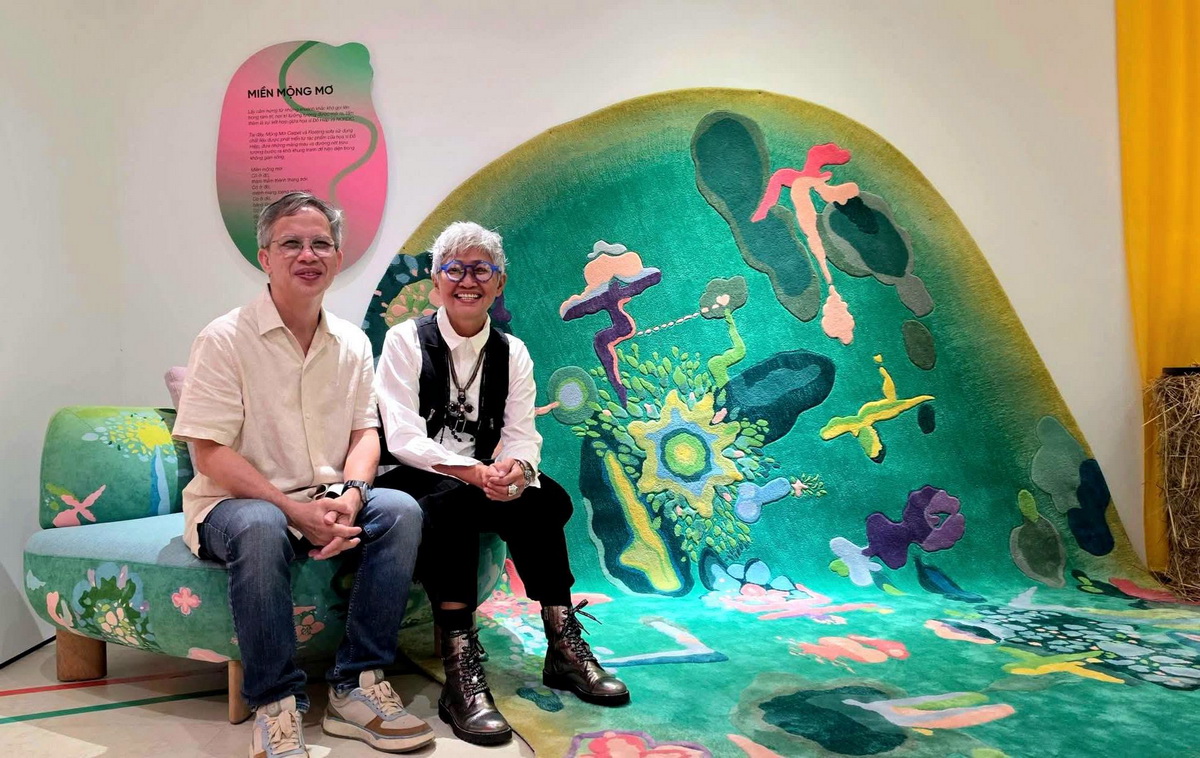
Colour and painting therefore become the first elements to command attention. Compared with Cầu Dining Table, Hà Nội Armchair or Floating Sofa, Miền Mộng Mơ is distinctly different in its visual language. The former largely seek to translate their sources of inspiration into form, structure and function; here, colour and pattern are brought directly to the surface. This makes Miền Mộng Mơ immediately recognisable, while also placing it somewhat apart from the overall rhythm of the collection.
In this collaboration, Đỗ Hiệp’s artistic imprint is expressed primarily through the carpet and the chair upholstery. Should NORDIC continue to develop collaborations with artists, the more interesting question will be how deeply painting might enter into material, craftsmanship or even the form of the object itself, rather than serving primarily to differentiate its surface.
MAY and the reworking of familiar imagery
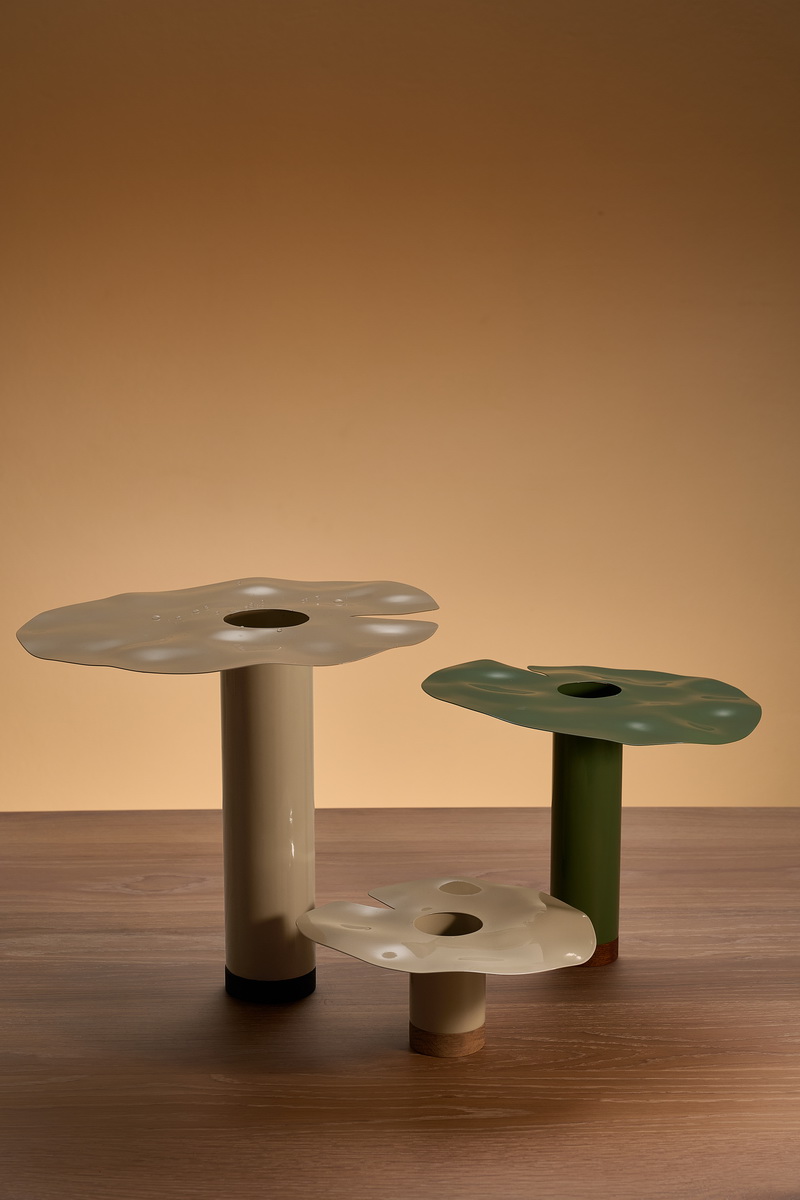
Among the smaller objects and accessories, Vietnamese references appear more directly. Đao Tray takes its starting point from the mái đao (the distinctive upward-curving roofline found in traditional Vietnamese architecture), reducing its architectural curve to a soft, compact contour along the tray’s edge. Hạ Liên Vase draws on the lotus of Đồng Tháp, a province in the Mekong Delta, without recreating the flower naturalistically.
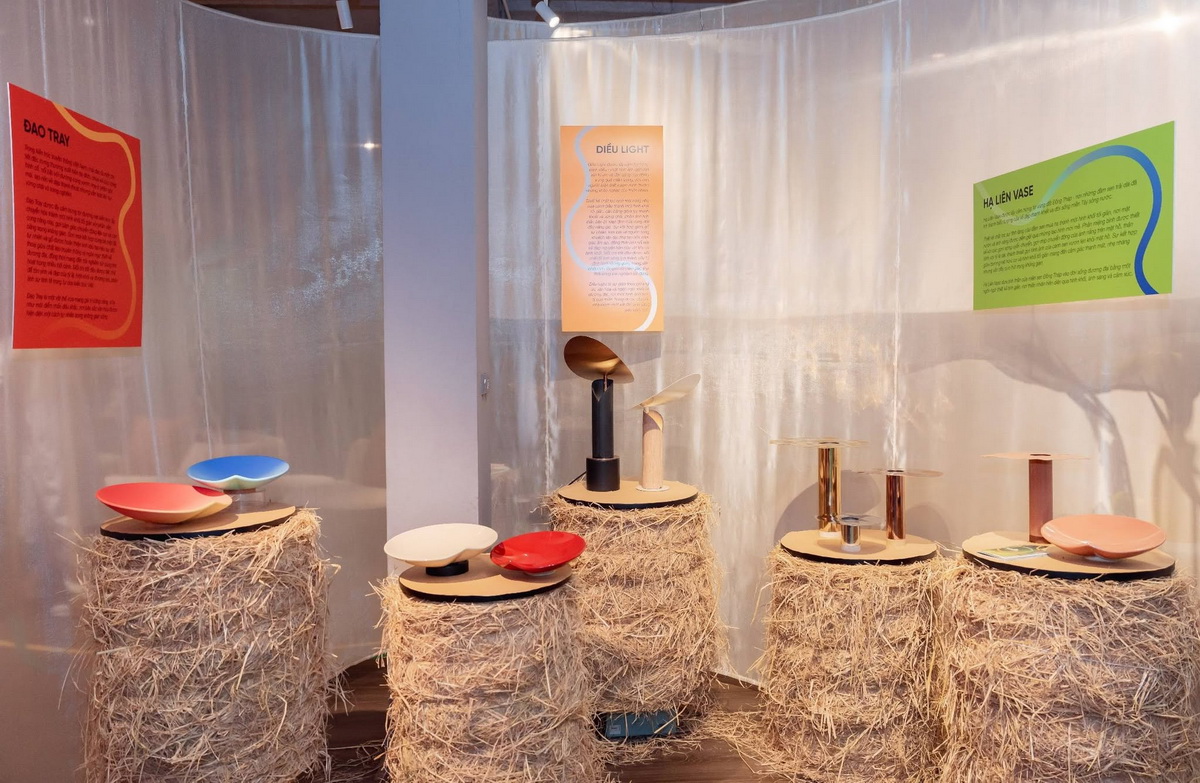
The mái đao and the lotus are both familiar images in narratives about Việt Nam. The challenge, therefore, is not whether viewers can recognise them, but how the designer can move beyond their original imagery to create objects capable of having lives of their own.
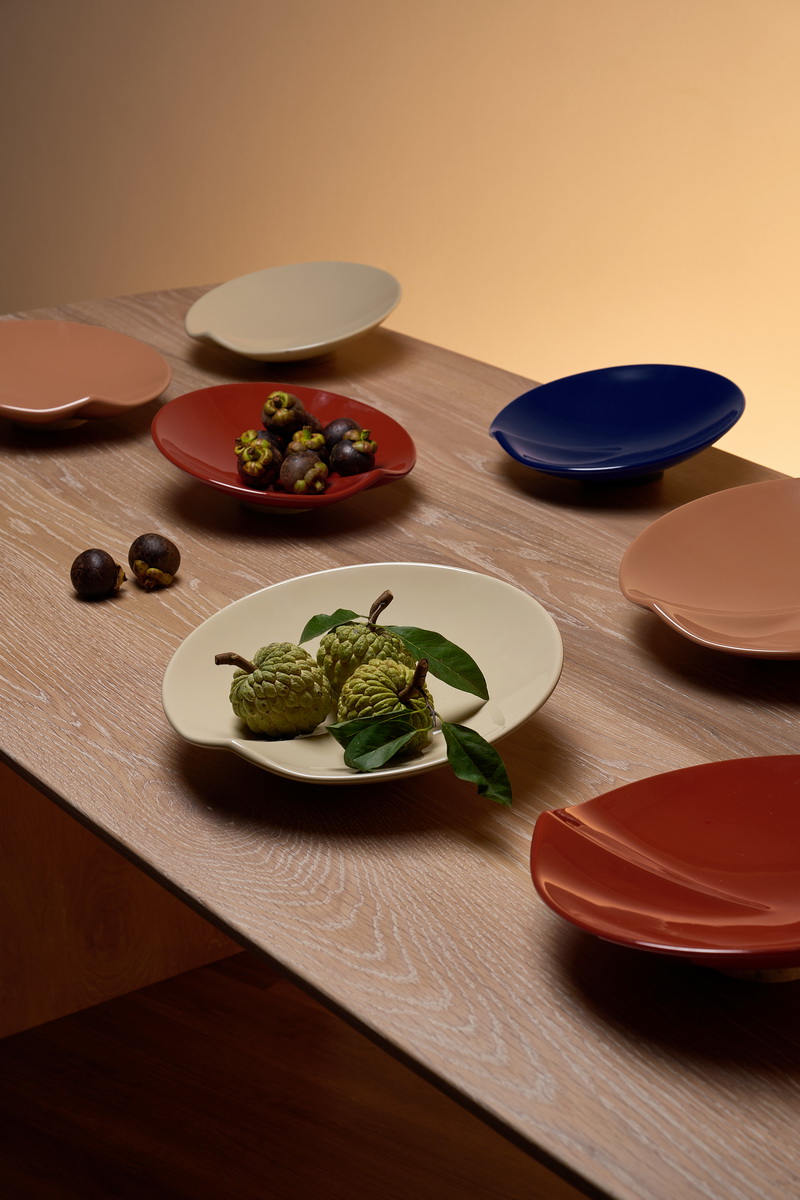
In Đao Tray, the architectural curve is reduced to a detail subtle enough to prevent the tray from becoming a miniature version of a traditional Vietnamese roof. Hạ Liên Vase, similarly, does not need to take the complete form of a lotus to evoke Đồng Tháp. With smaller objects, knowing when to stop before inspiration becomes imitation is especially important: add only a few more details, and the boundary between design and souvenir can quickly become very narrow.
From Scandinavian Inspired Design to a story closer to home
MIỀN suggests that NORDIC is seeking new material for a design language long influenced by Scandinavian principles. Natural wood, clean forms, clear functionality and restraint remain present, but the points of departure have moved closer to home: Hà Nội, Hội An, Huế and Đồng Tháp; bridges, mái đao, kites and riverine life.
This is also the difficulty inherent in a collection such as MIỀN. If cultural symbols are retained too literally, the products risk becoming illustrations of culture. Strip too much away, however, and the local story may survive only in a name and its accompanying description.
The eight designs presented so far show NORDIC exploring several ways of negotiating that tension. Cầu Dining Table and Floating Sofa establish a relatively clear connection between their starting points, construction and use. Hà Nội Armchair translates a comparatively abstract idea of a way of life into sitting posture. Lầu Dining Chair and Diều Lamp are more discreet, making their original narratives difficult to discern without an introduction. Miền Mộng Mơ, meanwhile, takes another route by bringing colour and painting to the foreground.
Ultimately, however, MIỀN is still furniture. Hà Nội Armchair will sit in a living room without the story of Thăng Long beside it; Floating Sofa may occupy an apartment where no one thinks of river life; Cầu Dining Table will witness far more meals than conversations about the bridges of miền Trung. At that point, proportion, materials, durability, comfort and the ability to sit naturally within a space will determine whether these objects continue to be used.
Perhaps MIỀN’s final test comes when a design no longer needs to tell us which region it comes from. When inspiration has been translated deeply enough, the story of a place no longer resides in a name or an explanatory panel, but in the way the object itself is made – and the way it is lived with.

Read more: