
 Hien Dang
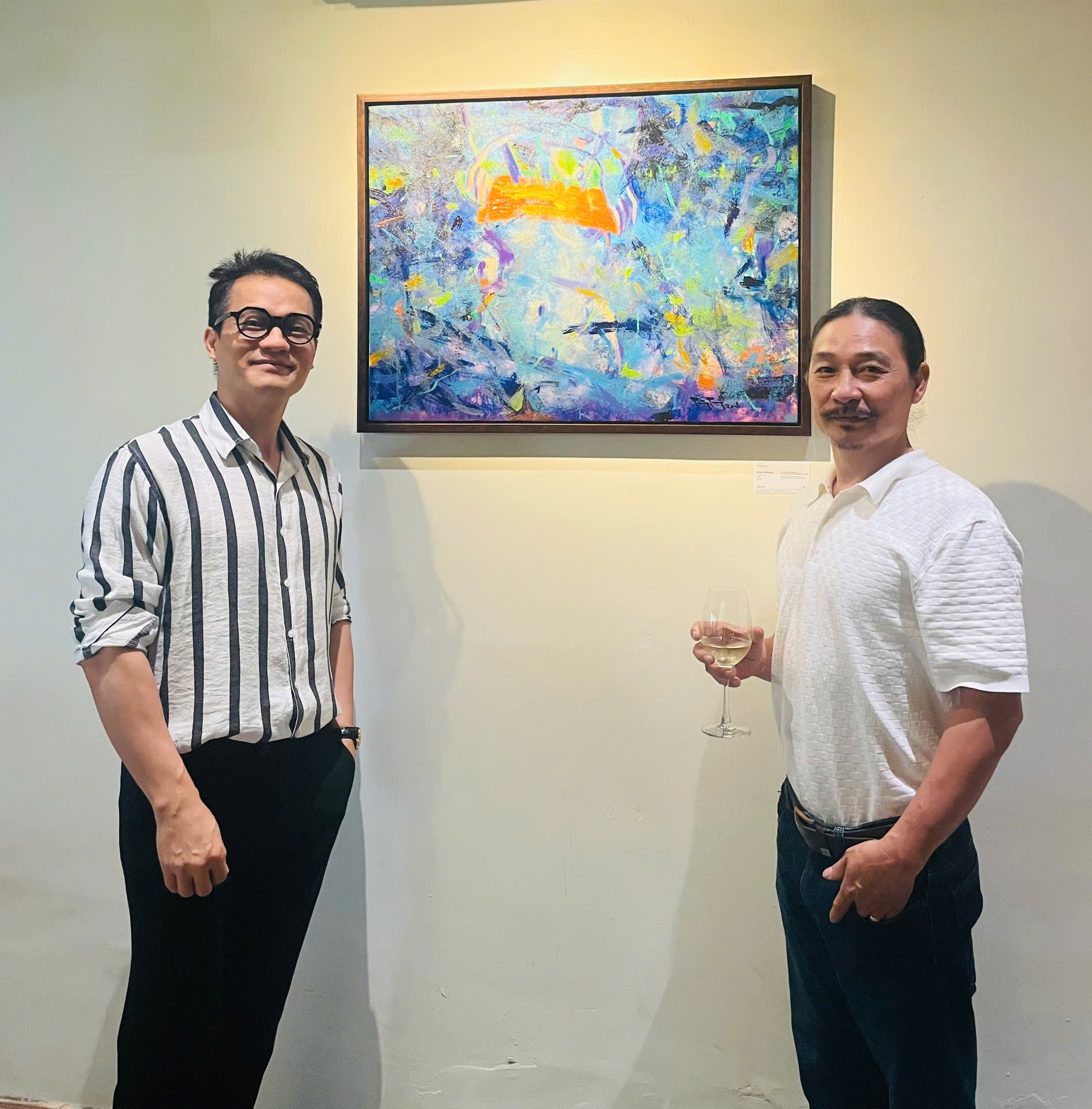
Seventeen works by three Hanoi artists – Trương Vũ Trung, Nguyễn Trọng Hà and Phạm Quang Việt – come together at STATES OF FORM – HÌNH THÁI. From different generations, backgrounds and artistic practices, each brings a distinct visual language to the exhibition.
Original Vietnamese version available here: Đọc bài viết tiếng Việt
Text: MINH NGUYỄN
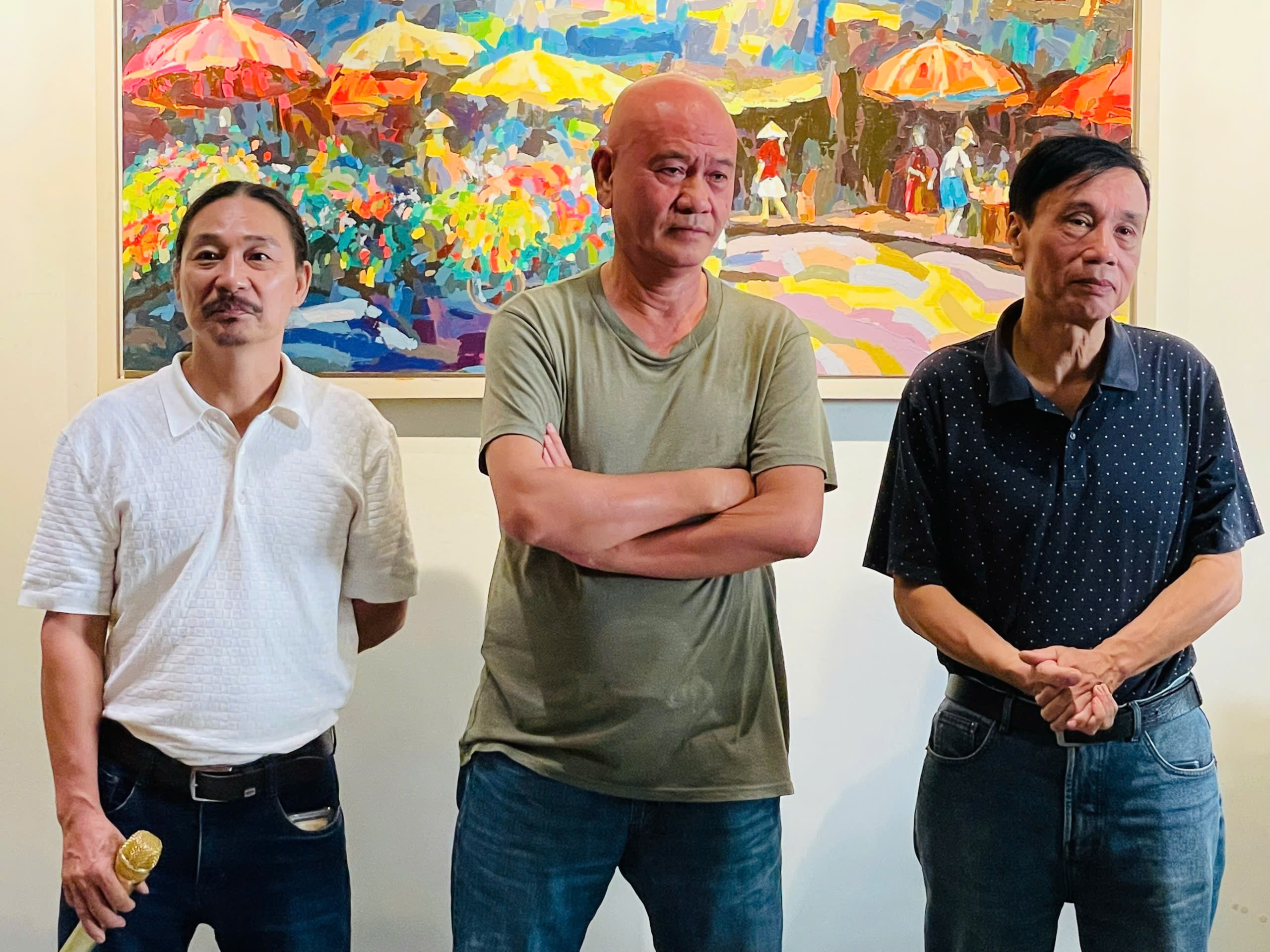
On the afternoon of 12 August, STATES OF FORM – HÌNH THÁI opened at Ambrosia Venue & Dining, bringing together works by Nguyễn Trọng Hà, Phạm Quang Việt and Trương Vũ Trung. Phạm Quang Việt moved from lacquer painting into graphic design; Nguyễn Trọng Hà has spent decades exploring the streets and everyday life of Hanoi; while Trương Vũ Trung has worked across oil, lacquer, silk, woodcut, gouache and charcoal. Placed alongside one another, their three different journeys make it clear that the exhibition is not seeking stylistic uniformity.
Seventeen works across four movements
Rather than dividing the space by artist, the seventeen works are arranged across four movements: Khi đời sống cất nhịp (When Life Finds Its Rhythm) – Tìm về điều thân thuộc (Returning to the Familiar) – Đối diện với chính mình (Facing Ourselves) – Đặt xuống để bắt đầu (Letting Go to Begin Again). This approach places works by all three artists in continual dialogue, rather than separating them into three distinct sections.
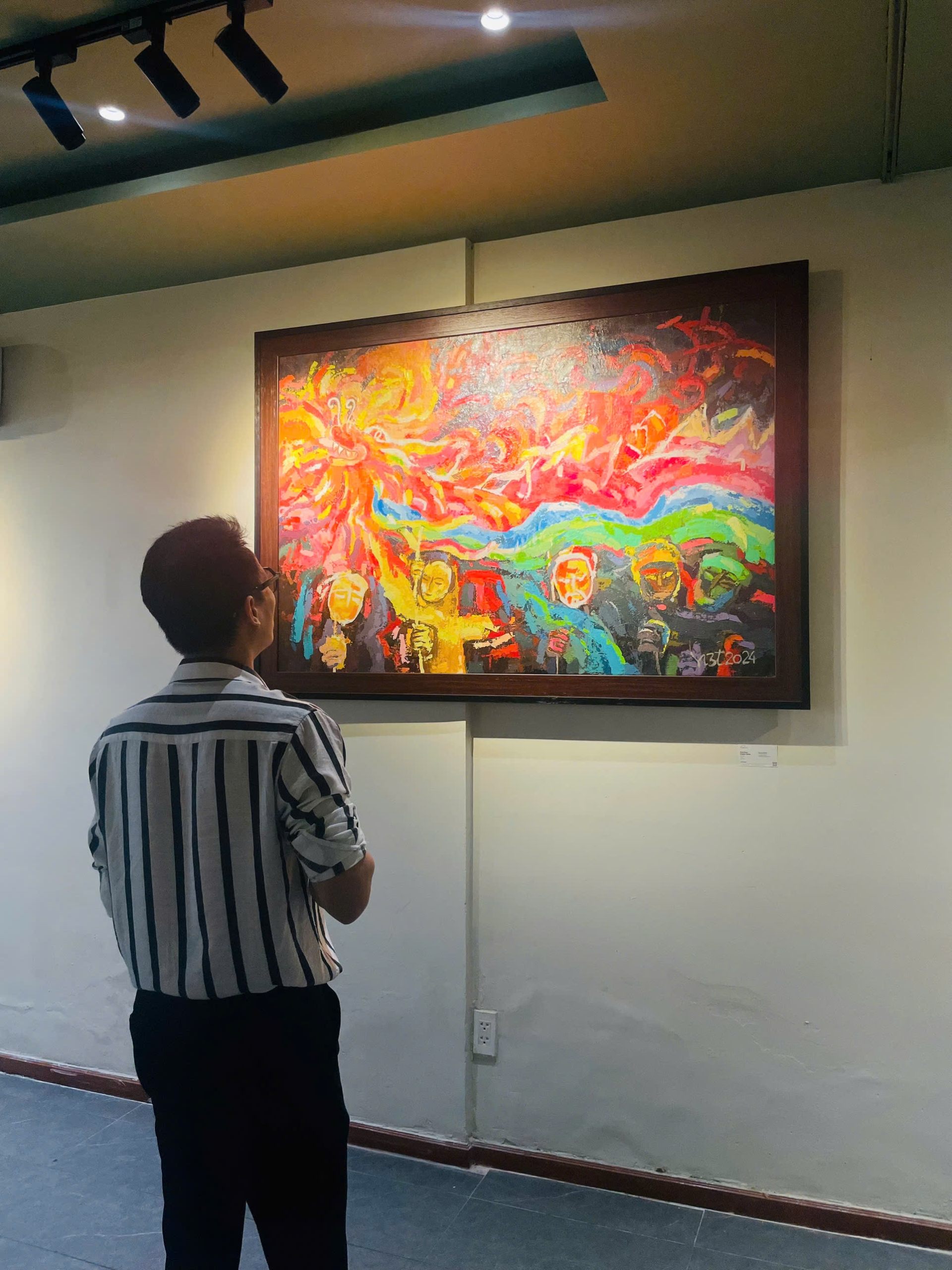
Phạm Quang Việt’s Múa rồng (Dragon Dance) opens with bold colour and a rush of movement. Further into the exhibition, the pace slows through streets, alleyways and water, before moving towards more distilled works such as Trương Vũ Trung’s Cấu trúc của im lặng (Structure of Silence) and Gỡ bỏ (Letting Go). Although the works were created independently, their arrangement makes the differences in colour, rhythm and visual structure between the three artists readily apparent.
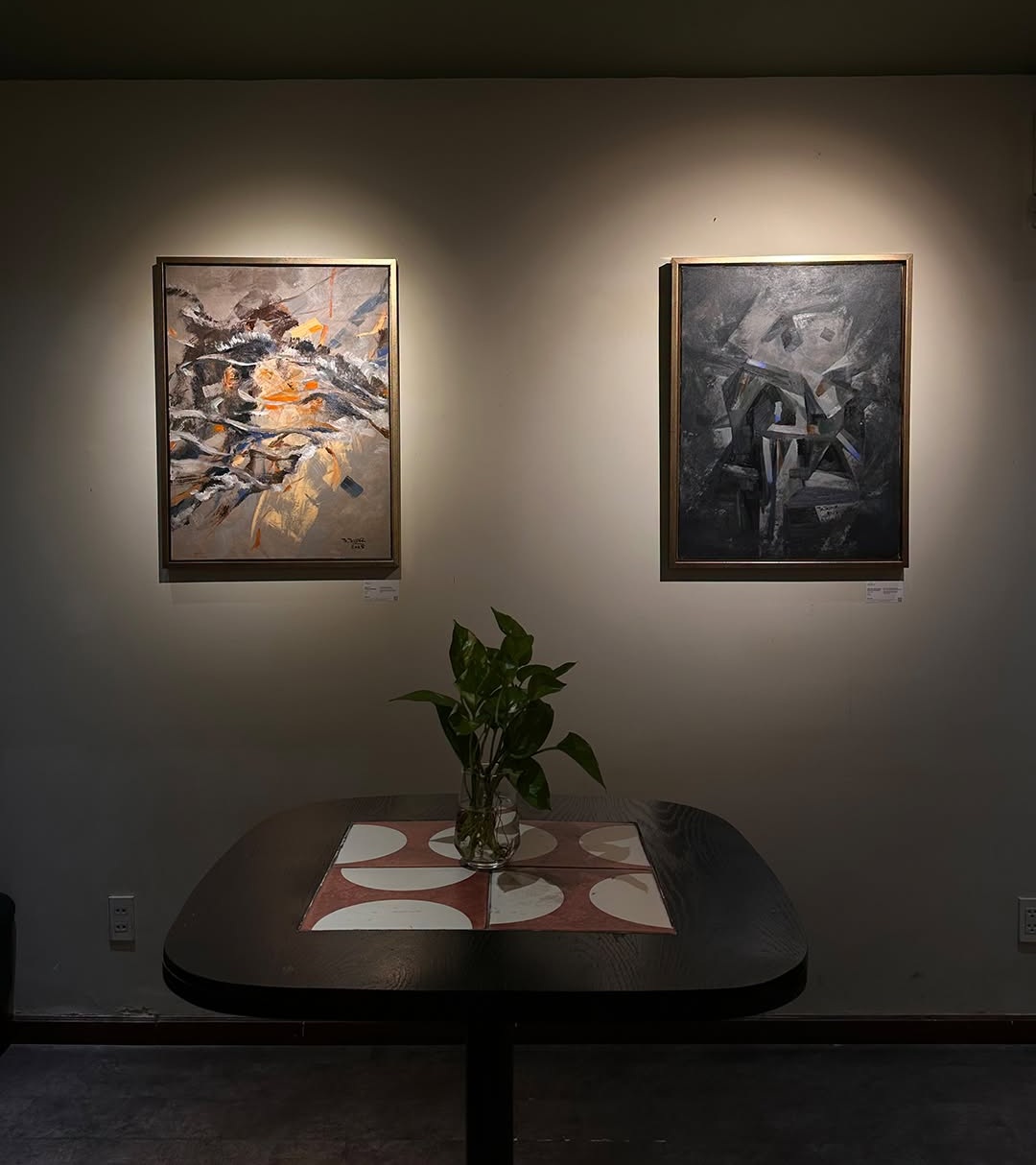
The exhibition guide does not require visitors to follow this sequence. Instead, they are encouraged to stop at whichever work first catches their attention, register their initial response and then find their own way into the art. The four movements therefore serve more as a guide than as a prescribed way of viewing the exhibition.
Three artists, three painterly rhythms
In Phạm Quang Việt’s paintings, colour and movement tend to make the first impression. Born in 1958, he graduated from the Lacquer Department at the University of Industrial Fine Art in 1990 and went on to spend many years working in 2D and 3D graphics and advertising. Something of that background can be seen in his paintings today: dense detail, layered colour and compositions full of movement without tipping into disorder.
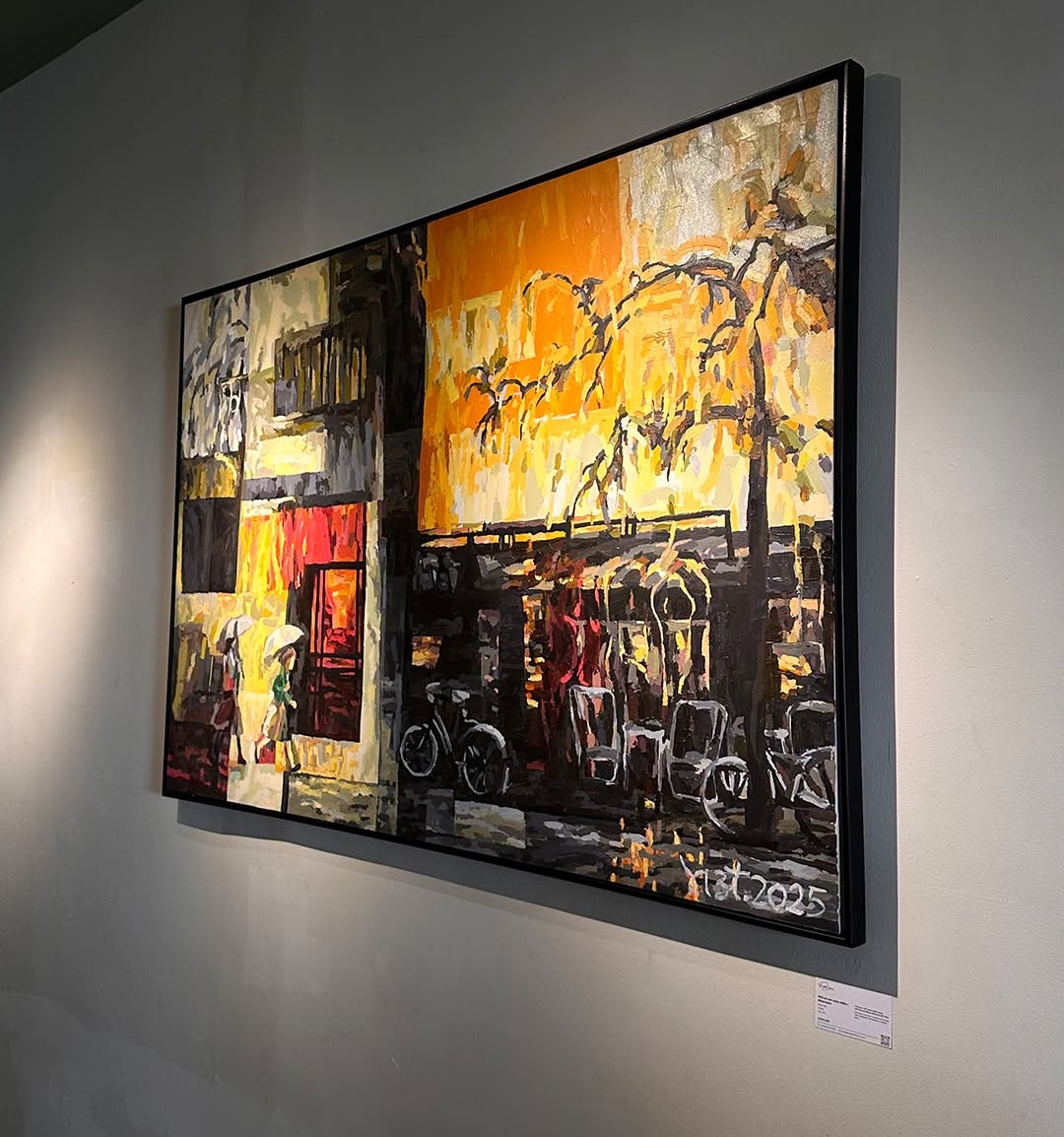
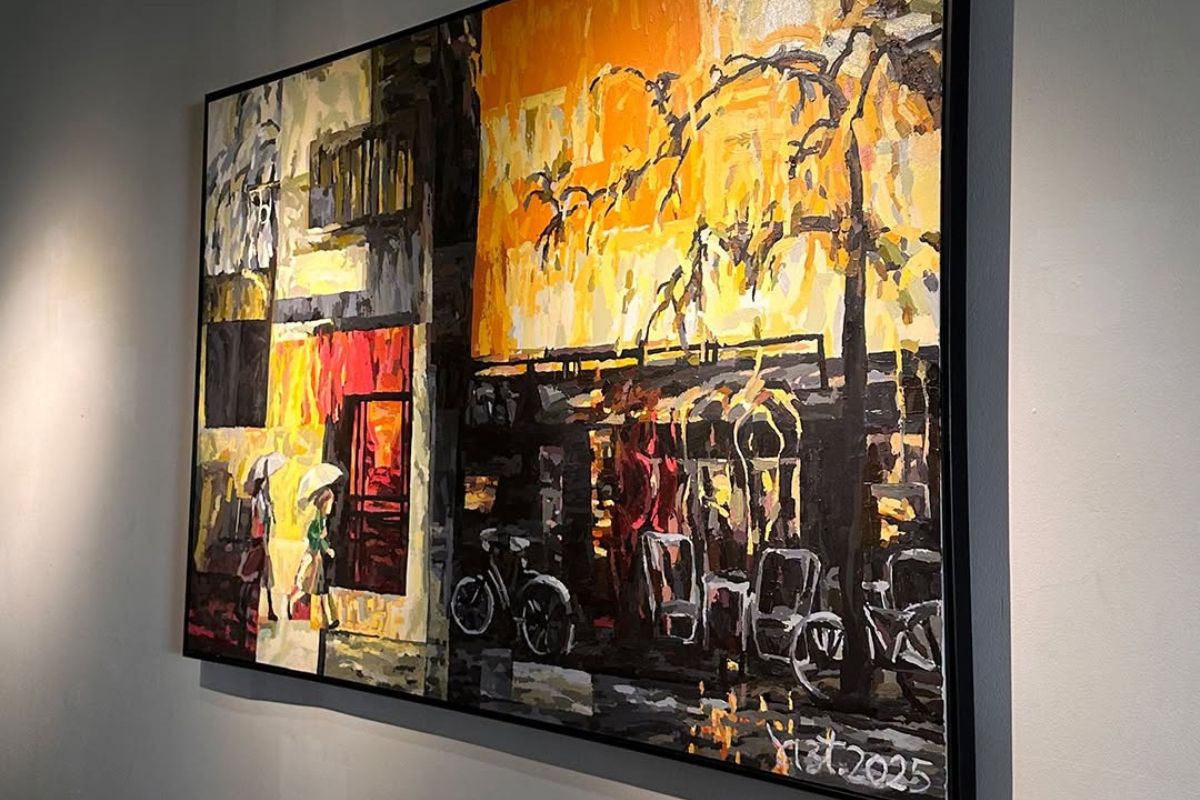
Múa rồng (Dragon Dance), Phố hoa (Street of Blooms), Phố và cơn mưa chiều (Afternoon) and Xào xạc thu (Autumn Murmurs) clearly demonstrate this approach. Reds, yellows and blues are used boldly; brushstrokes are loose and expressive; scenes are not contained by neat outlines. Múa rồng (Dragon Dance) carries the urgency of a crowd in motion, while Xào xạc thu (Autumn Murmurs) uses a gentler palette without losing movement across the surface. Phạm Quang Việt’s streets are busy, dense and at times untidy, closer to the sensation of a city unfolding in real time than to an urban scene carefully composed for contemplation.
Nguyễn Trọng Hà also draws on the city and familiar aspects of everyday life, but his paintings move at a slower pace. Born in 1957, he graduated from the Vietnam University of Fine Arts in 1995, has participated in exhibitions for several decades and presented more than forty works in a solo exhibition in 2022. The streets in Nguyễn Trọng Hà’s paintings are not noisy; their appeal lies in tiled roofs, old walls, rows of trees, small eateries and the traces of an older Hanoi.
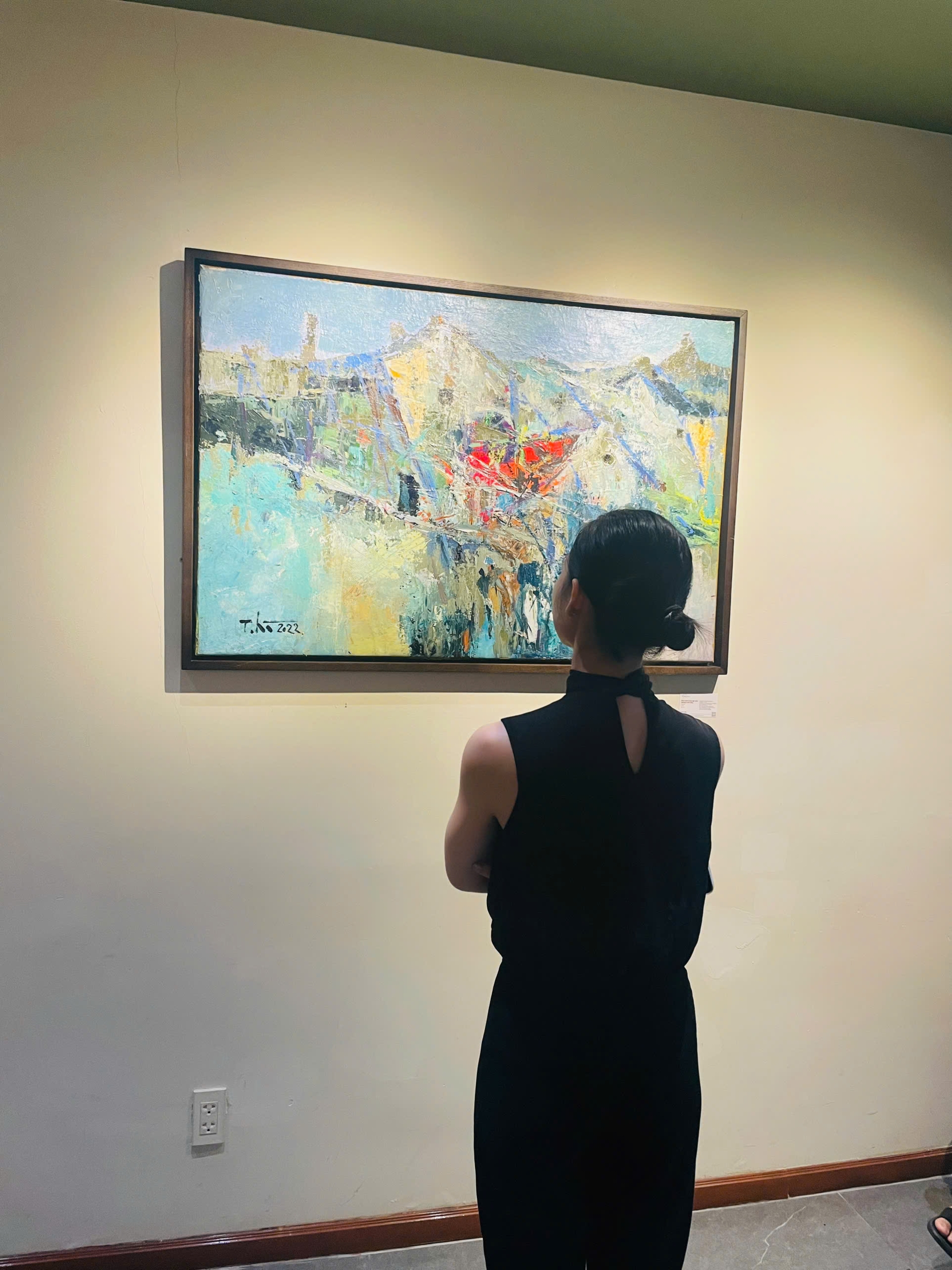
In Mùa xuân trong ngõ nhỏ (Spring in the Alley), the atmosphere of the old quarter remains recognisable, yet the scene is compressed into areas of colour, brushstrokes and loosely defined forms. He does not romanticise Hanoi or polish it into a nostalgic image. Worn surfaces, uneven details and traces of time remain visible, giving his Hanoi an aged, everyday quality rather than turning it into an idealised memory.
Trương Vũ Trung, born in 1973, belongs to a later generation and has developed a broader practice in terms of materials. After graduating from the University of Fine Arts in 2000, he has worked with oil, lacquer, silk, woodcut, gouache and charcoal. His exhibitions have included Lạc Trôi Dưới Rừng Sơn Trà (Drifting Beneath the Sơn Trà Forest) in 2024 and Thủ Đô (The Capital) in 2025, and his work has also been shown in South Korea. This range of materials makes his work difficult to define through any single visual formula.
The works by Trương Vũ Trung in STATES OF FORM also reveal a broad range. Khoảng trời trong ngõ (Sky in the Alley) and Bầu trời dưới hồ (The Sky in the Lake) retain traces of recognisable scenery, but the imagery has been pared back and reorganised into distinct structures. In Cấu trúc của im lặng (Structure of Silence), the landscape almost disappears from the surface altogether. Grey, black and white, intersecting lines and a handful of small points of colour hold the composition in a restrained, still state, while negative space plays a far greater role than in the work of the other two artists.
Cấu trúc của im lặng (Structure of Silence) is particularly notable for its handling of empty space. Rather than filling the entire surface, Trương Vũ Trung leaves room between forms and lines, giving the composition a sense of openness despite its relatively heavy palette. Gỡ bỏ (Letting Go) continues this reduction of imagery and concentration of structure. Rực rỡ của Hạ (Summer Vibrance), meanwhile, shows that his work is not confined to subdued tones: brighter colours emerge, yet the organisation of the picture plane remains restrained. Seen in sequence, these works reveal how Trương Vũ Trung increasingly pares back imagery, shifts visual density and moves from recognisable scenery towards abstraction.
Placed together, the differences between the three artists emerge naturally. Phạm Quang Việt is driven by colour and movement; Nguyễn Trọng Hà remains closely engaged with the streets and traces of time; Trương Vũ Trung strips imagery back to focus on structure and negative space. Hanging their works alongside one another makes these distinctions more apparent than dividing the exhibition into three separate sections would.
As a result, the pace of viewing continually changes. Some paintings command attention from a distance through colour; others require a closer look at their surfaces, brushwork or areas of empty space. These shifts in density, colour and structure also allow the seventeen works to remain connected, without giving the impression of three unrelated groups of paintings simply sharing the same venue.
No fixed way of looking
The curator has structured STATES OF FORM around themes of growing up, change, memory, confrontation and letting go. Yet this narrative primarily provides a framework for the exhibition’s arrangement. Once in front of the works themselves, visitors are free to disregard the four-part sequence and choose where to stop according to their own response.
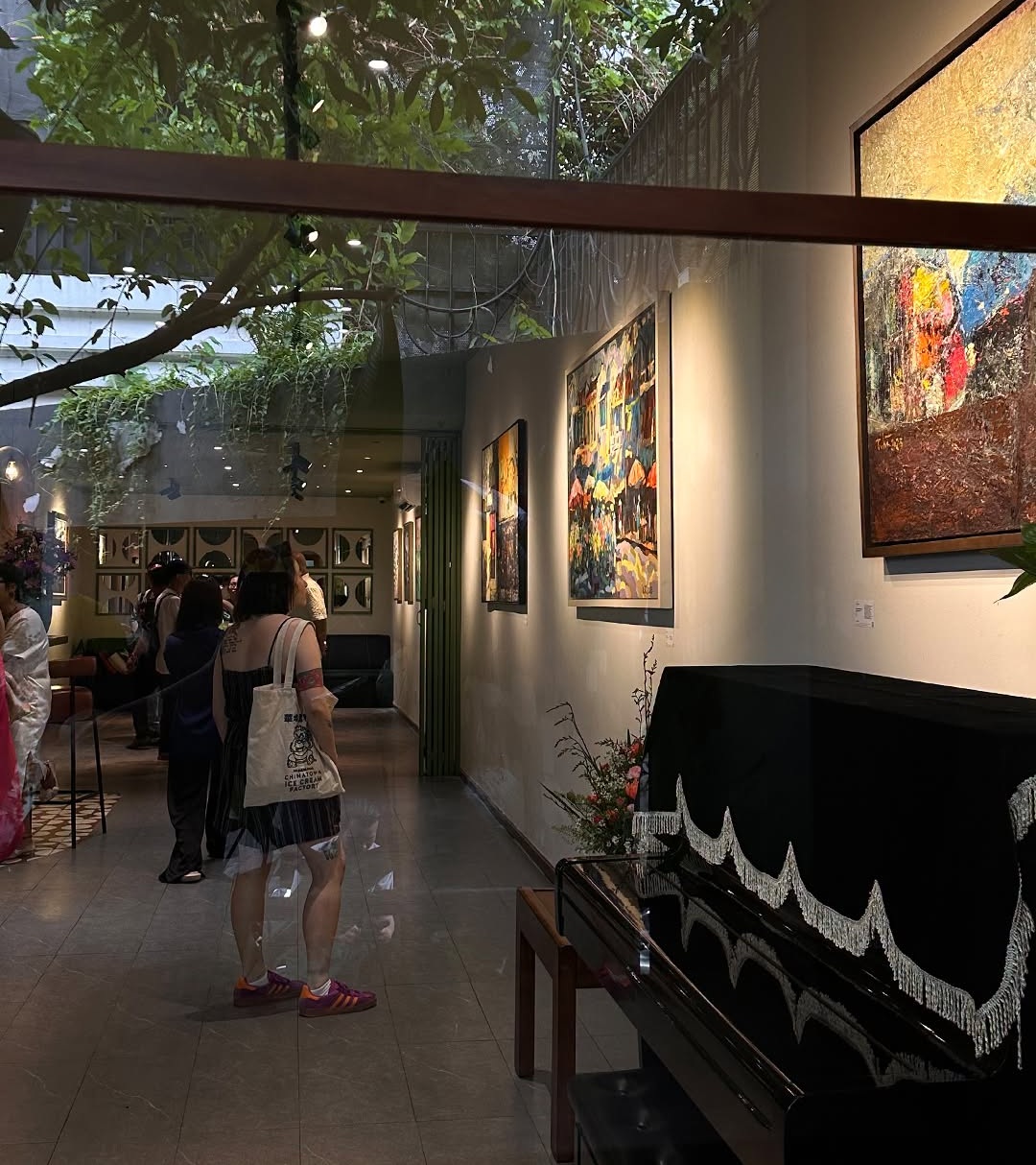
Those drawn to colour and movement may gravitate towards Phạm Quang Việt; those familiar with Hanoi may recognise its streets, alleyways and traces of time in Nguyễn Trọng Hà’s paintings; while Trương Vũ Trung’s works invite a slower examination of structure, surface and negative space. Three approaches create three different rhythms of viewing. STATES OF FORM preserves those differences, allowing the seventeen works to form their own connections simply by being placed alongside one another.
STATES OF FORM – HÌNH THÁI is on view at Ambrosia Venue & Dining, 29/9 D-E-F Nguyễn Bỉnh Khiêm Street, Sài Gòn Ward, Ho Chi Minh City, featuring seventeen works by Trương Vũ Trung, Nguyễn Trọng Hà and Phạm Quang Việt. Organised by the plARTform in collaboration with Ambrosia Venue & Dining, the exhibition is open to the public with free admission from 12 August to 15 November 2026.

Read more: