

 Hien Dang
For centuries, the night sky has been the stage for humanity’s imagination. The Greeks spun myths to explain why the stars shimmer. The Maya raised temples in rhythm with the planets. The Vietnamese looked up at the Milky Way and pictured the love story of Ngưu Lang – Chức Nữ. Today, as technology stretches towards what once seemed impossible, that millennia-old dream has put on a new guise: space tourism.
No longer the privilege of astronauts, no longer an illusion reserved for science-fiction films, outer space is fast becoming a new playground for the ultra-rich. A few minutes of weightlessness, a curved horizon cradling the blue Earth – experiences once deemed unattainable have become luxury products, sold at prices that make the world pause in awe. By 2030, the space tourism market is estimated to reach around US$8 billion, powered largely by private enterprise.
Original Vietnamese version available here: Đọc bài viết tiếng Việt
From dream to reality: when the “customer” steps in
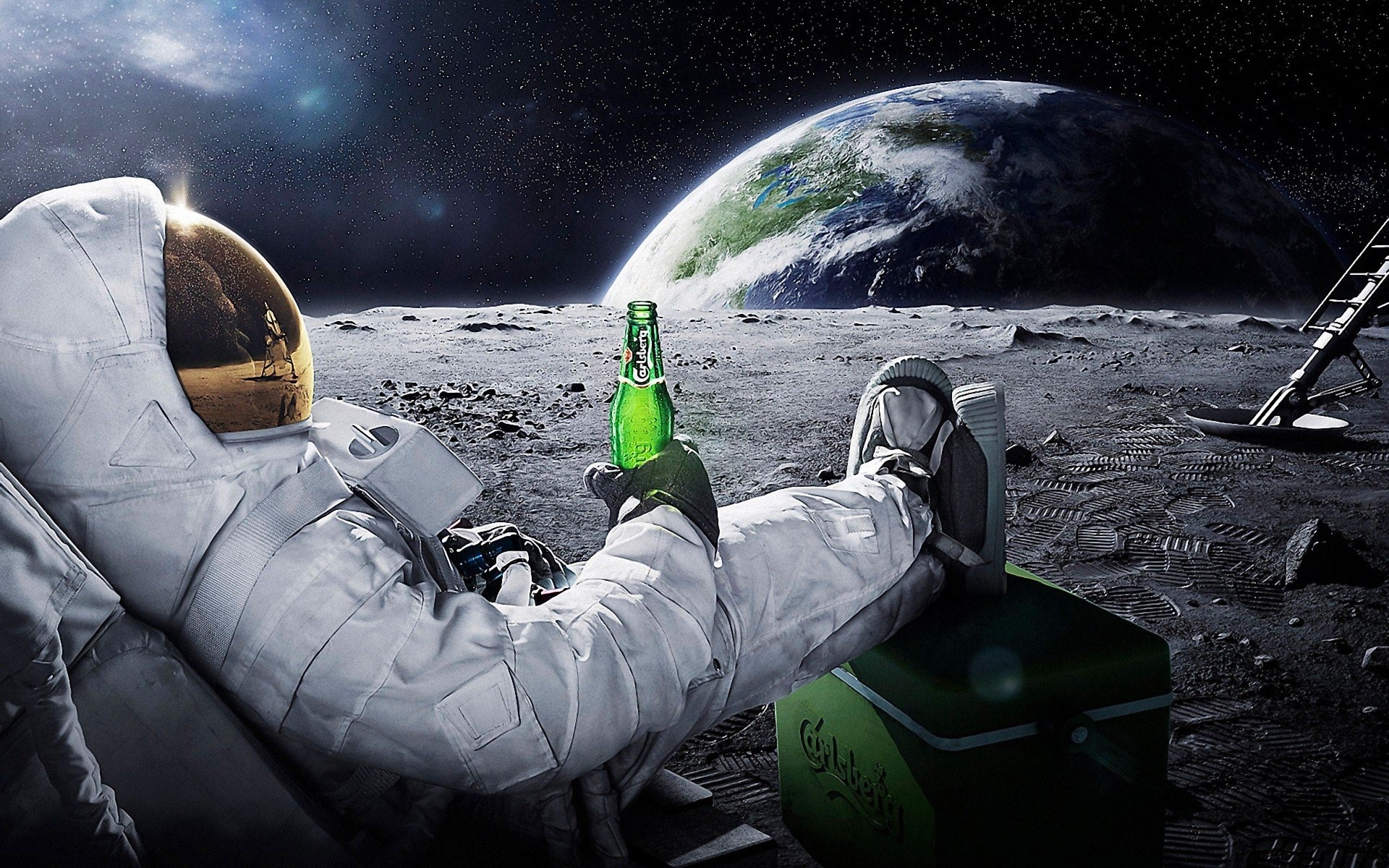
In 1961, Yuri Gagarin orbited the Earth and opened a new era of space exploration. Six decades on, spaceflight is no longer solely about asserting military or political might; it is gradually becoming a commercial service. When Blue Origin and Virgin Galactic launched their first suborbital flights with paying passengers, and Axiom Space began sending entrepreneurs to live alongside astronauts on the ISS, the world realised: space had officially entered the travel map.
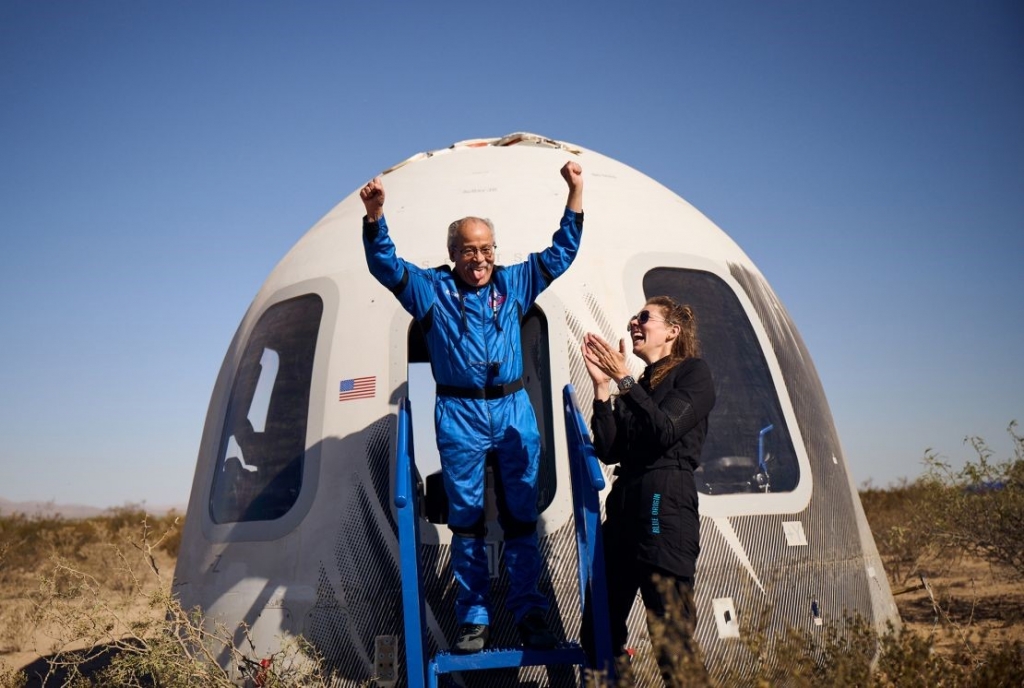
Blue Origin’s NS-25 flight in May 2024 was symbolic in many ways. On board was Ed Dwight, 90, once poised to become America’s first Black astronaut in the 1960s, but denied the chance. Six decades later, he finally touched space. It was more than a personal journey; it was a message: space is no longer a dream left unfinished, but a frontier that now opens – at a price – to those willing to “buy” a fragment of lifelong memory.
Meanwhile, the “stratospheric balloons” of Space Perspective and World View suggest a different philosophy. Instead of blasting off like a bullet, passengers can “rise with the dawn”: seated in a glass capsule, sipping wine as the Earth’s curvature slowly reveals itself. From 2025, the experience is expected to welcome its first guests, at around US$50,000 per person – considerably “softer” than a rocket launch, yet still exclusive enough to signal membership of a rarefied club.
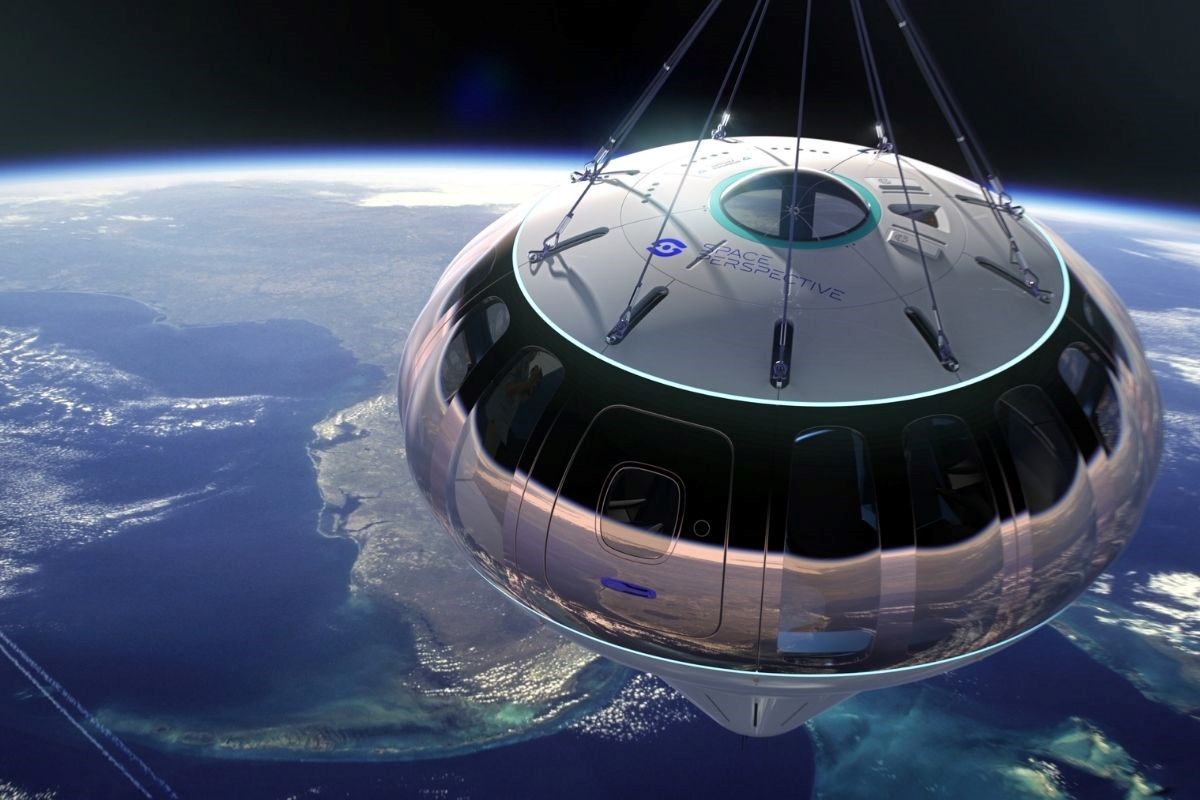
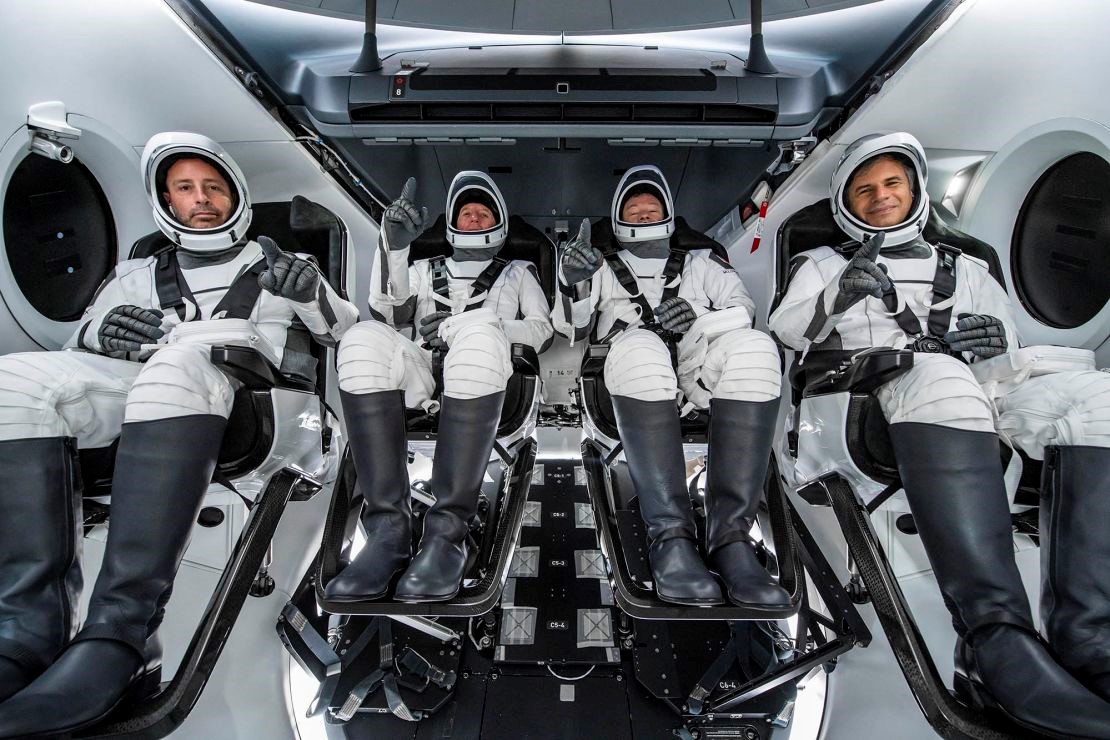
At a higher tier, Axiom Space, in partnership with SpaceX, offers a different kind of package: living alongside astronauts on the ISS. At roughly US$55 million per seat for a two-week stay, guests are not only “observing” history, but taking part in it. Once, we merely heard news from the space station; now, the ultra-wealthy can open a laptop in an ISS cabin, send emails from orbit, even join certain scientific experiments. Of course, not every dream comes to fruition. Japanese billionaire Yusaku Maezawa’s dearMoon project – a Starship flight around the Moon – was cancelled in June 2024 due to delays, a sobering reminder that even billionaire fantasies remain beholden to schedules and safety.
A new form of luxury: from diamonds to the horizon
The world of luxury has already moved through many waves: from jewellery, supercars and yachts to private jets. Yet all of these remain “in the air” – still beneath the protective blanket of Earth’s atmosphere. Space tourism introduces a new benchmark of luxury: outer space itself.
At that altitude, wealth is no longer measured in carats or horsepower, but in vantage points. To see the Earth from orbit, a fragile blue gem suspended in the dark, is an experience no other asset can buy. It is at once a privilege – only a few hundred among 8 billion people have ever witnessed it – and a declaration: I have not only succeeded on Earth; I have stepped beyond it.
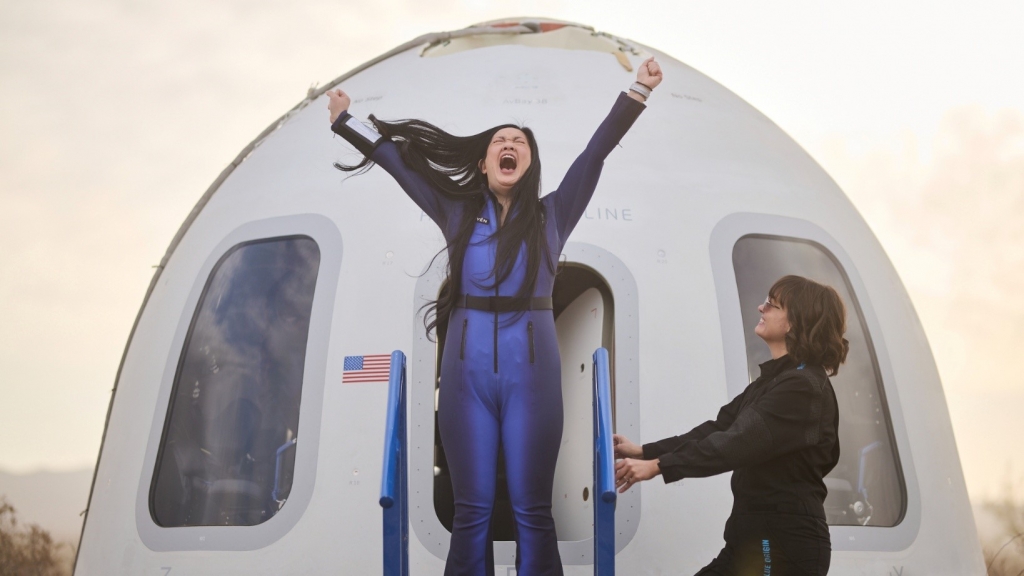
For many women leaders, a ticket to space is not merely an extravagant expense; it is a personal branding story. It might be a journey to inspire young women into STEM, a memory to pass down to future generations, or simply a clear statement: I have seen the world from a perspective almost no one else shares.
Three philosophies of experience: fast, slow and participatory
- Suborbital – the espresso of space
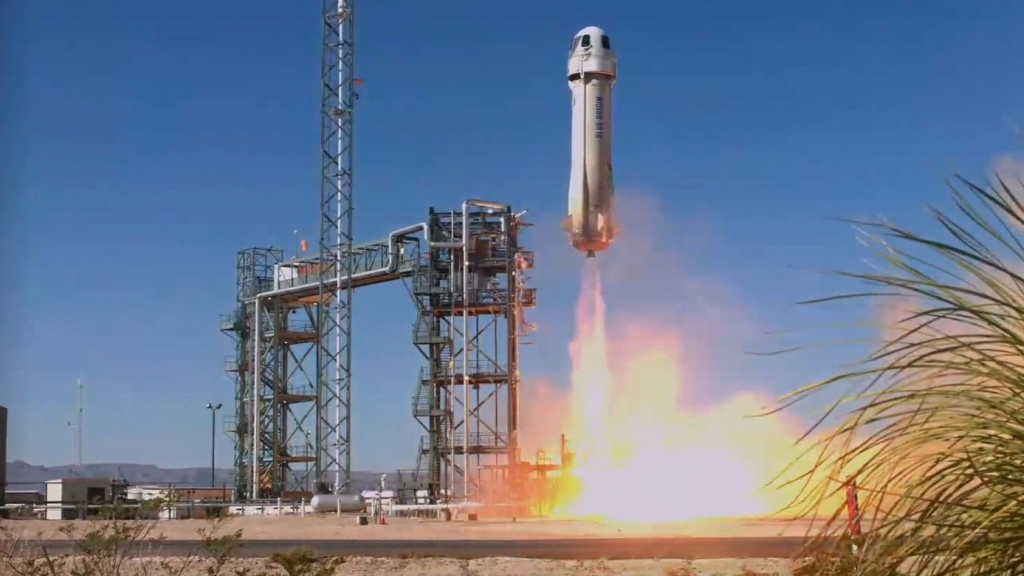
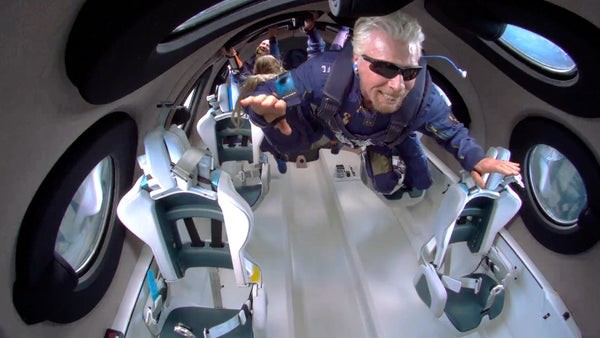
Suborbital flights with Blue Origin or Virgin Galactic are akin to an espresso shot: short, intense, overwhelming. A few minutes of weightlessness, a few dozen minutes from lift-off to landing – just enough for the heart to race and the mind to be imprinted for life. Virgin Galactic has previously advertised tickets at around US$450,000 per seat, with prices for its next-generation Delta-class vehicles expected to climb higher. Blue Origin remains discreet, but the first seat was auctioned for US$28 million – a diamond of a number, floating in mid-air.
- Balloon – afternoon tea at the edge of space
If suborbital is an espresso, the balloon flight is afternoon tea. No violent shaking, no crushing g-forces, no rocket roar – just a balloon gently lifting the capsule into the stratosphere. Over six to eight hours, guests can sip cocktails, listen to music and pose for photographs as the Earth curves dramatically below. This is the “soft entry point”, priced between US$50,000 and US$125,000 per passenger, but imbued with a quiet poetry.
- Orbital & ISS – becoming part of history
With Axiom, the focus is participation. You are no longer a “spectator” peering through the window, but a supporting actor in humanity’s greatest construction beyond Earth. US$55 million buys two weeks of living – eating, working, sleeping – in microgravity, so that upon returning home, you carry not only memories but a certificate of sorts: you were once a temporary resident of the ISS.
The luxury mindset: buying experiences, not products
What unites all space tourism packages is that guests are not simply buying a seat; they are buying an entire ecosystem of experience. Before launch, they undergo medical checks, training sessions and briefings with the crew. After landing, they receive personalised keepsakes – from tailored flight suits to commemorative rings forged from recycled alloys.
More importantly, they are buying a story. A female CEO can tell her team: “I have seen the Earth from space and realised that all borders are an illusion.” An artist can turn the journey into an artwork. A family can turn it into a three-generation legacy.
In the world of media, storytelling is the core currency. The ticket may be exorbitant, but the value of the story it generates can be priceless.
Space gastronomy: when fine dining takes off
For decades, food in space meant freeze-dried pouches and dense energy bars. But as space tourism enters the era of the ultra-rich, passengers’ palates are changing. They no longer want to eat merely to survive; they want to dine, to turn meals into a chapter of the luxury experience.
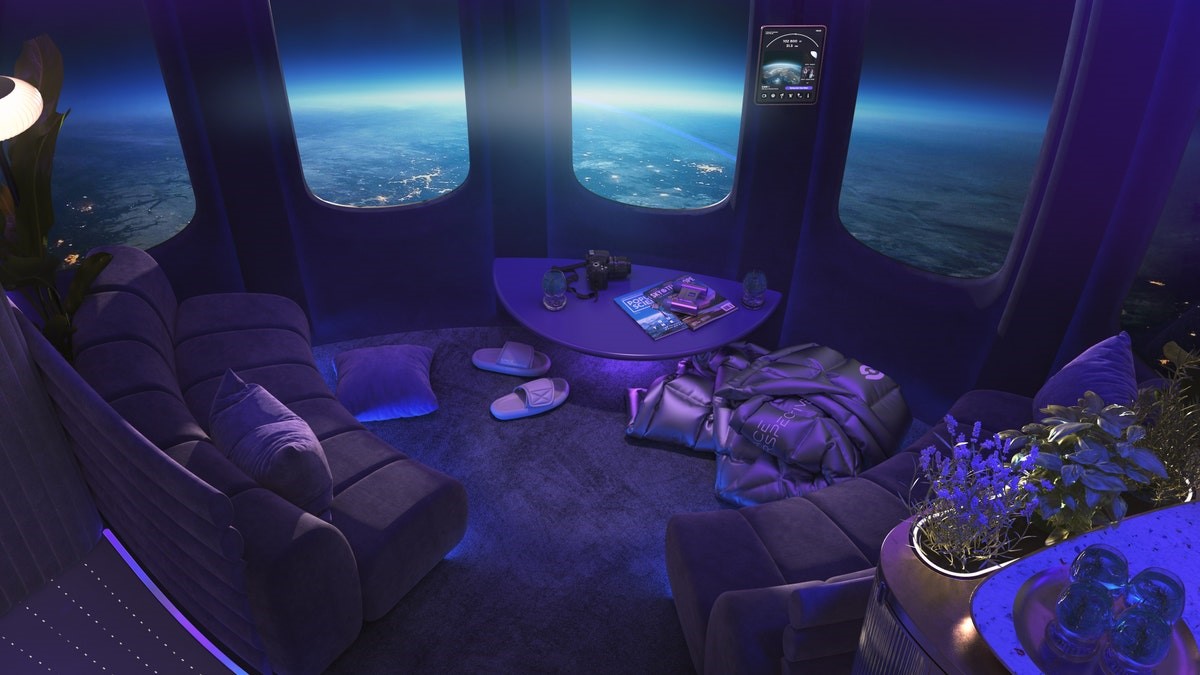
That is why gastronomy has become a new chapter in the story of space tourism. In orbit, astronauts still need high-energy menus, often seasoned more boldly because weightlessness dulls taste. But on leisurely balloon flights like those planned by Space Perspective, the experience is designed as a “sky lounge” with 360-degree views. Passengers are not subjected to violent acceleration or harsh training regimes; they can relax into armchairs, sip a translucent blue mocktail evoking the “Blue Marble” – our round, fragile Earth in space.
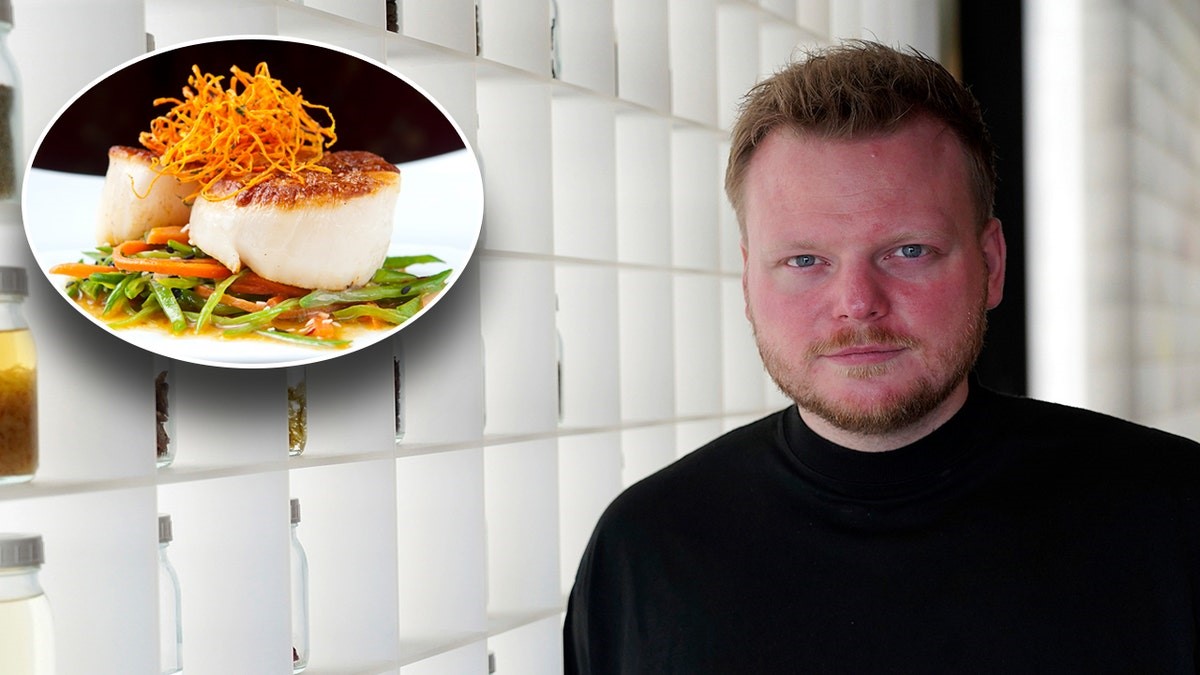
The pinnacle of this fusion between gastronomy and space is the collaboration between Rasmus Munk, the two-Michelin-star chef of Alchemist in Copenhagen, and Space Perspective. In 2025, he plans to take a six-hour dinner into the glass capsule of Spaceship Neptune at around 100,000 feet (about 30 kilometres). Only six diners will be onboard, each paying US$495,000. The menu will not simply be a procession of elaborate dishes, but a “story told through taste” – about 60 years of space exploration, orbital debris and a changing climate on Earth.
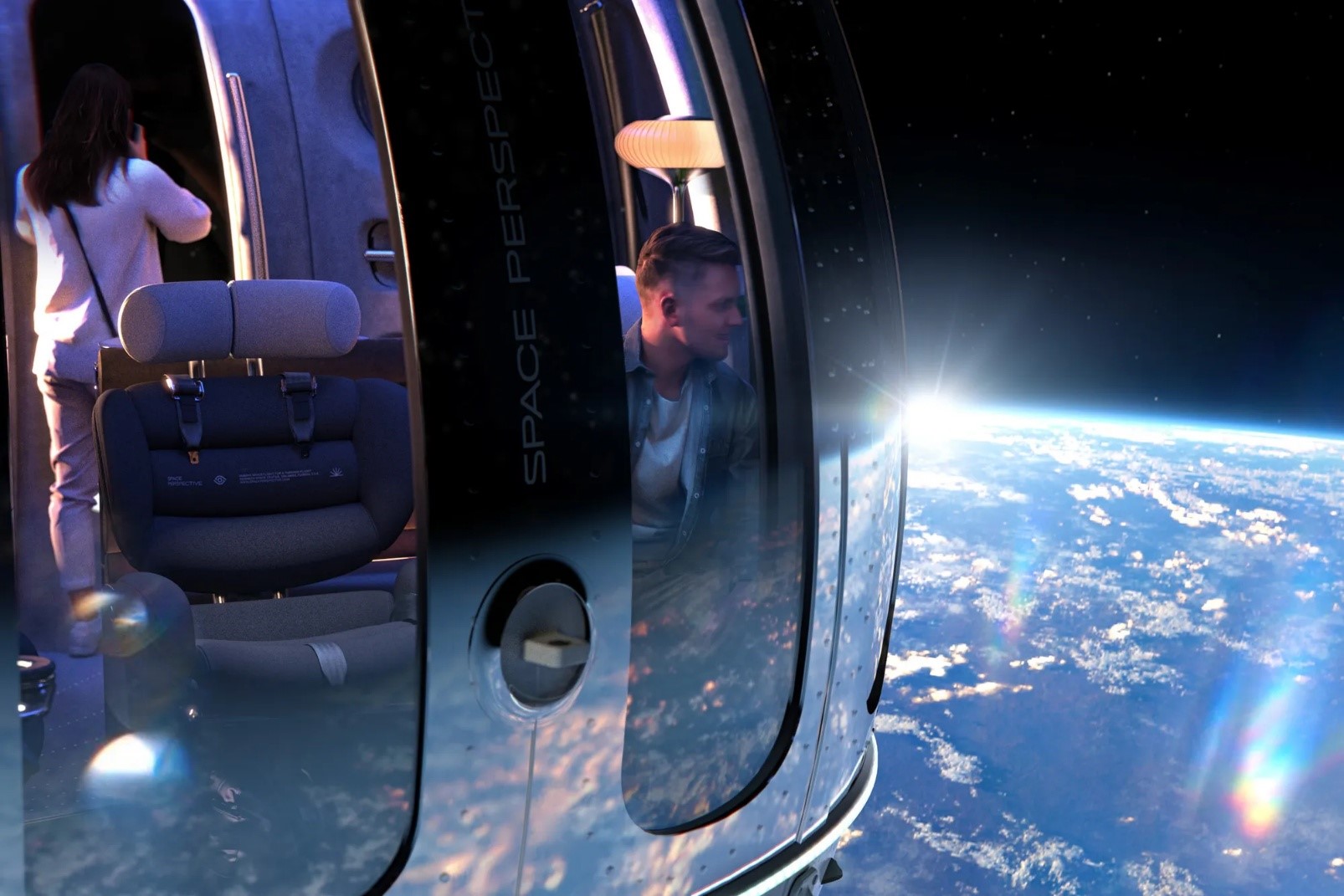
In this context, fine dining is no longer just a meal; it is an artistic manifesto. When the palate is moved in tandem with the eyes – gazing at a dramatically curved planet below – even a sip of wine seems to acquire a new layer of meaning. This is the luxury of perspective, where gastronomy becomes a bridge between science, art and human awareness.
Viewed through the lens of Travel & Cuisines, this event hints at a new trend: gastronomy breaking free from restaurants and five-star hotels to reach the stratosphere. If Michelin once represented the pinnacle of dining on Earth, then a dinner “in the sky” is now redefining the standards of luxury. It is no longer about which table you sit at or which vintage you drink, but where you dine – and in this case, “where” is the very edge of the atmosphere.
Thus, space tourism is not only lifting people off the ground; it is carrying culture, cuisine and the arts along for the ride. When fine dining begins to accompany the Overview Effect, we understand that 21st-century luxury is not confined to material things, but lies in the way our senses are elevated alongside a new state of awareness.
The price of a horizon
Depending on the experience, the “price” of a journey into space ranges from US$50,000 to US$55 million. For the ultra-rich, these figures reflect not just net worth, but aspiration. How much are you willing to pay for a few minutes or a few days of seeing the world in a way almost no one else can?
In truth, what they pay is not only money. It is the time spent training, the physical and mental preparation, and the acceptance of risk. Yet these very factors turn the ticket into something precious – a “medal of memory” that no one can take away.
Vietnam in a new constellation
With the rapid growth of high-net-worth individuals (HNWIs), it is only a matter of time before Vietnam sees its first business leader join a space tourism flight. It could be a woman executive using the journey to inspire young women to pursue STEM; a corporation framing it as a technology-driven CSR initiative; or simply a family who want to turn a trip to space into a living legacy.
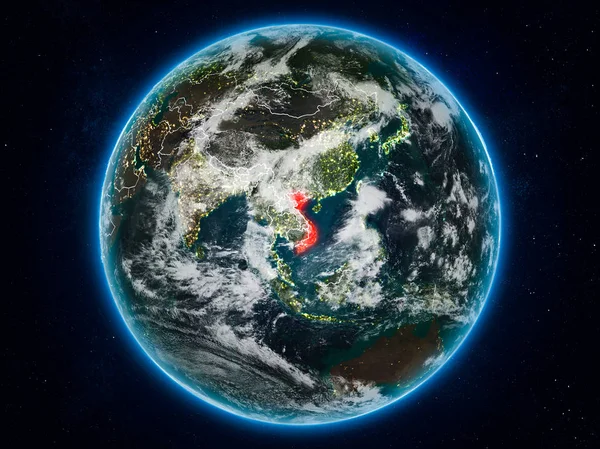
In a society where expressing one’s identity is increasingly important, a space ticket may well become the “ultimate luxury item” – a mark that transcends all material limits.
The ultimate luxury is awareness
In the pursuit of luxury, humanity has already acquired almost everything: diamonds, villas, superyachts. But only at the edge of space can one buy something that cannot be replicated: a reversed perspective. Seen from above, borders dissolve and conflicts shrink. People return not only with memories, but with a new awareness: that this planet is fragile, and that true success is not merely about “getting out”, but about learning to cherish the place we belong to. In that sense, space tourism – however costly and controversial – serves as a reminder: the ultimate luxury of the 21st century is not gold, but perspective. The luxury of this century does not lie in where we go, but in how we look at the world when we come back. When the horizon curves like a thin ribbon of light in the dark, we realise: space is the starting point of awareness, not the endgame of a luxury race.
Text: MINH NGUYỄN

Read more: