

 Hien Dang
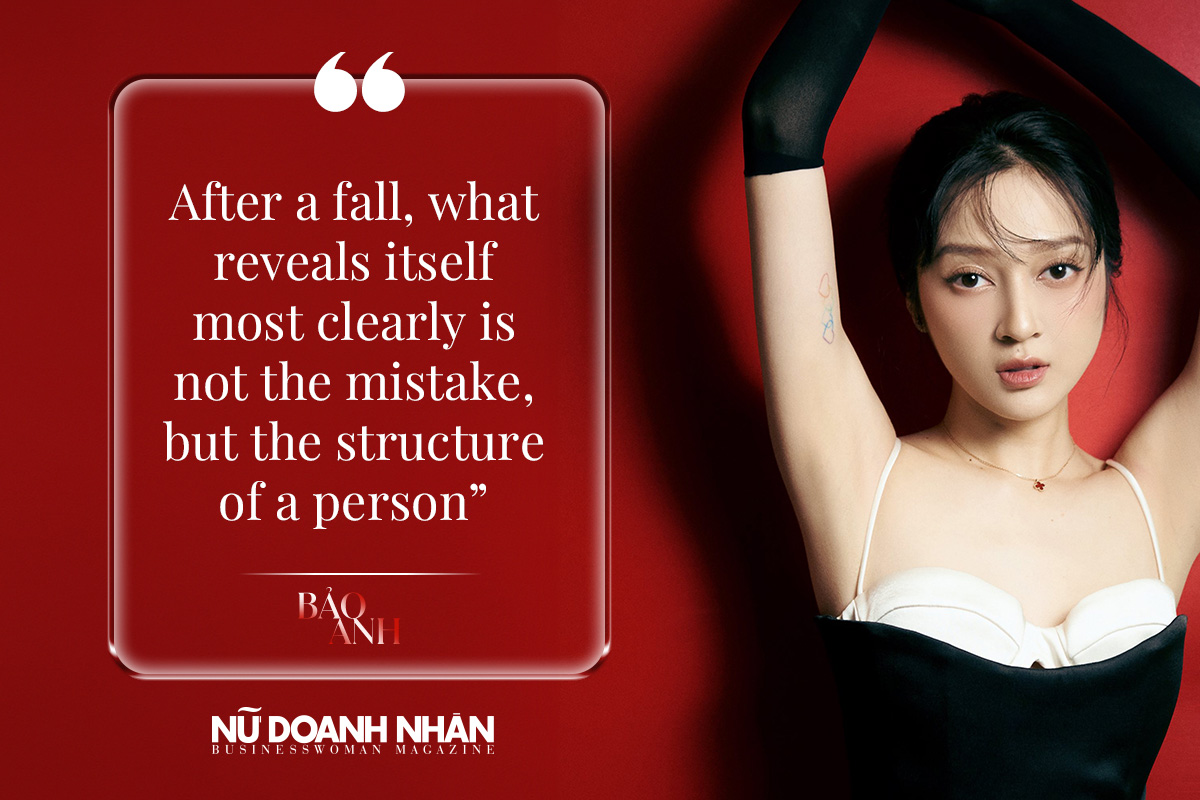
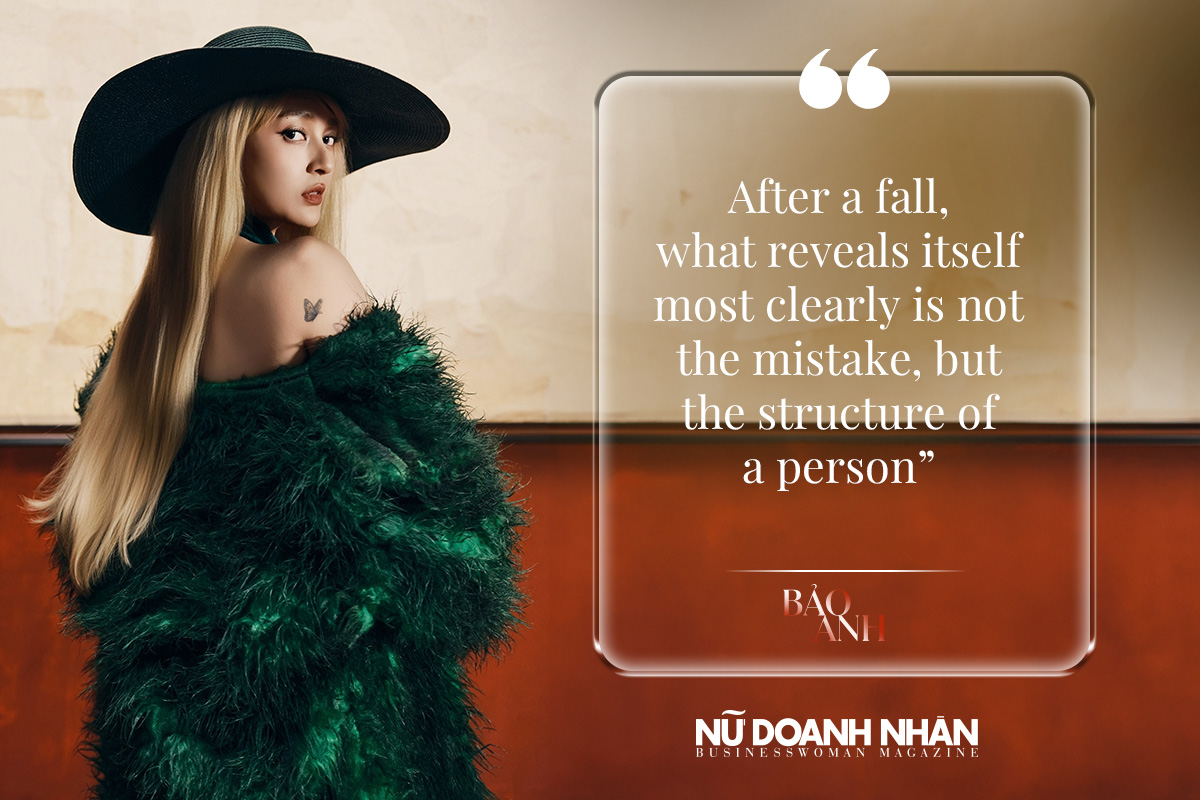
At first, I knew Bảo Anh the way one knows most artists, socially. We would meet at events, exchange a few polite words, then go our separate ways. Her name had long been familiar in mainstream Vietnamese music for over a decade, yet from the surface, it was difficult to separate her from the labels the public had placed on her: “queen of ballads”, “the woman of sorrowful love songs”, “the girl who loves more than she should”. Everything about her seemed to carry a sense of fragility. From that distance, she appeared easy to understand, even somewhat one-dimensional. But after a few more encounters and especially after hearing from industry insiders about a business setback she once experienced, I began to see her differently. What interested me was not the setback itself, but what came after it. Because after a fall, what reveals itself most clearly is not the mistake, but the structure of a person.
Text: NGUYỄN CÔNG MINH
Original Vietnamese version available here: Đọc bài viết tiếng Việt
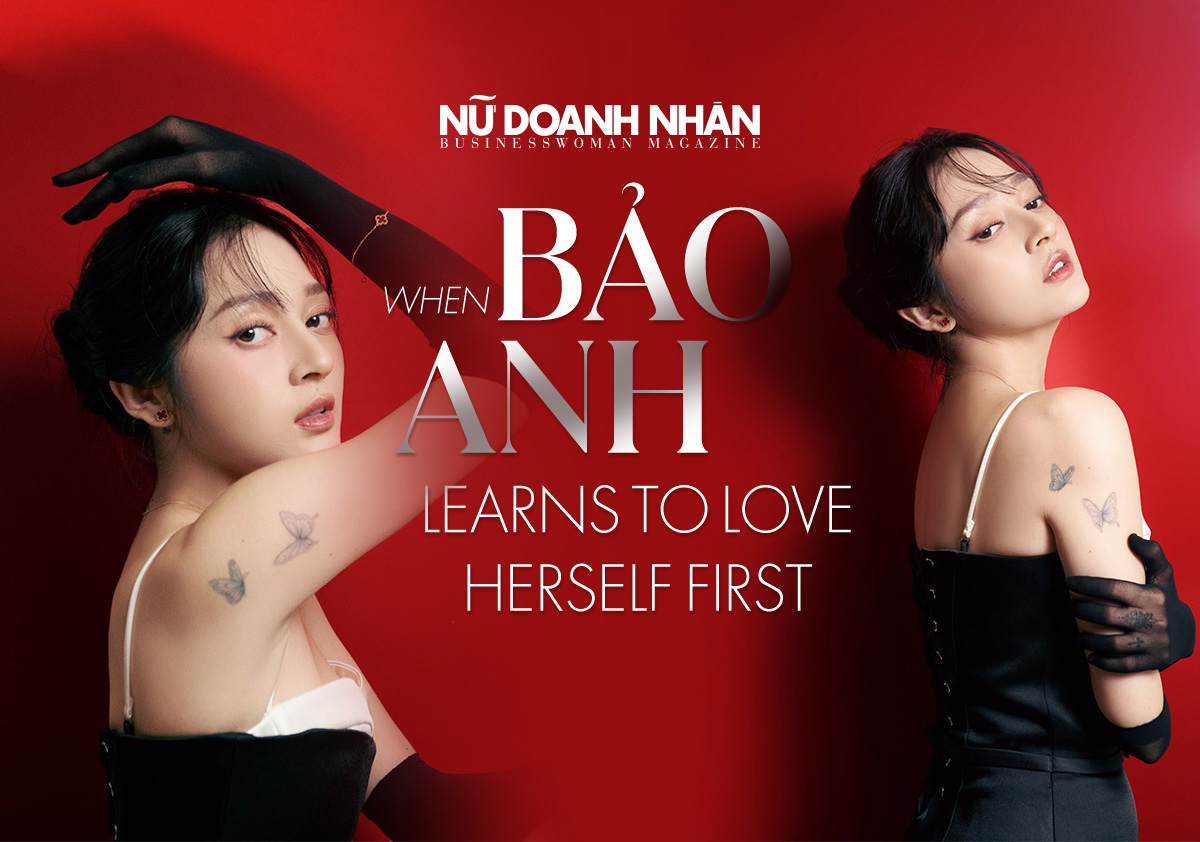
People remember Bảo Anh through sad love songs, yet sadness has never been her essence; it was simply a phase she stayed in longer than most. Perhaps that is where my reason for writing this piece begins.
Search her name online, and the results tend to revolve around her daughter Misumi, past relationships, and rumours linked to other artists. But if one traces back to the songs that defined her — Yêu Một Người Vô Tâm, Trái Tim Em Cũng Biết Đau, Sống Xa Anh Chẳng Dễ Dàng, Từng Là Của Nhau, Lười Yêu — it becomes clear why her emotional life has always drawn attention. Her music resonated deeply with many young women: loving wholeheartedly, taking the loss, and learning to accept. Those who sing often about pain are not weak; they simply do not have the habit of lying about their emotions. And when someone no longer needs pain as material for storytelling, that is when real change begins.
In the entertainment industry, emotional branding both sustains artists and keeps them in place. When audiences recognise themselves in the image of a “wounded woman”, they want that image to remain. But life moves. A woman in her twenties is vastly different from a woman in her thirties. If an artist stays the same, she risks repetition. If she changes, she risks losing the very connection that built her audience. The challenge is not choosing one over the other, but having the courage to accept losing a part of it.
What draws my attention to Bảo Anh now is that she no longer operates as someone driven purely by emotion. There was a time when emotion was how she survived. Now, she chooses not to let it dictate her decisions. The shift is subtle, revealed in quieter choices and in a different relationship with pain.
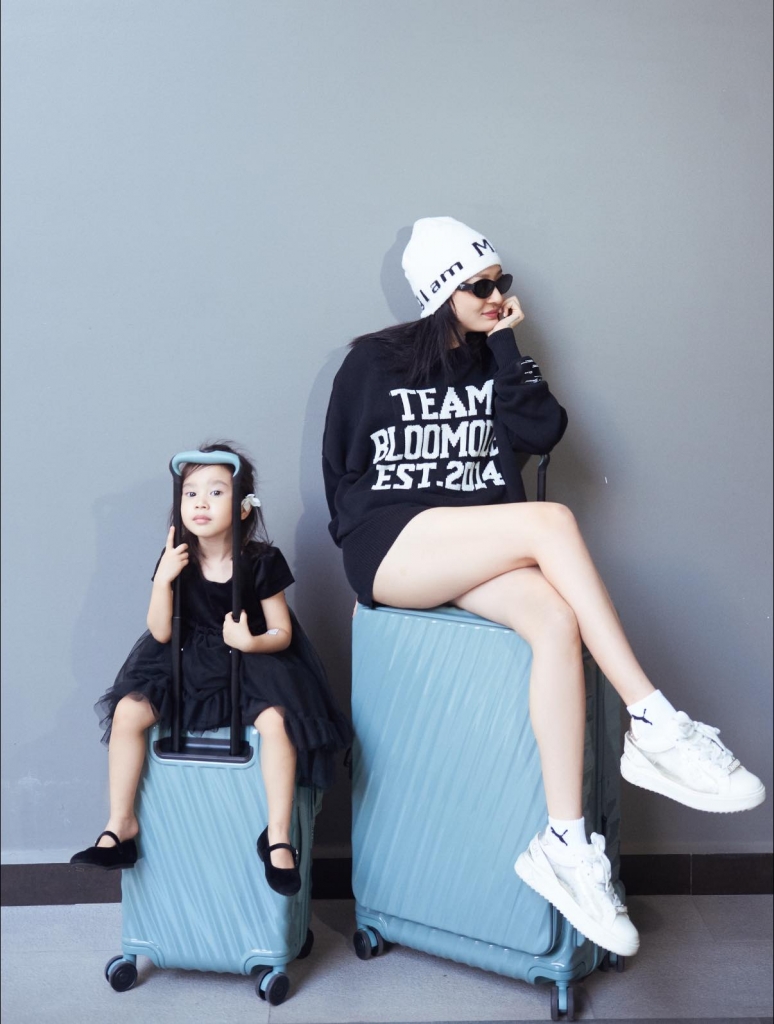


The other day, I asked her what she usually does in her free time. She answered immediately: “I rarely go out; you can see that. Between work and taking care of Misumi, that’s already all my time. There isn’t much left for anything else”.
At a certain point, people are not busier; they simply become more selective about what deserves their time. I realised that her priorities no longer revolve around appearances or image-making, but around keeping her personal life steady, for herself and for her child.
After talking for a while, I asked how motherhood had changed her. She paused: “Maybe softer… I used to be much more strong-willed. Now I have something to come back to”. When there is something to return to, one instinctively knows where to stop.
In a recent podcast, Bảo Anh spoke about how wounds prepare her for a sense of completeness yet to come. Before reaching any feeling of fulfilment, almost everyone passes through phases of lack imperfections, collisions, and moments of feeling incomplete. For her, the point is not whether life has left marks, but how deeply one understands them. Perhaps that is why she does not treat wounds as something to hold onto, but as data within a larger journey of growth. They remind her where she has been, where she has been wrong, where she has been vulnerable and from there, how to learn to love again from the beginning, to love others in ways they can feel while remaining free, and to love herself before expecting anyone else to do so. When understood deeply enough, the sense of lack loses its power. And when it no longer dictates decisions, the way one loves begins to change.
When pain is no longer used as emotional capital, life shifts. At one point, speaking about a business setback, she said: “If someone deceives you, it’s because you weren’t good enough”.
Not everyone who deceives you is wrong. Sometimes the mistake lies in trusting without verifying. Responsibility, when misplaced, keeps a person repeating the same mistake while still believing themselves to be the victim.
Motherhood makes that shift even clearer. When she revealed her daughter to the public, there was no narrative crafted for effect, no attempt to steer public sentiment, just a calm acknowledgement that her life had entered a new phase. Having a child does not weaken a person; it forces a different kind of strength. She once described her life as divided into two parts: before and after having a child. When another life becomes tied to yours, priorities change. Career still matters, but it is no longer the absolute centre. Even her choice of words reflects this. She does not say “teach”; she says “accompany”. “It’s not about control, but about accompanying your child to understand. Having psychological guidance helps them feel less lost”. Control creates distance. Accompaniment builds trust.
Her definition of “enough” has also changed. It is no longer measured by hit songs, awards, or search volume. “Enough” becomes an internal state: knowing what you need, where your limits lie, and what is worth keeping. Without a sense of limits, one always feels lacking. This shift is evident as she steps into business with King’s Pet by Bao Anh, where she is a co-founder. The pet nutrition market in Vietnam is growing rapidly, yet it does not operate on reputation alone. In business, emotion does not make you right; it simply makes you wrong faster and more costly.
When I asked about her recent business, she simply said: “It’s okay”. Then she smiled and after a pause added: “After that failure, I became much more careful. Careful enough to test things two or three times before I trust them”.
Caution always comes at a price. Business forces people to mature faster than music. In music, emotion can be transformed into art. In business, mistakes turn into costs and costs demand adjustment. What is notable is that Bảo Anh does not separate these worlds. Her music continues, shifting clearly in Người Yêu Anh Nhất, composed by Châu Đăng Khoa.
When “he” becomes oneself, love is no longer a search, but a form of discipline and discipline always outlasts emotion. On her personal page, she described the song as a confession. She spoke of a woman who has chosen wrongly, broken, yet continues to love. In this context, “he” also means Bảo Anh herself. When the object of love returns inward, the standard changes. You no longer love to be chosen; you love to remain with yourself. Here, music no longer serves as narration, but as a tool for self-dialogue. By equating “he” with “Bảo Anh”, she redirects her gaze from outward to inward. Placed alongside motherhood and business, the intersection becomes clear. In every role, she is accountable for her choices. Love is no longer about holding someone in place; it is about not losing oneself.
When speaking about growth, she simply said: “You go through it, then you take something from it”. Those who have gone through enough mistakes no longer need to be right in others’ eyes. Looking at her journey as a whole, Bảo Anh is stepping away from the image of a woman defined by pain. She does not deny it, nor erase it, she simply no longer uses it as her identity. In an industry where emotion can be exhausted as a resource, keeping a part of oneself untouched is a form of self-respect. What intrigues me most is not the hits that made her famous, but how she continues beyond them. If completeness exists, it does not come from a life without disruption, but from the ability to move through disruption without losing oneself.
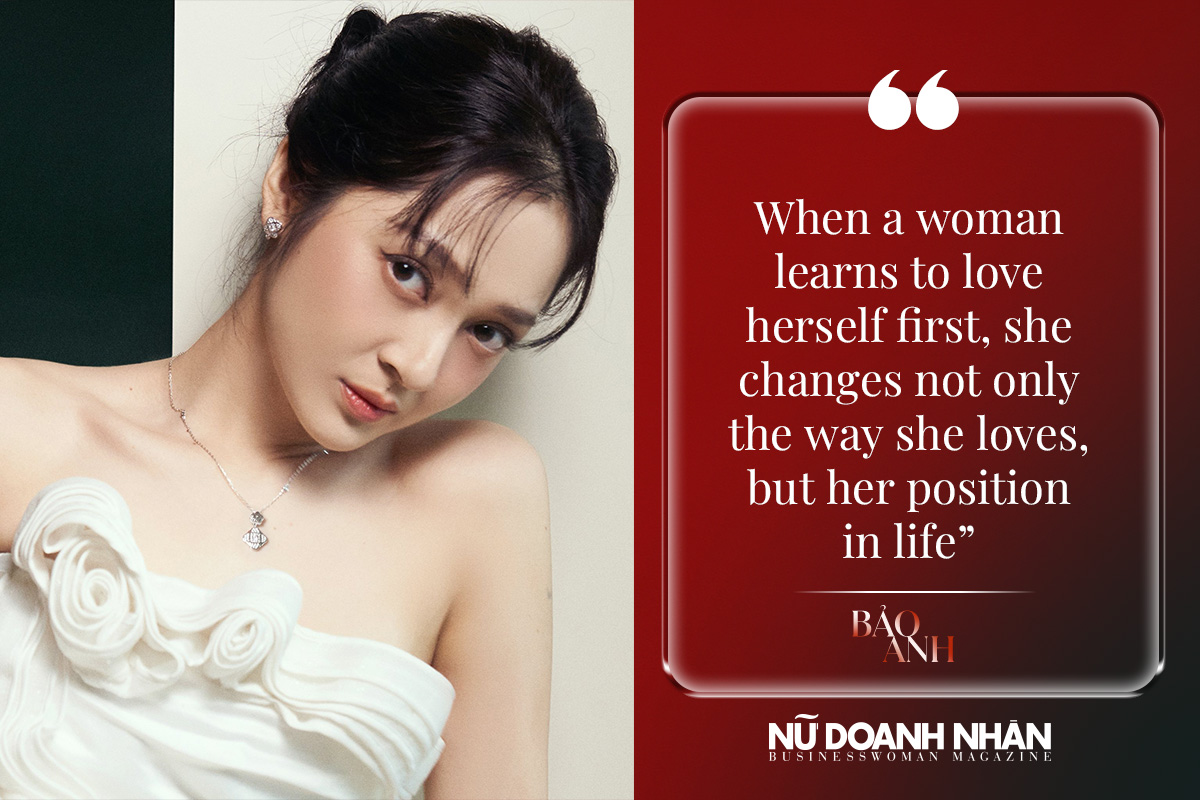
And perhaps what is most valuable about Bảo Anh today is not the high notes of her ballads, but the fact that she no longer needs sadness to prove she is worthy of love. When a woman learns to love herself first, she does not just change the way she loves, she changes her position in her own life.

Có thể bạn quan tâm: