
 Hien Dang
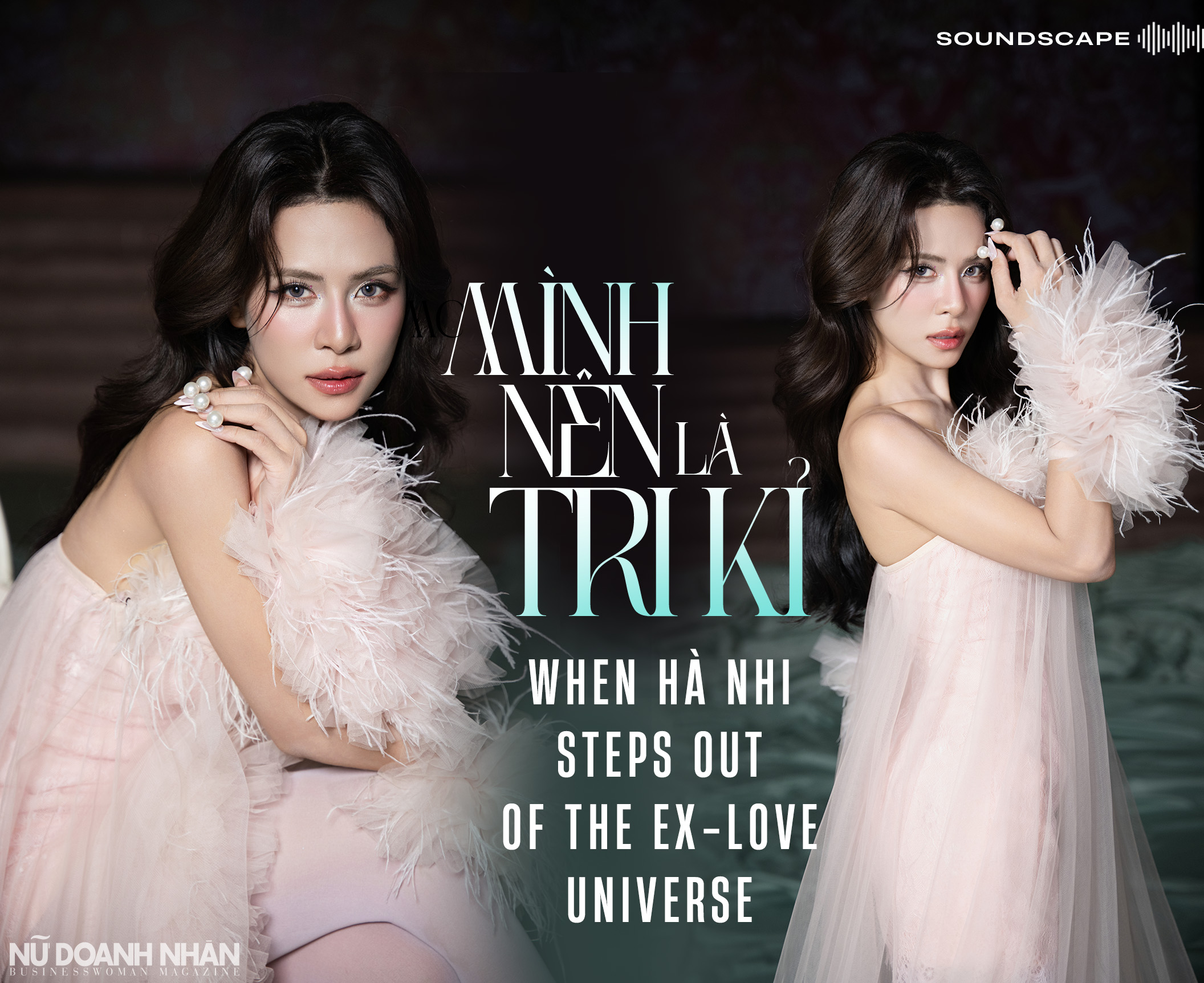
I have not known Hà Nhi long enough to claim I “truly understand” this Nghệ An girl, yet through what has surfaced in the press, through a handful of encounters, and most of all through what “Mình nên là tri kỷ” (loosely translated as “we should be confidants rather than lovers”) leaves behind once the melody has faded, I can read a little of the singer who placed in the Top 4 of Vietnam Idol 2015. Hers is a ten-year journey that has never run in a straight line, unpredictable, full of detours, long enough for people to assume she might one day take a different route altogether, even a decidedly practical one, like real estate. It is precisely that feeling, the sense of someone who has travelled far enough to no longer need to prove sadness that made me write this piece, not to recount a music release, but to speak about a rare kind of maturity in today’s artistic landscape.
Original Vietnamese version available here: Đọc bài viết tiếng Việt
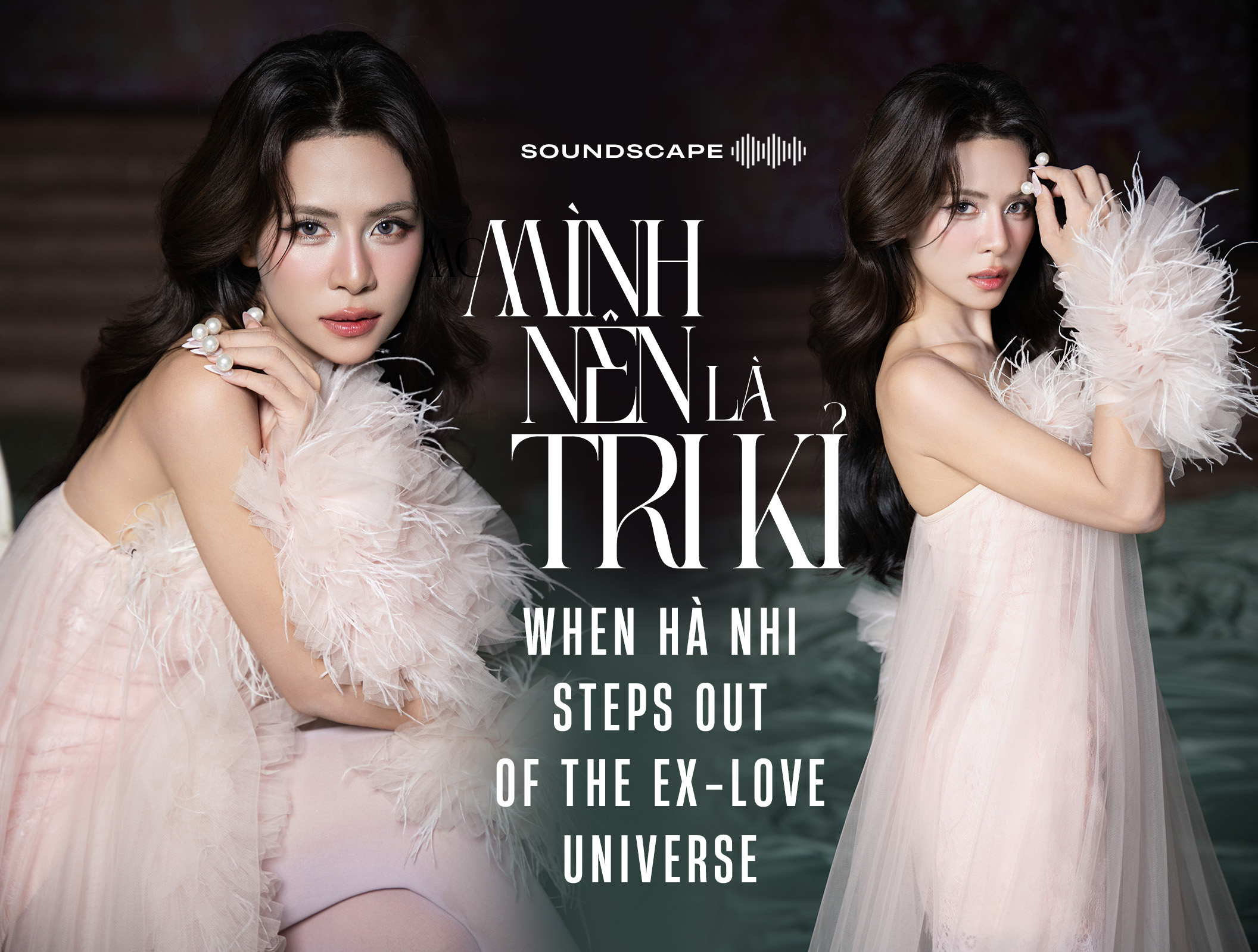
For the past few years, Hà Nhi’s name has been almost inseparable from what audiences jokingly call the “ex-love universe”: Chưa quên người yêu cũ (Haven’t Forgotten My Ex), Ai rồi cũng sẽ khác (Everyone Changes Eventually), Tội cho em (Pity Me), Vì em chưa bao giờ khóc (Because I’ve Never Cried), ballads heavy with memory, heavy with ache, heavy even with those late-night replays we use to punish ourselves. Those songs turned a Top-4 Vietnam Idol contestant, someone who took the long way round and once considered leaving music altogether into a sought-after voice, and into “Hà Nhây”, the Hà Nhi who can sing with force and still make a room laugh. But every “universe” has a flaw: if it does not expand, it becomes a loop, and the person inside is easily held hostage by yesterday’s success. Mình nên là tri kỷ arrives at a moment when Hà Nhi is lucid enough not to keep mining sadness as an endless resource, choosing instead to step beyond it.
Seen through a market lens, she is a case study worth watching: no instant explosion, no reliance on gimmicks, no dependence on looks or scandal, yet a steady, patient construction of an emotional territory distinctly her own, one that listeners enter when they need a voice honest enough to hold up a mirror. Hà Nhi sings best when she tells the story of parting, when she balances on the thin line between vulnerability and self-respect. But at the ten-year mark, she does not solve the “safe” equation by stacking up more guaranteed ballad hits. She changes lanes into a different palette, more retro, more rhythmic, inherently riskier accepting that audiences may need time to adjust to a new version of her.

Musically, Mình nên là tri kỷ is not a shock turn, but a calculated lane change. Written by Chung Thanh Duy, the track leans into a retro/city-pop colour: a defined bass line, a tight beat, synths and guitar that evoke a nostalgic decade, yet the overall sonic treatment feels decidedly “2025”, bright, clean, without the familiar, misty reverb that often coats emotional ballads. The way Hà Nhi places her voice signals a clear shift in adulthood: no more “wailing” at climaxes, but restraint and control; softness without weakness; femininity without syrup; and enough ease to play with rhythm as though she is half-smiling at her own memories. From a professional standpoint, it is an intelligent choice. When a singer has been closely associated with emotional balladry, a change in musical structure helps listeners change their mode of reception from listening to cry to listening to think, an especially crucial move in a market where emotion is consumed quickly and forgotten quickly unless it carries depth.
It is also worth saying plainly: for an artist entering her second decade, Mình nên là tri kỷ remains a relatively safe step. The song is new enough to open a fresh chapter, but not daring enough to completely break the old image. Still, for an artist who has grown alongside her audience’s feelings, moving slowly and surely can be wiser than a sudden, sharp turn, particularly when the aim is not to shock, but to last.

What makes Mình nên là tri kỷ most compelling is not the arrangement or the stylistic choice, but its central concept: tri kỷ. It is a beautiful word and a dangerous one because mishandled, it slips easily into sentimentality or vagueness. Hà Nhi avoids that trap by defining tri kỷ in a resolutely real, unsugared way: the person who can hear everything you carry; relationships that outlast romance and often answer to friendship; people who show up when you need them without requiring a reason, unbound by profit, and not positioned to judge. In an era where connections can be converted into value, relationships like that are not merely rare, they are a form of emotional luxury. And precisely because they are rare, losing them can feel, at times, worse than losing a lover.
Even so, Tri kỷ is also so beautiful a concept that it invites idealisation. Not everyone is lucky enough to meet a true tri kỷ, and not every relationship labelled as such will remain. In that sense, Mình nên là tri kỷ feels more like an invitation than a promise: an invitation for listeners to take stock of the relationships that are genuinely safe, rather than chasing an immaculate template in real life.
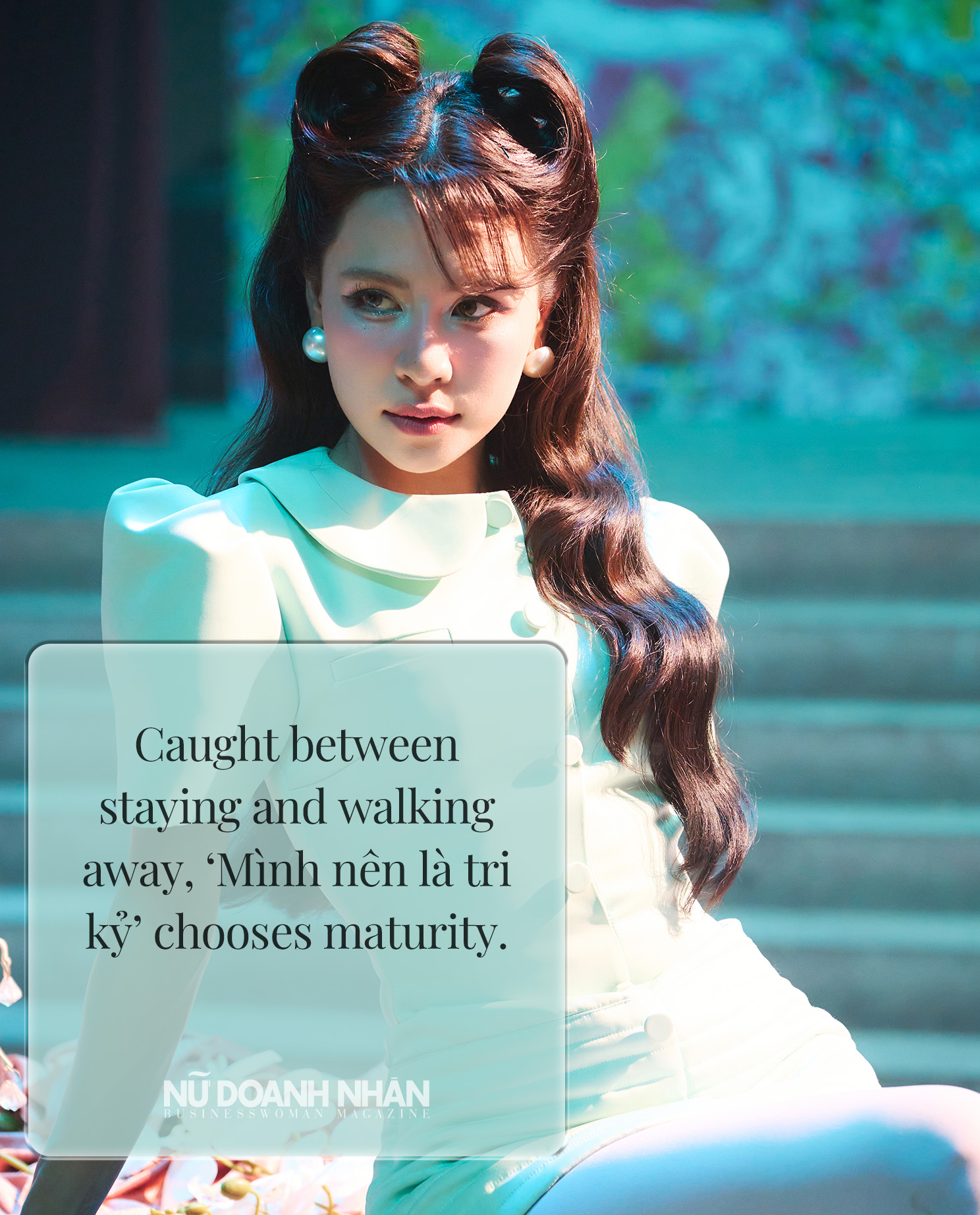
When Hà Nhi says a tri kỷ is “love on a different level”, the most revealing word is “level”. This is not “more love” or “less love”, but a different space altogether, one where two people open another door into a zone of safety, where neither has to brace themselves, neither has to pretend they are fine, and above all, neither lives with the fear of being abandoned. That, too, is an honest emotional need of adulthood. After enough collisions, what people seek is no longer drama but safety; no longer feverish intensity but the absence of constant defence. That is why Mình nên là tri kỷ is not a call to return, but a proposal to upgrade a relationship or, if that is impossible, the courage to let go.
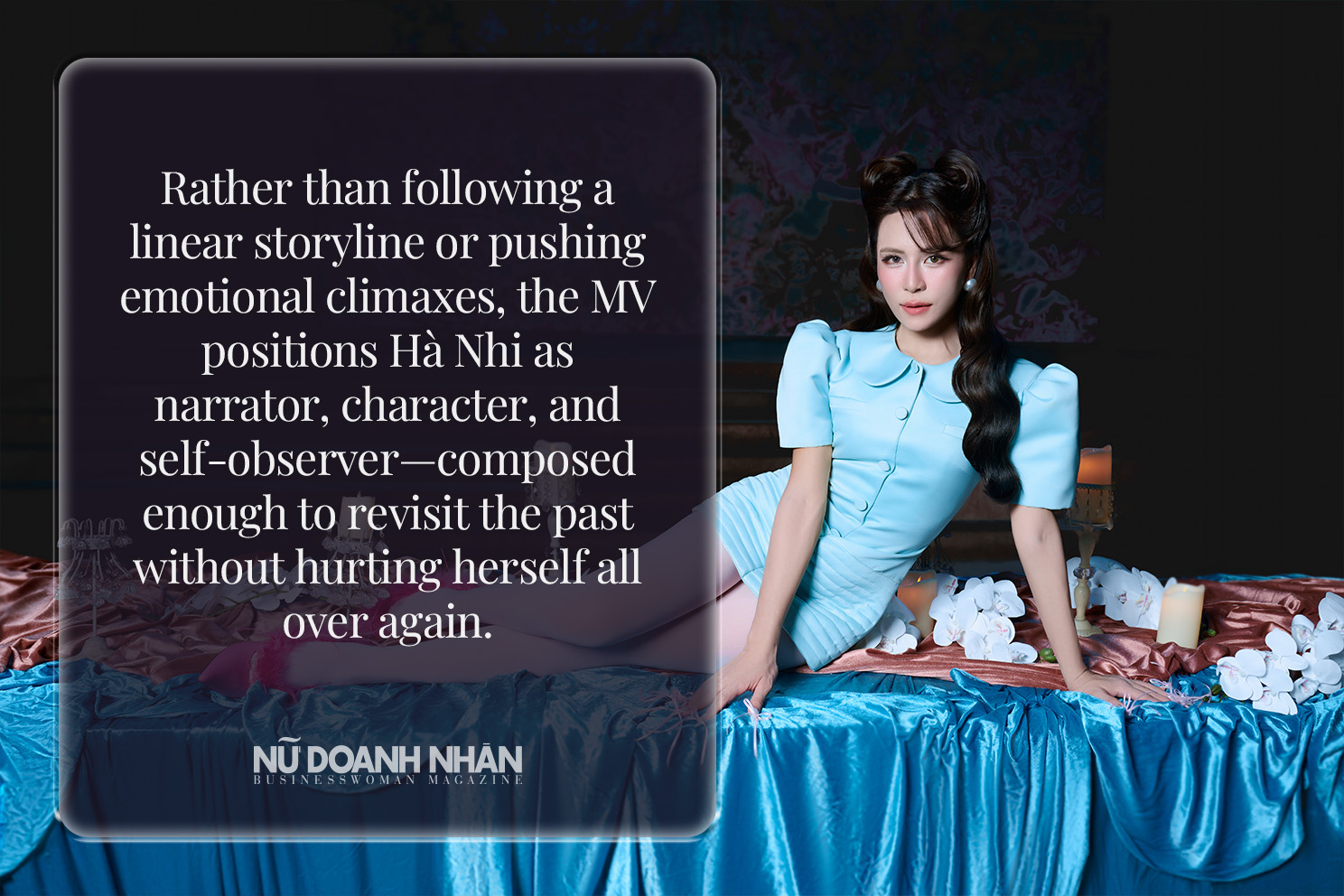
Visually, director Kiên Ứng reinforces the same spirit through an intentionally restrained “stage of memory”. The MV avoids linear storytelling and refuses a tear-driven climax. Instead, it positions Hà Nhi as narrator, character, and observer at once calm enough to look back without punishing herself again. It is a fitting choice for a long-range image strategy: an artist no longer needs to be confined to the role of the sorrowful woman.
Calling Tri kỷ her “album of the decade”, Hà Nhi does not hide the cost, fatigue, even exhaustion. Yet the happiest moment she chooses to represent that entire journey does not come from the new release, but from an older memory: singing Chưa quên người yêu cũ and hearing the whole venue sing back, phone flashes lit like a sky of stars. For any artist, that is the most elemental dream to sing and to be returned by a chorus of listeners. And from the perspective of someone who has worked in media for years, I believe this is the key reason Hà Nhi endures: she does not treat her audience as a market, but as a relationship.
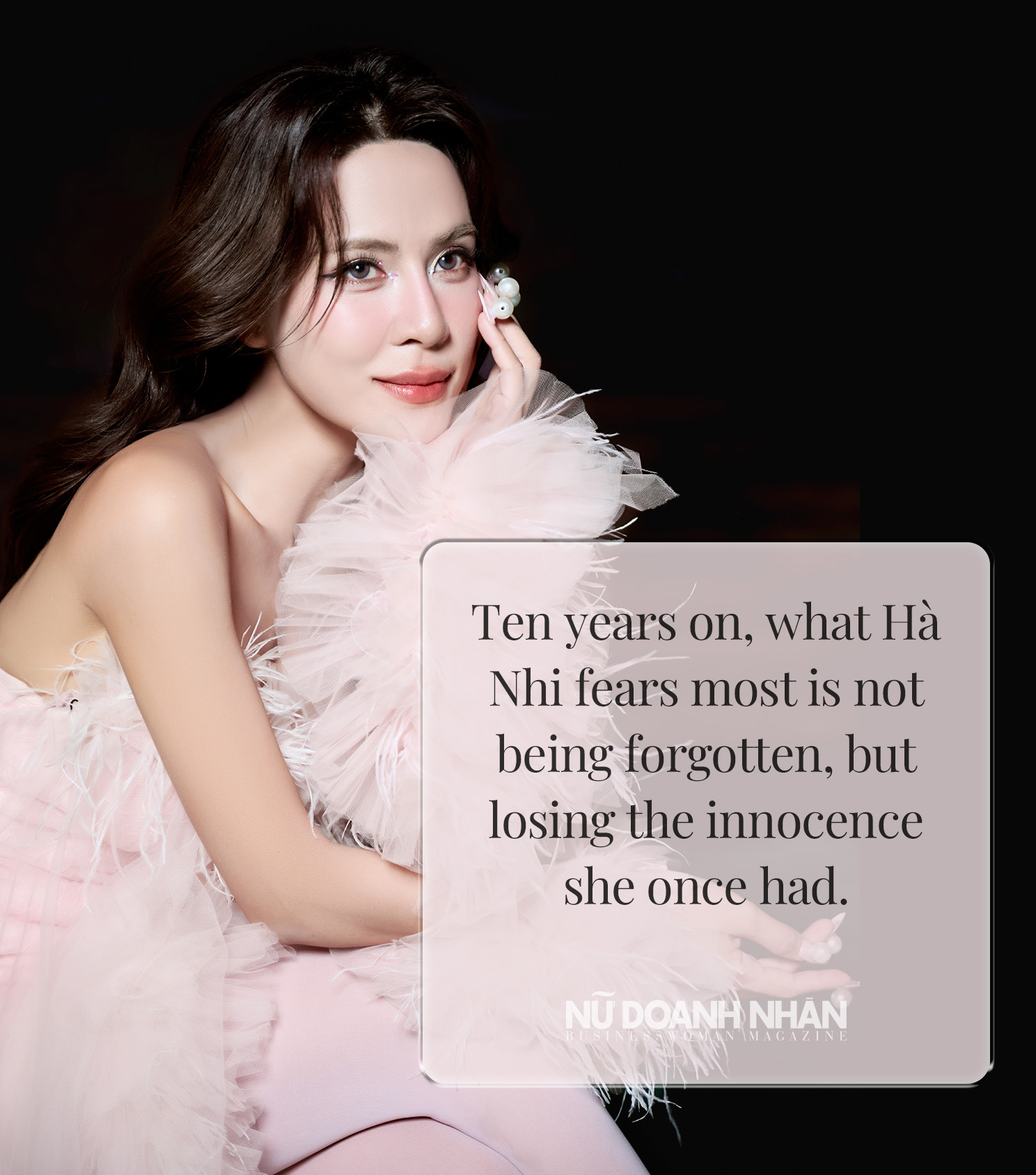
After ten years, Hà Nhi’s greatest fear is not that listeners will stop playing her new music, but that work will pull her into a cycle so relentless it strips away her original lightness. When the boundary between what we “must do” and what we “want to do” dissolves, it becomes easy to live in a constant state of bracing, just to keep everything standing. Realising that things will, in fact, be alright in their own way, and learning to balance, to know what is enough, these lessons sound simple, but many pay dearly to learn them.
So, the message Hà Nhi sends to those still trapped in the “ex-love universe” is not consolation, but a gentle wake-up call. There is no need to forget at all costs, but it is worth understanding that a tri kỷ matters more than clinging to a completed memory because an ex cannot be beside you when you need them, while a tri kỷ can. For those still in the raw centre of heartbreak, this song may feel too lucid, even a little cold. Yet that very edge becomes its signature: it is not written to make you cry again, but to help you stand after you have cried enough.
At this point, Mình nên là tri kỷ is no longer merely Hà Nhi’s story. It becomes a psychological slice of a generation learning to love differently, no longer fully convinced by the permanence of emotion, yet still craving relationships sturdy enough that life does not feel like an endless series of restarts. From a personal-branding angle, this is a step that suggests Hà Nhi is ready for a new phase: less melodrama, more depth; less dependence on sadness, more agency in choice. It is not a rejection of identity, but an expansion of it. And if I had to reduce everything to a single line, I would not choose a lyric, I would choose a state of being: the state of someone who has lived enough not to need extra pain to prove she once loved deeply.

A tri kỷ is not something you can simply decide to find, nor something you can always keep once you have met. But for a singer to choose to sing about tri kỷ, rather than continue tugging at an ex—already signals a kind of growth worth recognising, at the very least a growth beyond the version of herself from a few years ago.
Text: NGUYỄN CÔNG MINH | Design: KHANG PHẠM

Read more: