

 Hien Dang
MICAM Milano – the international footwear trade fair held regularly in Milan – marked its first official introduction in Ho Chi Minh City on 21 April 2026, bringing together industry businesses, buyers, and stakeholders across the fashion and footwear sector.
Text: MINH NGUYỄN
Original Vietnamese version available here: Đọc bài viết tiếng Việt
Organised by the Italian Trade Agency (ITA) in collaboration with the Italian Footwear Manufacturers’ Association, the event took place against the backdrop of Vietnam’s continued role as a key player in the global footwear supply chain. Rather than approaching the industry solely from a manufacturing perspective, the programme positioned it within a broader framework linking design, market dynamics, and distribution systems.
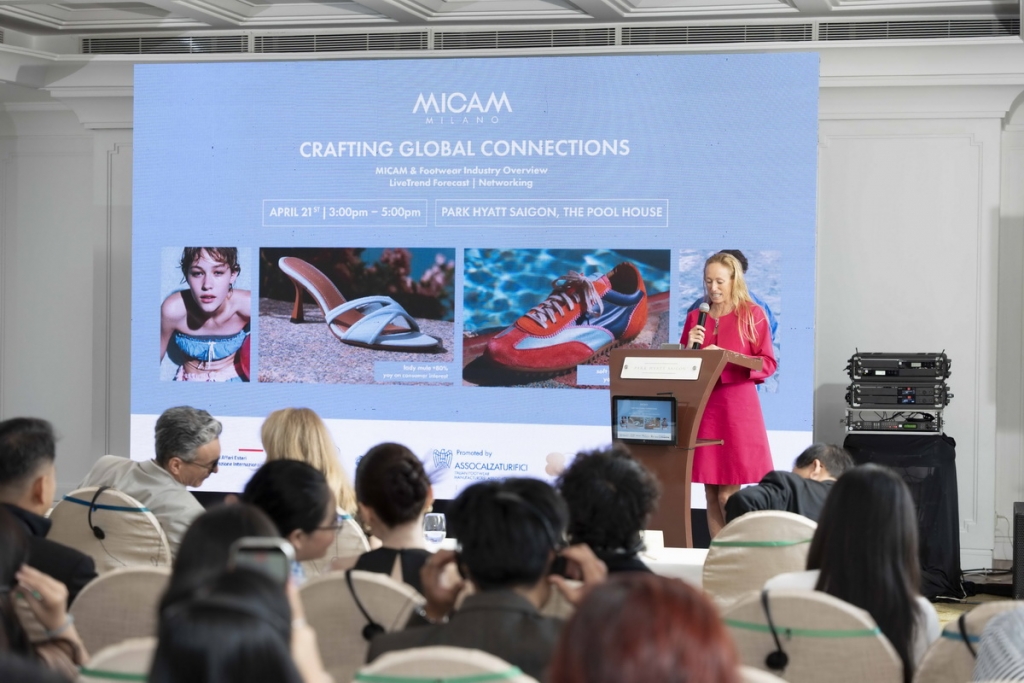
Italy’s footwear industry maintains its international standing through product value, shaped by design, materials, and craftsmanship, rather than production volume. According to Matteo Scarparo, Head of Global Trade and Business Services at the Italian Footwear Manufacturers’ Association, this advantage stems not from scale but from industry structure, where the majority of companies are small- to medium-sized enterprises focusing on specialised skills and design-driven product development.
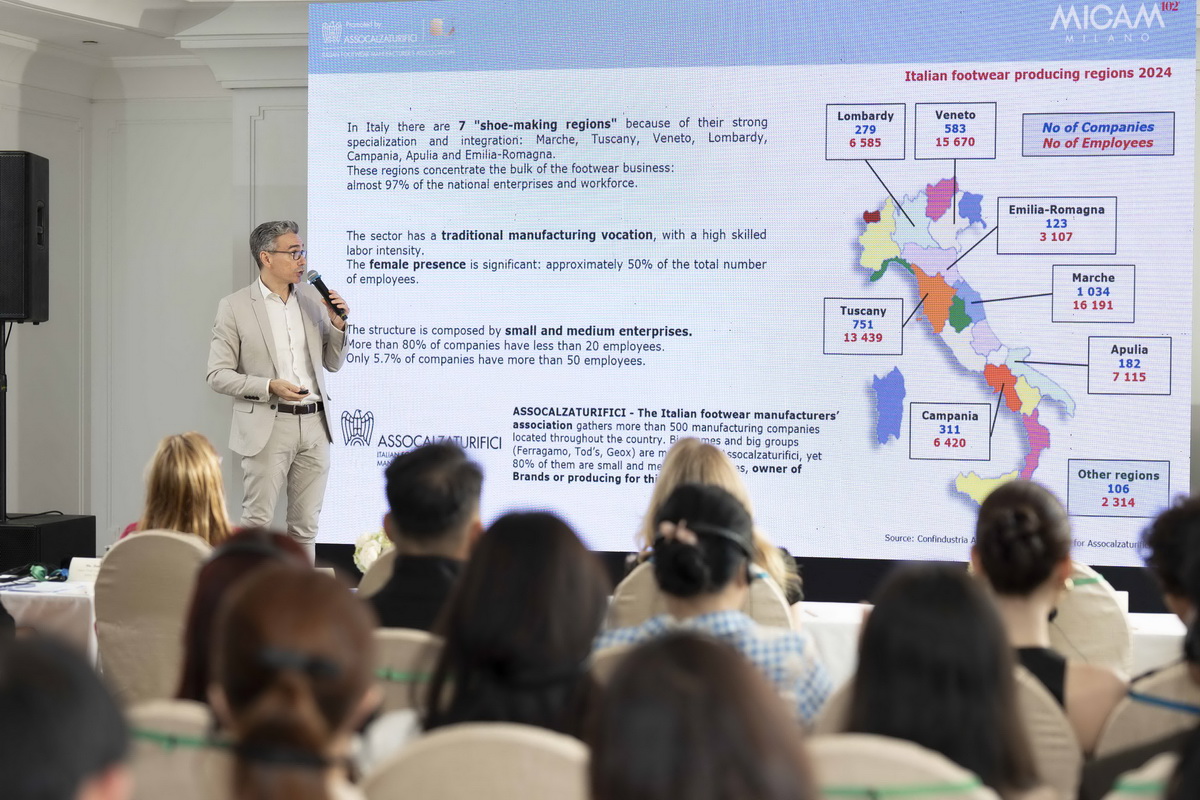
Within this framework, MICAM Milano is positioned not merely as a trade exhibition, but as a platform enabling businesses to access international markets through buyer-focused services, networking activities, and curated content programmes. Initiatives such as MICAM Next extend the role of the fair beyond commercial transactions, serving as a space to explore technological developments, consumer behaviour, and emerging business models within the footwear industry.

This approach creates a direct link between production and distribution systems, where trends are no longer treated as reference points but as integral to product development. This is further reflected in the analysis of Spring/Summer 2027 trends, where data serves as the foundation for identifying and shaping design directions. Information is drawn from multiple sources, including social media, e-commerce platforms, and visual content from international fashion weeks, encompassing millions of images and hundreds of thousands of products updated on a continuous basis.
Based on this dataset, individual design elements such as colour, material, silhouette, and detailing, are monitored over time to assess growth patterns and market traction. Trends are categorised into distinct stages, from early signals to commercially viable directions, while also identifying those entering decline. This classification establishes a clear framework linking trends directly to market risk and demand.

From this data-driven foundation, design directions are structured into cohesive systems where colour, material, and detailing are closely interrelated. The rise of darker, neutral tones is often associated with softer material surfaces such as suede and nubuck, while brighter palettes tend to align with lighter, more flexible materials such as mesh or canvas. At the level of detailing, elements such as lacing systems, metal hardware, and subtle embellishments continue to evolve as part of an integrated design structure, rather than as isolated features.
This model demonstrates that trends are no longer abstract ideas, but embedded within the product development process, where data functions as input, design acts as transformation, and the final product reflects real consumer behaviour in the market.
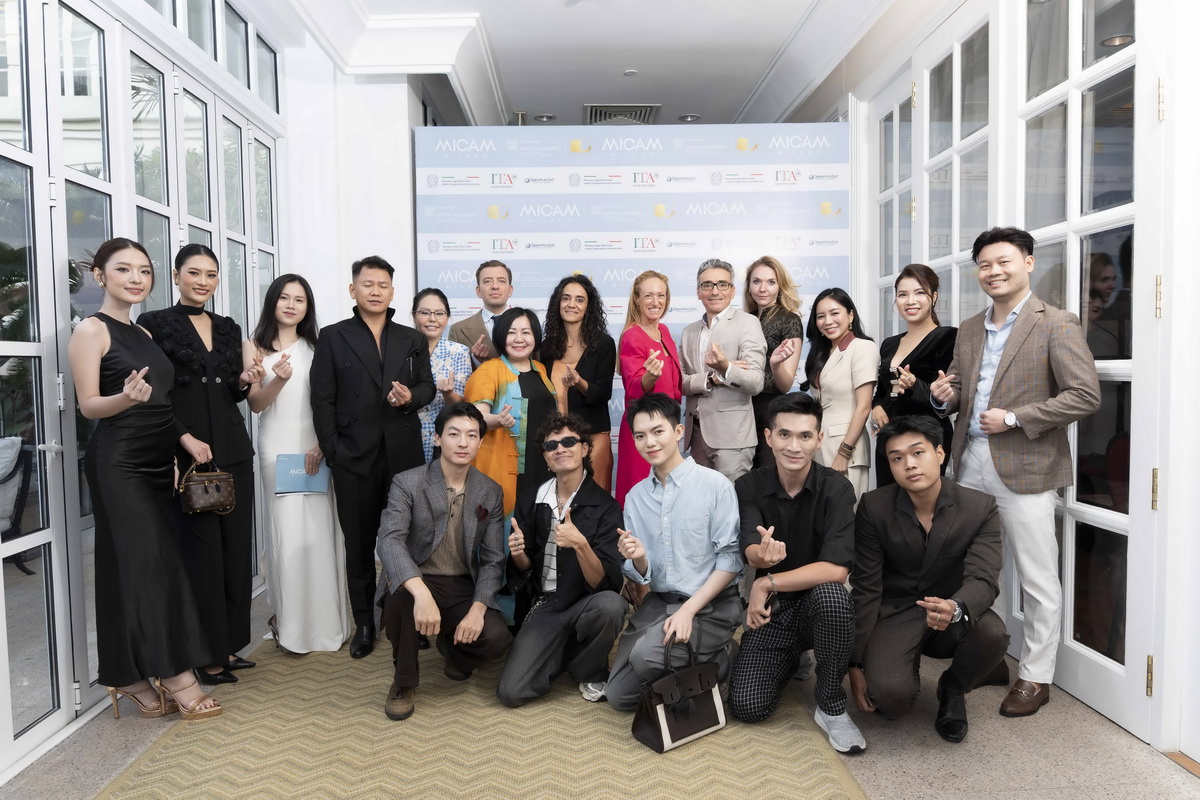
MICAM Milano’s engagement with the Vietnamese market at this stage reflects a broader expansion of international platforms across Southeast Asia. As the footwear industry shifts towards an integrated model combining data, design, and distribution, markets such as Vietnam are increasingly positioned not only as manufacturing hubs, but as active participants within the industry’s broader operational framework.

Read more: